 comparison
American Peptides vs Reputable Peptide Suppliers 2026
Last Updated: October 25, 2026
Quick Summary
American Peptides is a domestic peptide supplier that states its products are tested before release and shipped same-day from its own facility, but it does not detail lot-specific analytical results publicly. Other reputable peptide suppliers differentiate on documentation depth and specialization, so documented batch-level quality, not marketing copy, separates a reliable vendor from a risky one.
- Documentation and testing carry the most weight because they are the hardest to fake and the easiest to verify.
- Request a lot-specific COA and confirm the lot number matches your vial before ordering.
- A generic COA covering an entire product line tells you almost nothing about the vial in your hand.
- A purity percentage on a COA is not a safety claim and does not establish sterility or endotoxin status.
- The supplied research does not verify specific prices for any supplier in this comparison.
Table of Contents
- American Peptides vs Reputable Peptide Suppliers: 2026 Comparison
- American Peptides: Domestic Testing and Same-Day Fulfillment
- How Other Reputable Peptide Suppliers Stack Up
- How to Verify a Peptide Supplier Before You Order
- What a Peptide Certificate of Analysis Should Actually Show
- Research Peptide Storage After Delivery
- Pricing, Shipping, and Documentation Trade-Offs
- Request Lot-Specific Documentation From Bluegrass Research
- Frequently Asked Questions
American Peptides vs Reputable Peptide Suppliers: 2026 Comparison
American Peptides is a domestic supplier that states its products are tested before release and shipped same-day from its own facility. That is a solid baseline.
The distinction matters because research-grade peptides sit in a narrow lane. Suppliers label materials "research use only," yet the documentation behind each vial varies enormously.
Below, we walk through a reproducible scoring method, a supplier snapshot, and the verification steps we would run before any order.
Comparison Table: Supplier Snapshot
| Supplier | Testing Claim | Documentation | Fulfillment | Best For |
|---|---|---|---|---|
| American Peptides | Pre-release testing stated | Not detailed in public results | Same-day, own facility | Buyers wanting fast domestic turnaround |
| Bluegrass Research | Third-party analytical testing | Lot-specific COA records | Discreet US shipping | Labs needing batch-level traceability |
| Biotech Peptides | Research-grade positioning | Limited public detail | Not verified | Research-focused buyers |
| Core Peptides | Custom synthesis focus | Not verified | Domestic fulfillment | Custom synthesis projects |
How This Comparison Was Scored
We scored each supplier on four weighted criteria: documentation transparency, testing evidence, fulfillment reliability, and product availability. Documentation and testing carry the most weight because they are the hardest to fake and the easiest to verify.
Here is the scoring method we would use, and you can reproduce it yourself:
- Documentation (35%): Does the supplier provide a lot-specific COA on request?
- Testing evidence (30%): Is third-party analytical testing named, dated, and tied to a batch?
- Fulfillment (20%): Are shipping speed and packaging claims specific and verifiable?
- Product availability (15%): Is compound selection broad enough for your protocol?
A supplier that scores well on speed but poorly on documentation is a convenience vendor, not a research partner. Weight accordingly.
American Peptides: Domestic Testing and Same-Day Fulfillment
American Peptides positions itself as a domestic producer that tests before release and fulfills from its own facility. For a lab on a tight timeline, same-day fulfillment is a genuine advantage.
What most guides miss is that "tested before release" is a claim, not a document.
Best for: Researchers who prioritize domestic production and fast turnaround. Skip if: You need lot-specific third-party documentation published up front.
How Other Reputable Peptide Suppliers Stack Up
Other reputable peptide suppliers differentiate on documentation depth and specialization. Biotech Peptides is characterized as serving research-grade needs rather than clinical therapy, a positioning that matters when you want a vendor clear about intended use.
Neither profile, in the public results we reviewed, verifies specific testing protocols or prices. For a broader look at other reputable options, see our guide to American Peptides alternatives. That is not a knock against them. It is a reminder that reputation and evidence are different things.
How to Verify a Peptide Supplier Before You Order
Verification is a checklist, not a gut feeling. Run these steps before any purchase, and keep the answers on file for your procurement records.
- Request a lot-specific COA and confirm the lot number matches your vial
- Check that the COA names the testing lab and the test date
- Confirm the supplier states "research use only" and "not for human use"
- Ask whether purity testing uses HPLC and identity confirmation uses mass spectrometry
- Verify shipping method and temperature handling for your compound
- Confirm the supplier's return or replacement policy for damaged shipments
If a supplier cannot answer these in writing, treat that as your answer. Our step-by-step walkthrough on how to know if a peptide is legit expands each item into a full verification sequence.
What a Peptide Certificate of Analysis Should Actually Show
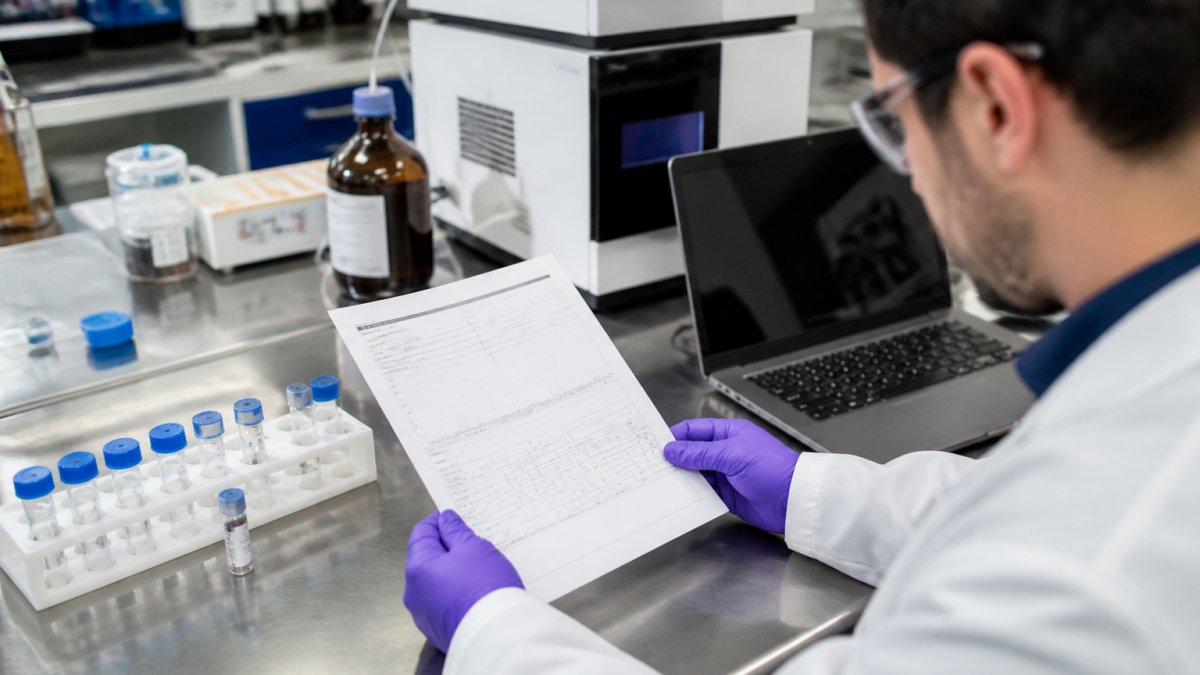
A peptide certificate of analysis is a batch-specific document that reports the identity, purity, and test methods for one manufactured lot. It should name the compound, the lot number, the analytical method, the result, and the testing laboratory.
The minimum contents of a usable COA
A COA you can defend to a procurement office should include, at minimum:
- Compound name and lot number that match the label on the vial you received
- Test method for each result, typically reverse-phase HPLC for purity and mass spectrometry for identity confirmation
- Reported result for each method, such as a purity percentage and a measured mass
- Testing laboratory name and whether it is the supplier's in-house lab or an independent third party
- Test date so you can judge whether the data is current for the lot
If any of these are missing, the document is a marketing artifact, not a traceability record.
What HPLC and mass spectrometry can and cannot establish
This is the part most guides skip. A purity result from HPLC tells you the proportion of the detected peak area attributable to the target compound under the stated method. It does not, by itself, establish identity. Mass spectrometry helps confirm identity by reporting a measured molecular mass that should match the expected mass of the compound. Together, the two methods give you a reasonable basis for saying the material is the compound it claims to be at the stated purity.
What neither method establishes:
- Sterility. Purity testing does not tell you whether the material is free of microbial contamination.
- Endotoxin status. A purity result says nothing about endotoxin levels.
- Safety or suitability for human or veterinary use. Research-grade testing is not a safety assessment, and a high purity number does not change that.
- Stability over time. A COA reports the lot at the time of testing, not how it will behave after shipping and storage.
How to tie a COA to the lot you actually received
A COA is only useful if it matches your vial. Run these checks when the shipment arrives:
- Match the lot number. The lot number on the COA must match the lot number printed on the vial label and the packing slip. If they differ, request a corrected COA before using the material.
- Match the compound and quantity. Confirm the compound name and the stated quantity on the COA match what you ordered.
- Check the test date against the lot. A COA dated well before the lot was manufactured is a red flag.
- Confirm the testing lab. If the COA names an independent lab, you can often verify the report with that lab directly. If it names only the supplier's in-house lab, treat the result as a supplier claim rather than independent verification.
- File the COA with your invoice and packing slip. Institutional procurement workflows often require a documentation trail linking the purchase record to the analytical record.
The generic-COA trap
Watch out: a generic COA that covers an entire product line rather than a single lot tells you almost nothing about the vial in your hand. Batch-specific documentation is the whole point. If the certificate has no lot number, it is not a traceability record, and a supplier that cannot produce a lot-specific document on request is telling you something about its quality system.
For a deeper breakdown of what separates a genuine lot record from a generic one, see our guide to identifying legitimate lot-specific COAs.
Research Peptide Storage After Delivery
Storage decisions protect the integrity of your compound once it arrives. Most research peptides are stored lyophilized at low temperature, and reconstituted material is typically kept cold and used within a defined window. Our peptide storage best practices guide details protocols to protect peptide integrity after delivery.
A common mistake is assuming shipping stability equals storage stability. They are different problems. Temperature control in transit does not extend the shelf life of a reconstituted vial sitting on a bench.
Pricing, Shipping, and Documentation Trade-Offs
Pricing transparency varies widely across peptide suppliers. Some publish per-unit pricing openly; others quote on request. The supplied research does not verify specific prices for any supplier in this comparison, so treat any figure you see elsewhere with suspicion until the vendor confirms it directly.
The trade-off is rarely price alone. For deeper benchmarks, see our high purity peptide pricing analysis. A lower unit cost can hide weaker documentation, slower shipping, or unclear testing.
Request Lot-Specific Documentation From Bluegrass Research
The comparison comes down to evidence. American Peptides offers a credible domestic, fast-fulfillment profile. Other suppliers bring specialization.
Here is what that means in practice. Every order ships with transparent verification records tied to your batch. Our third-party analytical testing supports the purity and identity claims on the label.
We do not publish a one-size price list because quantities and compounds differ. Request current pricing and a sample COA, then judge the documentation for yourself.
Frequently Asked Questions
Who is the most trusted peptide supplier for laboratory use?
There is no single answer that applies to every lab. Trust comes down to documentation you can verify: a lot-specific certificate of analysis, third-party analytical testing, and clear research-use-only labeling. American Peptides reports pre-release testing and same-day fulfillment from its own facility, while other reputable peptide suppliers emphasize custom synthesis or domestic fulfillment. Ask each supplier for batch-specific HPLC and mass spectrometry data before you commit, and compare the records side by side rather than relying on reputation alone.
How do I verify a peptide supplier is legitimate?
Start with the certificate of analysis. It should list a lot number that matches the vial you receive, plus HPLC purity results and mass spectrometry identity confirmation. Cross-check that the lot number on the CoA matches your shipment, and confirm the supplier labels products research use only, not for human or veterinary use. Ask whether testing is done by an independent lab and request a sample CoA before ordering. A supplier that cannot produce batch-specific documentation on request is a risk to your study.
What should a peptide certificate of analysis include?
A useful peptide certificate of analysis includes the compound name, lot number, molecular weight, HPLC purity percentage with the chromatogram, mass spectrometry identity results, and the testing date. It should also state the storage recommendations and the research-use-only disclaimer. Batch-specific documentation matters more than a generic spec sheet because it ties the analytical results to the exact vial in your hands. If the CoA has no lot number or shows the same values across every batch, treat it as a trust signal that is missing.
How should research peptides be stored after delivery?
Most lyophilized research peptides should be stored at -20°C or colder, protected from light and moisture, and kept desiccated. Once reconstituted, follow the supplier's guidance, which usually means refrigerating at 2-8°C and using the material within a defined window. Record the lot number and receipt date in your inventory log so storage conditions stay traceable. If a shipment arrives warm or damaged, document it and contact the supplier before use, since temperature excursions during transit can affect compound integrity.
Why does lot-specific third-party testing matter for research buyers?
Lot-specific third-party testing ties analytical results to the exact batch you receive, so purity and identity claims are verifiable rather than generic. For a laboratory procurement workflow, that documentation supports reproducibility and gives you a defensible record if results are scrutinized. Generic or batch-agnostic CoAs cannot confirm what is in your vial. When comparing American Peptides with other reputable peptide suppliers, ask each one whether the CoA you receive will carry the lot number printed on your shipment.
The real challenge is not finding a peptide supplier; it is finding one whose records survive scrutiny. Bluegrass Research pairs lot-specific COA documentation with third-party analytical testing, discreet US shipping, and a research-first philosophy built for laboratory procurement. Get started with Bluegrass Research and verify the documentation behind your next order.