 how-to
Peptide Storage Best Practices: 2026 Lab Guide
Table of Contents
- Why Proper Peptide Storage Matters for Research Integrity
- Lyophilized vs. Reconstituted Peptides: Different Rules
- Temperature Requirements: -20°C vs -80°C
- Bacteriostatic Water vs Sterile Water for Peptides
- Peptide Shelf Life After Reconstitution
- Aliquoting and Handling: Preventing Contamination
- Troubleshooting Degraded Peptides and Shipping Storage
- Conclusion
- Frequently Asked Questions
Last Updated: September 9, 2026
Why Proper Peptide Storage Matters for Research Integrity
Peptide storage is the single most controllable variable in determining whether your experimental results are reproducible or quietly compromised. A peptide that degrades due to improper handling doesn't announce its failure; it simply produces weaker signals, inconsistent data, or assays that cannot be replicated. At Bluegrass Research, we supply research-grade materials with lot-specific documentation, but those compounds only maintain their verified integrity if you follow strict handling protocols from the moment they arrive.
The science behind degradation is straightforward. Peptides are susceptible to hydrolysis, oxidation, and microbial growth, all of which accelerate when temperature, moisture, or light exposure fall outside recommended ranges. Most researchers understand that peptides need cold storage, but the nuances of when to freeze, how to reconstitute, and which solvent to use make the difference between a stable stock and a compromised one.
Lyophilized vs. Reconstituted Peptides: Different Rules
The physical state of your peptide dictates entirely different storage requirements. Lyophilized peptides, which arrive as dry powder in sealed vials, are remarkably stable when kept anhydrous and cool. Reconstituted peptides, once dissolved in liquid, enter a far more vulnerable state where degradation pathways accelerate dramatically.
For lyophilized powder, the primary threats are moisture ingress and temperature fluctuation. The powder is hygroscopic, meaning it actively absorbs water from ambient air, which triggers hydrolysis. Keep lyophilized vials tightly sealed with their original capping, store them in a desiccator if available, and minimize the time vials spend open at room temperature.
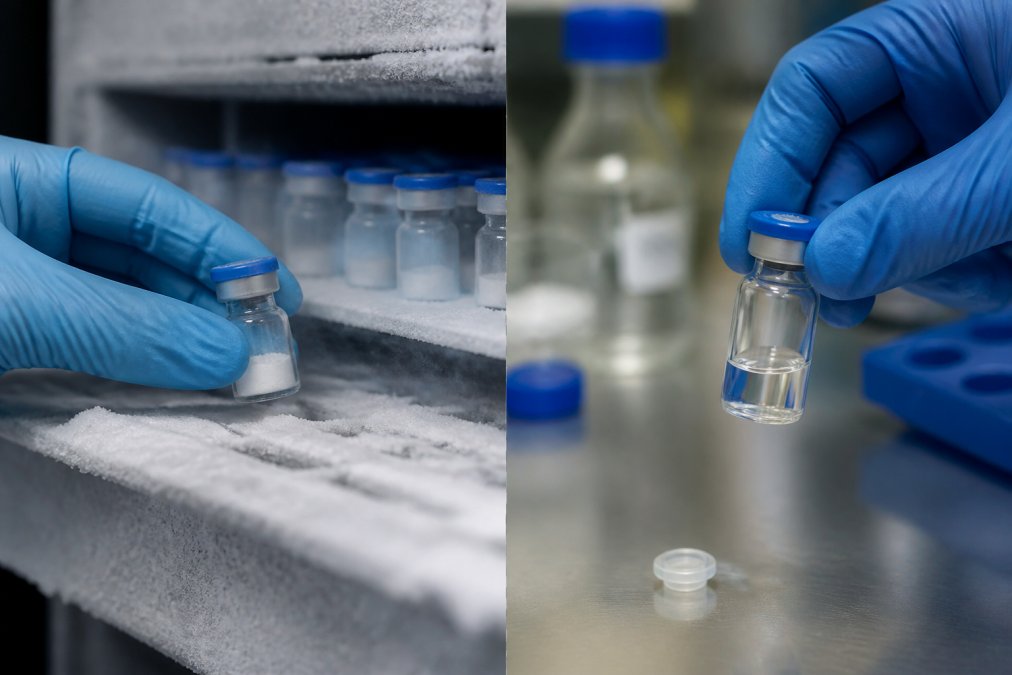
Reconstituted peptides follow different rules entirely. Once you add solvent, the peptide becomes vulnerable to microbial growth, oxidation, and repeated freeze-thaw damage. The shelf life of a reconstituted peptide is measured in days or weeks, not months, and every freeze-thaw cycle causes measurable degradation. As documented in Bachem's handling and storage guidelines for peptides, solutions should be stored below -15°C for long-term stability, with aliquoting performed before initial freezing to prevent repeated cycling.
Temperature Requirements: -20°C vs -80°C
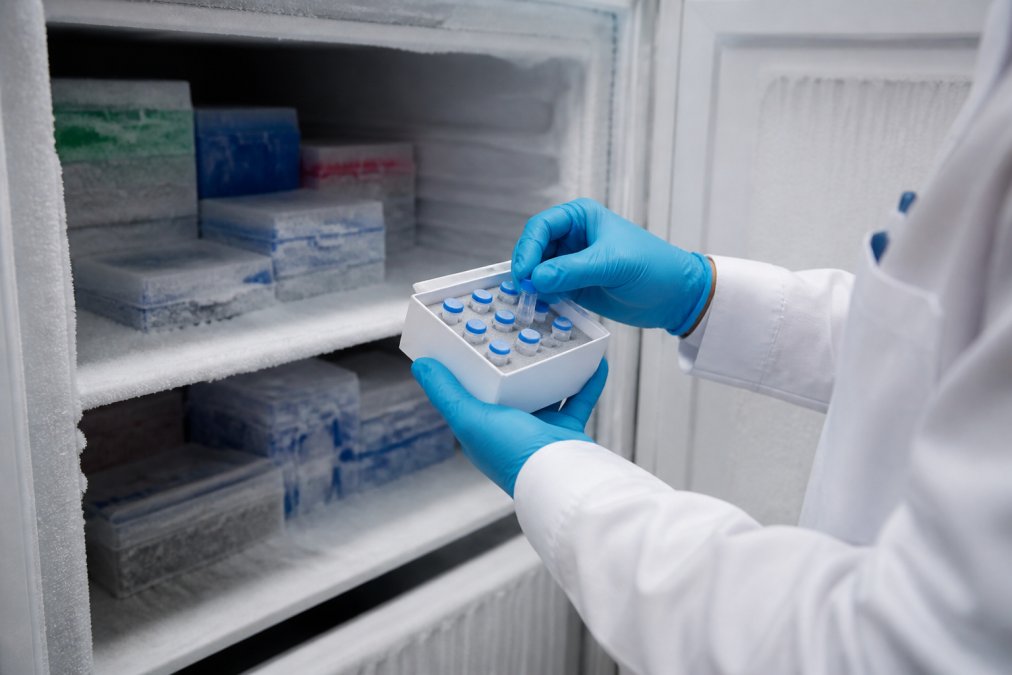
Temperature selection depends on both the peptide's physical state and your intended timeline. Lyophilized peptides stored in sealed vials remain stable at -20°C for extended periods, often exceeding one year when moisture is excluded. Deep freezing at -80°C provides an additional safety margin but is not strictly necessary for most lyophilized materials.
Reconstituted peptides demand colder conditions. Standard practice places peptide solutions at -20°C for short-term storage of one to three months, while -80°C extends stability for longer horizons. The critical variable is consistency: temperature fluctuations cause condensation and ice crystal formation, both of which damage peptide structure. GenScript's peptide storage and handling guide emphasizes avoiding repeated freeze-thaw cycles as the single most destructive practice for peptide solutions.
Ambient temperature exposure should be minimized at every step. Remove vials from the freezer only long enough to withdraw your aliquot, then return them immediately. Never allow a peptide solution to warm fully to room temperature before refreezing, as each cycle introduces hydrolysis and oxidation opportunities.
| Storage Condition | Lyophilized Peptide | Reconstituted Peptide |
|---|---|---|
| Room temperature | Hours to days (sealed) | Not recommended |
| Refrigerator (2-8°C) | Short-term, if sealed | 24-72 hours |
| Freezer (-20°C) | 12+ months | 1-3 months |
| Deep freeze (-80°C) | Indefinite | 3-6+ months |
Bacteriostatic Water vs Sterile Water for Peptides
The solvent you choose for reconstitution directly impacts how long your peptide remains usable after mixing and whether it stays chemically intact. This decision is not one-size-fits-all; it depends on your peptide's solubility profile, your experimental timeline, and whether your assay tolerates preservatives.
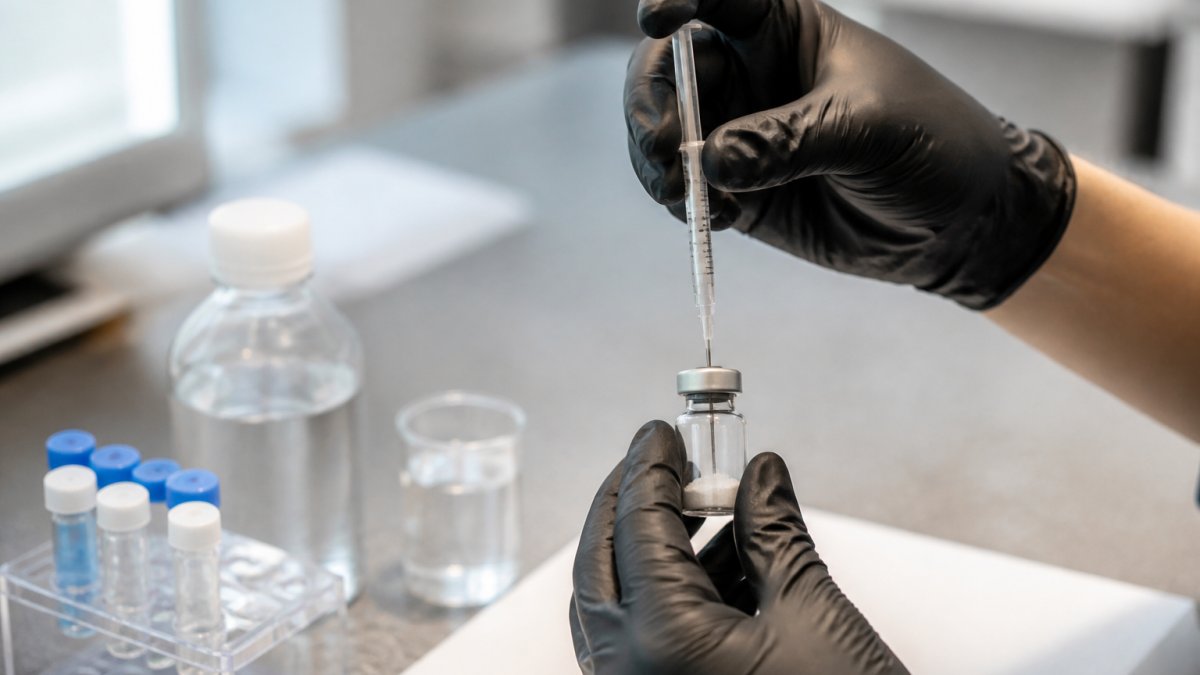
Bacteriostatic water contains 0.9% benzyl alcohol, which inhibits bacterial growth and allows multiple withdrawals from the same vial over several weeks. This makes it the default choice for multi-dose protocols where you will sample from a single vial repeatedly across days. The benzyl alcohol acts by disrupting bacterial cell membranes, which is effective against most common contaminants introduced by needle punctures.
Sterile water contains no preservative, making it suitable only for single-use or immediate consumption protocols. It is the correct choice when your peptide is sensitive to benzyl alcohol, when your downstream assay could be skewed by the preservative's presence, or when you plan to aliquot into single-use vials immediately after reconstitution.
Buffer Compatibility and pH Considerations
The choice between bacteriostatic water and sterile water is only the first layer. Many peptides require specific pH conditions for optimal solubility and stability. A common pattern is that peptides with a high proportion of basic residues (arginine, lysine, histidine) dissolve more readily in slightly acidic conditions, while acidic peptides may need a mild base.
| Solvent | Typical pH | Best For | Stability Window (2-8°C) | Notes |
|---|---|---|---|---|
| Bacteriostatic water | 4.5-6.5 | Multi-dose vials | 2-4 weeks | Contains 0.9% benzyl alcohol; verify peptide compatibility |
| Sterile water | 5.0-7.0 | Single-use, immediate | 24-72 hours | No preservative; risk of microbial growth after first puncture |
| Acetic acid (0.1-1%) | 2.5-3.5 | Hydrophobic peptides | 1-2 weeks | Improves solubility for some sequences; may accelerate hydrolysis |
| PBS (pH 7.4) | 7.4 | Hydrophilic peptides | 24-48 hours | Physiological pH; not ideal for long-term storage |
| Tris buffer (pH 8.0) | 8.0 | Specific assay requirements | 24-72 hours | Avoid if downstream assays are pH-sensitive |
Practical Decision Framework
- Will you puncture the vial more than once? If yes, bacteriostatic water is the safer default, provided the peptide tolerates benzyl alcohol.
- Is your assay sensitive to benzyl alcohol? If you are running cell-based assays or ELISA formats that could be affected by preservatives, switch to sterile water and aliquot immediately.
- Does your peptide require a specific pH for dissolution? Consult the certificate of analysis or published solubility data. If the peptide is known to be difficult to dissolve, prepare a small test solution first.
- What is your storage timeline? For experiments completed within 72 hours, sterile water with refrigeration is acceptable. Beyond that, bacteriostatic water or aliquoting and freezing becomes necessary.
A practical tip from experienced lab managers: when using bacteriostatic water, always wipe the vial septum with 70% ethanol and allow it to dry before puncturing. This reduces the bioburden introduced with each needle stick and extends the usable window of the vial.
For peptides that are particularly sensitive to hydrolysis, some researchers add a small amount of a stabilizer such as trehalose or mannitol before lyophilization or storage. This is more common for custom synthesis projects than for standard research peptides, but it is worth noting if you are working with a sequence known to be unstable in solution.
Biosynth's peptide solubility and storage tips provides a useful solubility screening chart that lists common solvent systems for different peptide classes. Cross-referencing that resource with your specific sequence can save significant troubleshooting time.
Peptide Shelf Life After Reconstitution
Once reconstituted, peptide shelf life after reconstitution becomes a matter of days and weeks, not months. The exact window depends on three variables: the solvent used, the storage temperature, and whether the solution has been aliquoted. Understanding these variables lets you predict, rather than guess, when your material is no longer reliable.
Expected Stability Windows by Condition
The table below summarizes typical stability windows observed in research settings. These are practical guidelines, not guarantees; individual peptide sequences can deviate significantly based on their amino acid composition.
| Storage Condition | Bacteriostatic Water | Sterile Water | Acetic Acid Solution |
|---|---|---|---|
| Refrigerator (2-8°C) | 2-4 weeks | 24-72 hours | 1-2 weeks |
| Freezer (-20°C, aliquoted) | 1-3 months | 1-3 months | 2-6 weeks |
| Deep freeze (-80°C, aliquoted) | 3-6+ months | 3-6+ months | 2-3 months |
These windows assume strict aseptic technique during each vial puncture and no exposure to warm temperatures. The moment a vial warms to room temperature, hydrolysis accelerates. Each freeze-thaw cycle can cause 5-15% loss of active peptide, depending on the sequence and the freezing rate.
The Freeze-Thaw Damage Mechanism
When a peptide solution freezes, ice crystal formation concentrates the remaining liquid, which can lead to localized pH shifts and increased peptide-peptide interactions. This often results in aggregation or precipitation. Upon thawing, the peptide may not fully return to its native soluble state. Additionally, each thaw introduces moisture condensation on the vial interior if the cap is not perfectly sealed, which can dilute your solution and introduce contaminants.
How to Tell If Your Peptide Has Degraded
Most storage guides stop at prevention. Here is how to recognize when degradation has already occurred:
- Visible particulate matter: If you see flakes, cloudiness, or precipitate that does not dissolve with gentle swirling, the peptide has likely aggregated or hydrolyzed.
- Unexpected pH shift: If your solution's pH has drifted by more than 0.5 units from the buffer's expected pH, chemical degradation has occurred.
- Reduced solubility upon reconstitution: If a fresh vial of the same lot dissolves easily but an older vial does not, the older material has degraded.
- Loss of biological activity: If your assay results become inconsistent or weaker over time without any protocol change, degradation is a likely culprit.
- Unusual odor: While not common for peptides, a foul or unusual smell can indicate microbial contamination.
The Most Common Mistake: Repeated Freeze-Thaw Cycling
The most common mistake is repeatedly freezing and thawing a single vial. Each cycle causes mechanical damage to the peptide structure and introduces condensation that accelerates hydrolysis. The solution is straightforward: divide your reconstituted peptide into single-use aliquots immediately after dissolving, then freeze the aliquots you won't use within days.
Shipping and Transit Storage: The Overlooked Window
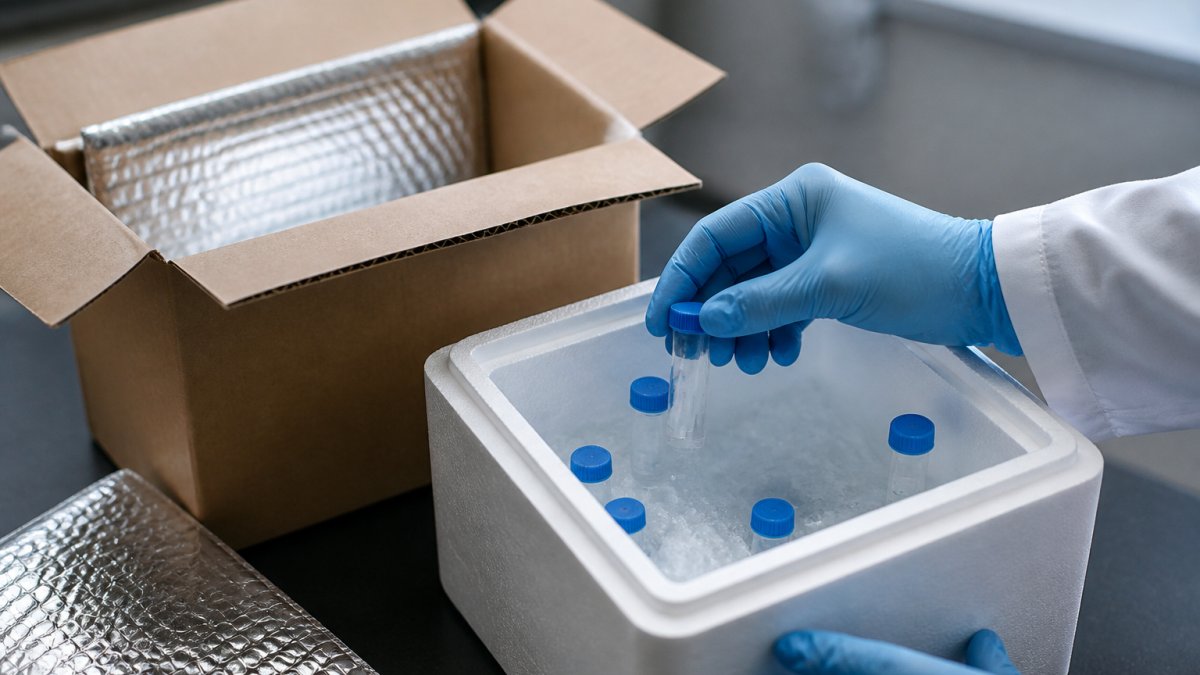
A frequently overlooked aspect of shelf life is what happens between the moment your package arrives and when you move it to the freezer. Peptides in transit experience temperature fluctuations, vibration, and potential exposure to light. Quality suppliers account for this with insulated packaging and cold packs, but the responsibility shifts to you upon delivery.
When your order arrives:
- Inspect the packaging immediately. Note whether cold packs remain cold or have fully thawed.
- Check the vial for damage. Look for cracks, broken seals, or moisture inside the vial.
- Move lyophilized peptides to the freezer or desiccator within 30 minutes of receipt. Do not leave them on the receiving bench while you finish other tasks.
- For pre-reconstituted peptides (if applicable), refrigerate immediately and use within the window specified on the label.
- Document the arrival condition. If there is any question about temperature excursion during transit, contact your supplier before using the material.
A Note on Energy-Efficient Storage
For laboratories running multiple -80°C freezers, consider consolidating peptide storage into a single unit that is opened less frequently. Each door opening causes a temperature spike that can take 30-60 minutes to recover. Designating one freezer for peptide storage and minimizing its access frequency not only protects your materials but also reduces energy consumption. Modern ultra-low temperature freezers with variable-speed compressors can reduce energy use by 30-50% compared to older models, making them a worthwhile investment for labs with significant cold storage needs.
Aliquoting and Handling: Preventing Contamination
Proper aliquoting is the cornerstone of long-term peptide storage. The goal is simple: create multiple single-use portions so that no vial experiences more than one freeze-thaw cycle and no stock solution is repeatedly punctured.
Begin by calculating your total volume and dividing it into the number of aliquots you'll need for your experimental timeline. Use sterile pipettes and work in a laminar flow hood if available. Each aliquot vial should be clearly labeled with peptide name, concentration, reconstitution date, and solvent type. This documentation becomes critical when you're managing multiple compounds across different studies.
Pipetting technique matters more than most researchers realize. Always use sterile barrier tips to prevent aerosol contamination, and avoid vortexing peptide solutions vigorously, as this can cause denaturation. Gentle swirling or slow inversion is sufficient for mixing most peptides. Centrifugation briefly before opening vials helps consolidate liquid at the bottom and prevents loss during cap removal.
Troubleshooting Degraded Peptides and Shipping Storage
Despite best efforts, peptides sometimes arrive degraded or show signs of deterioration during storage. Recognizing the symptoms early can save weeks of wasted experiments. Common indicators include visible particulate matter in solution, unexpected pH shifts, reduced solubility upon reconstitution, or simply inconsistent assay results compared to previous batches.
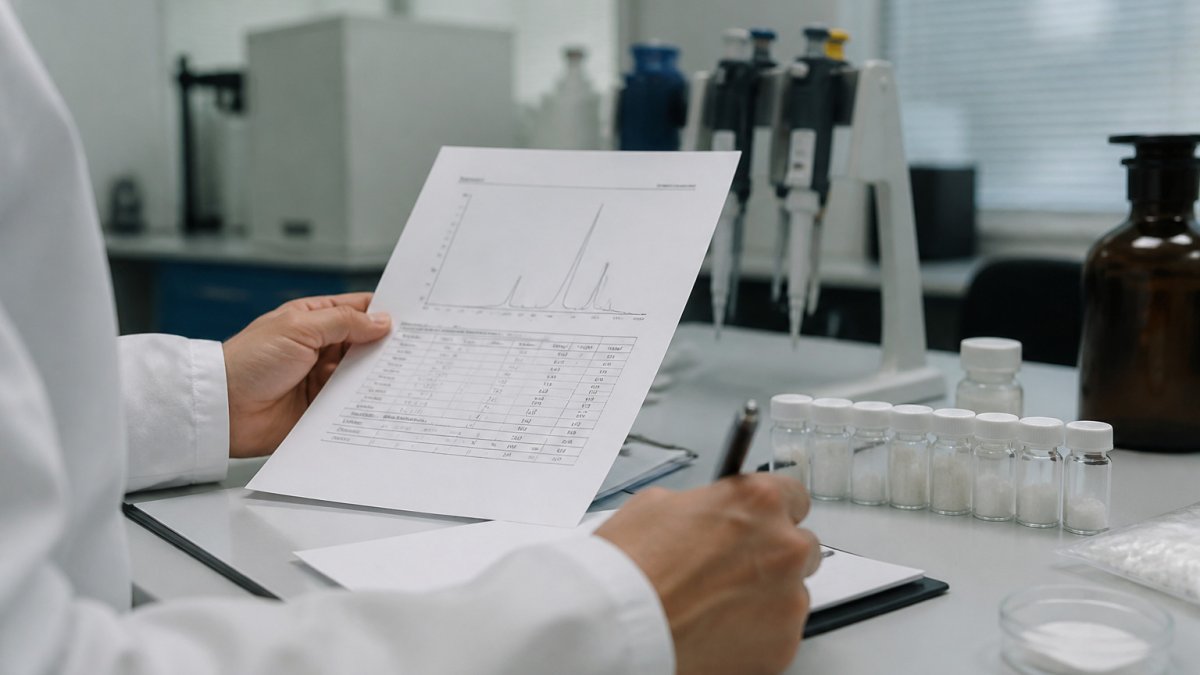
If you suspect degradation, the first step is documentation. Note the lot number, storage history, and any deviations from protocol. Compare your current results against the certificate of analysis provided with your order. This is where sourcing from a supplier that provides lot-specific COA documentation becomes invaluable, as you can verify whether the degradation originated during shipping or developed during your storage.
Shipping presents unique challenges that many researchers overlook. Peptides in transit experience temperature fluctuations, vibration, and potential exposure to light. Quality suppliers account for this with insulated packaging and cold packs. When your order arrives, inspect the packaging immediately and note whether cold packs remain cold. If there's any question about temperature excursion during transit, contact your supplier before using the material.
For researchers managing multiple peptides or working in shared laboratory spaces, consider designating a dedicated storage container that remains sealed except during access. This minimizes temperature fluctuation from frequent door openings and protects your materials from accidental mishandling by others. NIBSC's peptide storage resource emphasizes that dry, cool, dark conditions form the foundation of peptide preservation, with freezer storage serving as the extension of those principles.
Conclusion
Proper peptide storage is not complicated, but it is unforgiving of shortcuts. The difference between a peptide that performs consistently for months and one that silently degrades within weeks comes down to disciplined handling: keeping lyophilized powder dry and cold, reconstituting with the appropriate solvent, aliquoting before freezing, and never subjecting solutions to repeated freeze-thaw cycles.
At Bluegrass Research, we support your research with lot-specific COA documentation and third-party analytical testing so you can verify compound integrity from the moment your order arrives. Combined with disciplined storage practices, this documentation gives you confidence that your results reflect your experiment, not degradation artifacts. Shop now to secure research-grade materials backed by transparent verification records.
Frequently Asked Questions
Do peptides really go bad after 30 days?
For reconstituted peptides, the 30-day guideline is a conservative safety window, not an exact expiration date. Peptide shelf life after reconstitution depends on the specific peptide, the solvent used, and storage temperature. Peptides reconstituted with bacteriostatic water and kept at 2-8°C generally retain stability for several weeks. However, repeated exposure to air, light, and temperature fluctuations accelerates degradation. To maintain research integrity, label vials with the reconstitution date and follow the 30-day rule unless you have specific stability data for your peptide.
What is the correct way to store lyophilized vs. reconstituted peptides?
Lyophilized (freeze-dried) peptides are hygroscopic and temperature-sensitive. Store the sealed vial in a dry, dark place, preferably at -20°C or below, away from moisture. Allow the vial to reach room temperature before opening to prevent condensation. Reconstituted peptides require refrigeration at 2-8°C for short-term use or freezing at -20°C for longer storage. Never freeze peptides reconstituted with bacteriostatic water if you plan to use them within a few weeks, as freeze-thaw cycles can damage the peptide structure.
Is it necessary to use bacteriostatic water for peptide reconstitution?
Bacteriostatic water contains 0.9% benzyl alcohol, which inhibits bacterial growth during repeated vial access. Sterile water lacks this preservative. For multi-dose research protocols, bacteriostatic water is the safer choice to prevent microbial contamination. Use sterile water only for single-use, immediate administration. When comparing bacteriostatic water vs sterile water for peptides, consider your dosing schedule: if you will puncture the vial more than once, bacteriostatic water is necessary to maintain sterility and peptide stability.
What are the signs of peptide degradation in research samples?
Visible changes are your first indicator. A clear solution turning cloudy or developing particulates suggests precipitation or microbial growth. A color shift from clear to yellow or brown indicates oxidation. A strong or unusual odor can also signal bacterial contamination. Subtler degradation may not be visible, which is why strict adherence to storage protocols is critical. If degradation is suspected, do not use the sample. Review your handling procedures, including temperature control, exposure to light, and the sterility of your technique.