 how-to
Avoiding Degraded Peptide Samples During Shipping
Last Updated: October 22, 2026
Quick Summary
Avoiding degraded peptide samples during shipping means defending against four degradation pathways: heat, moisture, light, and oxygen. Build the barrier in layers, matching the sample form and transit time, and place a temperature logger inside the insulated layer next to the vials. Lyophilized material is far more forgiving than reconstituted material, which needs validated dry ice cold-chain shipping.
- Peptides degrade in transit through four pathways: heat, moisture, light, and oxygen.
- Place the temperature logger inside the insulated layer next to the vials, not in the outer box.
- Use a fresh desiccant pack for every shipment, since an opened pack is already partly spent.
- Packing a standard shipment takes 30-45 minutes with a checklist.
- Quarantine any shipment showing a logger excursion and contact the supplier before use.
Table of Contents
- Why Peptide Shipping Fails: The Four Degradation Pathways
- Peptide Sample Temperature Stability: What Transit Conditions Actually Do
- Peptide Packaging for Laboratory Research: Choosing the Right Barrier System
- Step-by-Step: How to Ship Lyophilized vs. Reconstituted Peptides
- How to Store Research Peptides Before and After Transit
- Receiving Inspection: How to Tell If a Peptide Sample Degraded in Transit
- Conclusion
- Frequently Asked Questions
Why Peptide Shipping Fails: The Four Degradation Pathways
Peptide samples degrade in transit through four main pathways: heat, moisture, light, and oxygen. Each one breaks the peptide bond in a different way, and each needs a different defense. Avoiding degraded peptide samples during shipping is a packaging problem first and a logistics problem second.
Here is what happens at the molecular level, in plain terms:
- Hydrolysis: water splits the peptide bond. Humidity is enough to start it.
- Oxidation: oxygen attacks sensitive residues, especially during transit vibration.
- Thermal breakdown: heat speeds up every other reaction.
The common mistake is fixing only temperature. A cold pack does nothing for a vial that sat open to humid air.
Peptide Sample Temperature Stability: What Transit Conditions Actually Do
Peptide sample temperature stability depends on the gap between the vial's actual temperature and the degradation threshold for that sequence.
Transit conditions that matter most:
- Peak temperature, not average. One hot afternoon in a delivery truck can do more damage than three mild days.
- Time above threshold. A two-hour excursion is different from a twelve-hour one, and the cumulative time above threshold is what you should record.
- Freeze-thaw cycles. Repeated cycling stresses physical stability more than a steady cold hold, and a shipment that partially thaws and refreezes in transit can cycle more than once.
For cold-chain shipping, validated temperature monitoring is the only honest way to know what happened. A logger inside the insulated mailer tells you the real story.
According to USP guidance on temperature-controlled storage and shipping, controlled room temperature and cold-chain categories are defined by specific ranges, not by feel.
How to monitor temperature in transit
A practical monitoring setup has three parts:
- A logger placed with the samples. Put it inside the insulated layer, next to the vials, not in the outer box where it reads ambient air. A logger that only sees the truck compartment tells you about the truck, not the sample.
- A defined acceptance range. Write down the range before you ship, based on the receiving lab's requirement and the sample form. "Cold" is not a range.
- A retrieval plan. The logger data has to come back to you. A logger that arrives at the receiving lab and is never read is a cost, not a control.
Single-use temperature indicators are a cheaper alternative for low-value shipments. They show whether a threshold was crossed but not for how long, so they are a screening tool, not a validated record. For reconstituted material and for any shipment you may need to defend later, use a logger that records time and temperature together.
How to assess an excursion and document corrective action
When the logger shows a reading outside your acceptance range, work through the same sequence every time so the response is reproducible:
- Quantify the excursion. Record the peak temperature, the lowest temperature, and the total time outside the range. A brief spike and a long slow drift are different problems.
- Quarantine the shipment. Do not move samples into storage or into use until the excursion is assessed. Label the box and keep the logger data with it.
- Check the sample form. Lyophilized material on a short excursion is usually assessed differently from reconstituted material on the same excursion. The form determines how much margin you have.
- Inspect the vial and packaging. Look for condensation inside the secondary bag, compromised crimps, or melted coolant. These are physical evidence that the thermal layer failed, independent of the logger.
- Document the decision. Write down what happened, what you observed, and whether the sample was accepted, re-tested, or rejected. Keep the logger file with the lot documentation.
- Fix the lane, not just the shipment. If the excursion was caused by the route or the season, change the packaging or the shipping schedule before the next shipment. A corrective action that only covers one box is not a corrective action.
The documentation from this process is what lets the receiving lab accept the sample with confidence, and it is the same record you would need if a shipment is ever disputed.
Peptide Packaging for Laboratory Research: Choosing the Right Barrier System
Peptide packaging for laboratory research should match the sample form, the expected transit time, and the season. There is no single best container, and treating every shipment the same is how samples degrade.
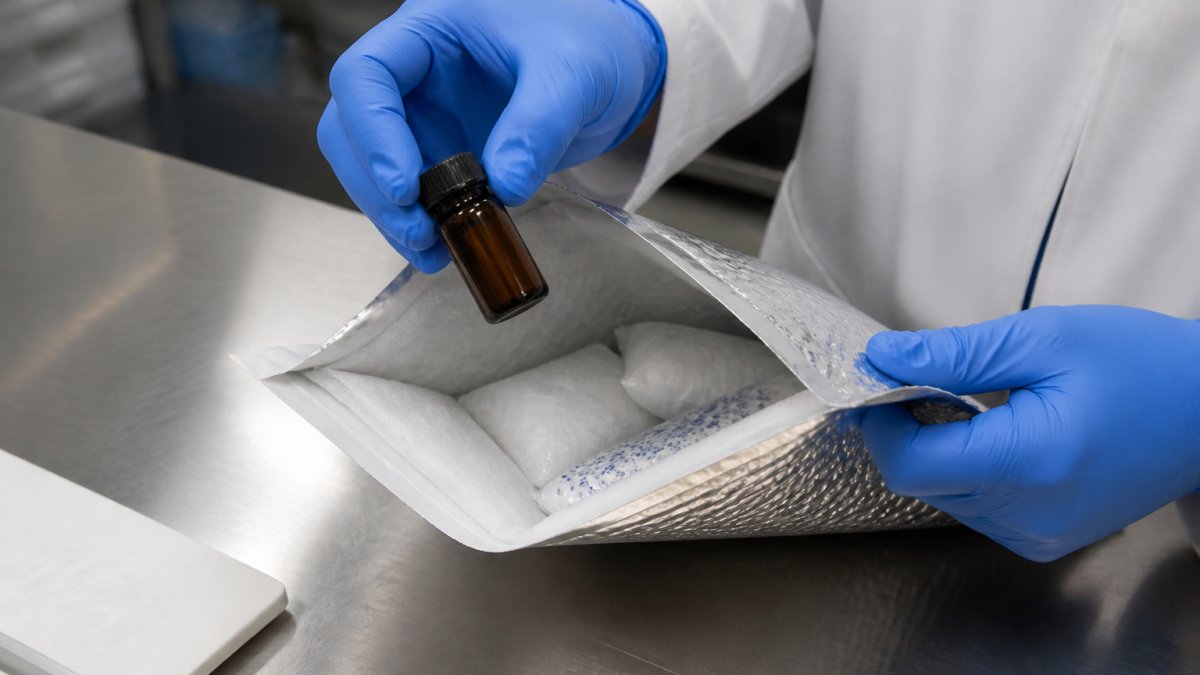
Build the barrier in layers
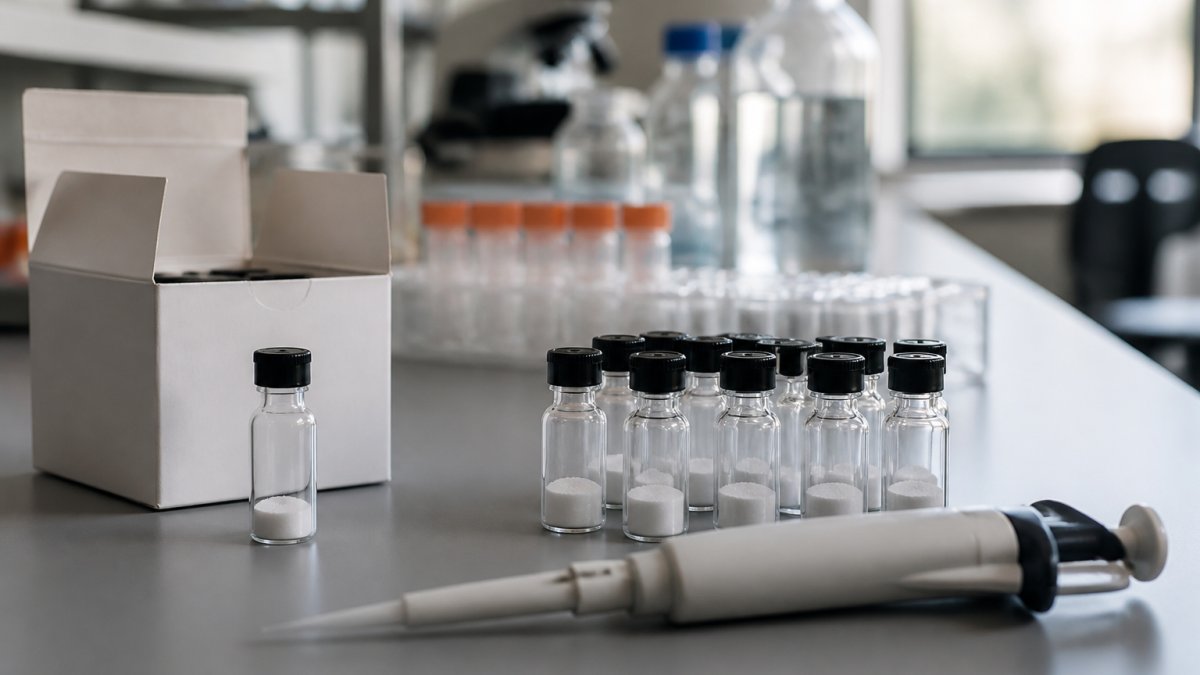
- Primary container: a sealed vial, ideally amber glass for light protection. Confirm the septum and crimp are intact before packing. A compromised crimp defeats every layer outside it.
- Moisture barrier: a desiccant pack inside a sealed secondary bag. This is your defense against humidity and hydrolysis. Use a fresh desiccant pack for every shipment; a pack that has been open to room air is already partly spent.
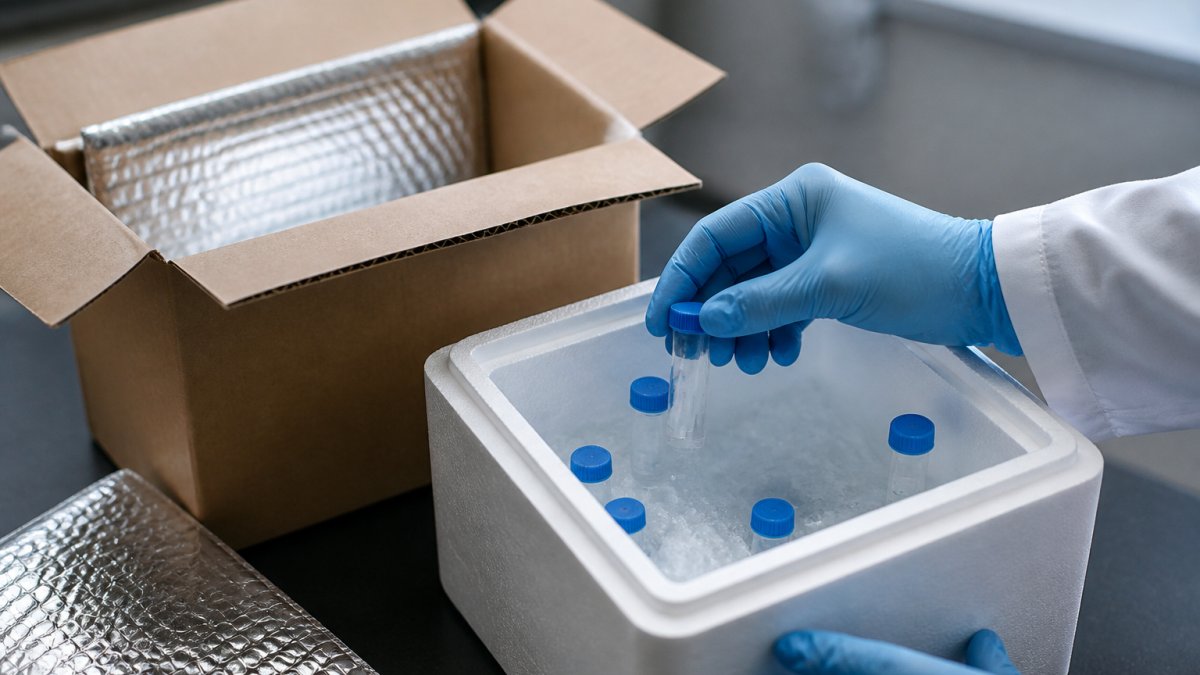
- Thermal layer: dry ice for frozen material, cold packs for refrigerated material, and an insulated mailer around both. The insulation is what buys you time during a hot afternoon in a delivery truck.
- Outer container: rigid, labeled, and sealed. No external branding if discretion matters to your institution.
A common mistake is skipping the desiccant because the vial "looks sealed." Sealed vials still exchange trace moisture through the septum over multi-day transit, and that moisture is enough to start hydrolysis on the vial wall.
A decision matrix by sample form and transit time
Use the matrix below as a starting point, then adjust for season and for the receiving lab's storage capacity. The categories are deliberately conservative: when in doubt, move one row colder and add a logger.
| Sample form | Expected transit | Thermal layer | Moisture and light control | Notes |
|---|---|---|---|---|
| Lyophilized | 1-2 days, mild season | Cold packs in an insulated mailer | Desiccant + sealed amber vial in secondary bag | Often adequate; confirm receiving freezer space |
| Lyophilized | 3+ days or hot season | Dry ice or doubled cold packs | Desiccant + sealed amber vial in secondary bag | Add a logger; avoid weekend holds |
| Reconstituted | Any route | Dry ice, validated | Sealed bag, minimal headspace, amber vial | Receiving lab must be ready on arrival |
| Reconstituted | Any route, hot season | Dry ice with extra coolant mass | Sealed bag, minimal headspace, amber vial | Qualify the lane before shipping |
The matrix is not a substitute for lane testing. It is a way to avoid the two most common errors: shipping reconstituted material on cold packs alone, and shipping lyophilized material in summer without enough coolant mass to survive a delayed delivery.
Step-by-Step: How to Ship Lyophilized vs. Reconstituted Peptides
Shipping lyophilized peptides and shipping reconstituted peptides are different jobs. Lyophilized powder is far more forgiving. Reconstituted material needs cold-chain shipping and a receiving lab that is ready on arrival.
Total time: 30-45 minutes to pack a standard shipment. Difficulty: Beginner with a checklist.
What You'll Need
- Sealed amber vials with intact crimps
- Desiccant packs and airtight secondary bags
- Dry ice or cold packs, matched to sample form
Step 1: Confirm Sample Form and Route [Time: 5 minutes]
Check whether each vial is lyophilized or reconstituted. Confirm the expected transit time and the receiving lab's storage capacity.
Expected result: a written packing plan per vial.
Step 2: Pack the Primary Container [Time: 5 minutes]
Wipe vial exteriors dry. Place each vial in its secondary bag with a fresh desiccant pack. Seal the bag airtight.
Step 3: Add the Thermal Layer [Time: 10 minutes]
For lyophilized material on short routes, cold packs in an insulated mailer are usually enough. For reconstituted material, use dry ice and confirm the receiving lab can accept it.
Step 4: Place the Logger and Seal [Time: 5 minutes]
Put the temperature logger inside the insulated layer, next to the samples. Seal the outer container and label it clearly.
Step 5: Document and Ship [Time: 5 minutes]
Include lot documentation and handling instructions. Ship on a schedule that avoids weekend holds.
| Sample Form | Thermal Layer | Moisture Control | Typical Use |
|---|---|---|---|
| Lyophilized, short transit | Cold packs, insulated mailer | Desiccant + sealed bag | Domestic 1-2 day routes |
| Lyophilized, long transit | Dry ice or doubled cold packs | Desiccant + sealed bag | Multi-day or summer shipping |
| Reconstituted | Dry ice, validated | Sealed bag, minimal headspace | Any route, receiving lab ready |
How to Store Research Peptides Before and After Transit
Knowing how to store research peptides properly is half the battle against degradation. Pre-shipment and post-delivery storage conditions decide whether your sample integrity survives the trip at all.
Before transit:
- Keep lyophilized vials in a freezer at a stable low temperature.
- Keep them in the dark. Amber vials help; a closed drawer helps more.
- Limit freeze-thaw cycles. Aliquot before freezing if you can.
After delivery:
- Inspect on arrival before moving anything to storage.
- Move lyophilized material to the freezer promptly.
- Store reconstituted material per your protocol, usually cold and protected from light.
We ship every Bluegrass Research order with lot-specific COA documentation so the receiving lab can verify identity and purity against the record.
Receiving Inspection: How to Tell If a Peptide Sample Degraded in Transit
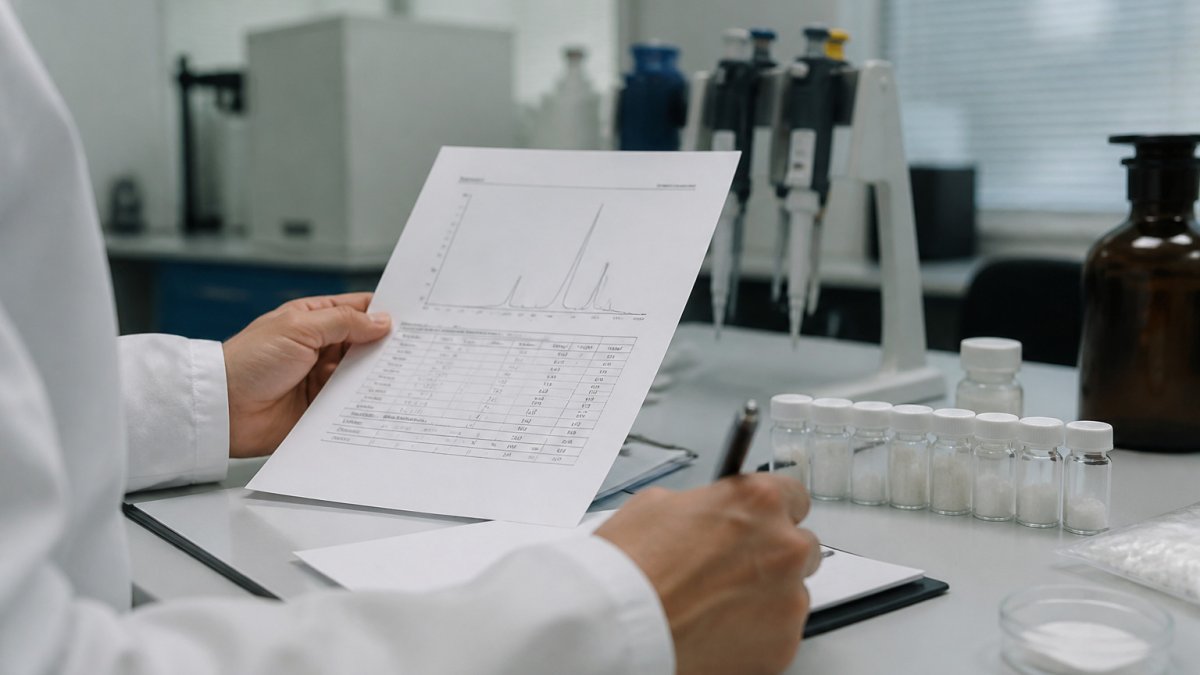
Receiving inspection is your acceptance test. Check the logger first, then the vial, then the documentation.
A sample acceptance checklist:
- Temperature logger shows no excursion beyond your validated range
- Dry ice or cold packs still present and effective
- Vials intact, crimps unbroken, no cracks
If the logger shows an excursion, quarantine the shipment and contact the supplier before use. Do not assume the sample is fine because the box felt cold.
One more distinction worth stating plainly: this guidance covers research-use handling only. It does not describe human or clinical use, and the acceptance criteria above are for laboratory samples.
Conclusion
Shipping failures are preventable, but only if you plan the packaging around the sample form and the actual route. Heat, moisture, light, and oxygen each need a specific defense, and a temperature logger is the only way to know whether your defenses held.
Bluegrass Research supplies research-grade peptides with lot-specific COA documentation, third-party analytical testing, and discreet shipping with no external branding. Every order arrives with the verification records your lab needs to accept it with confidence. Shop Now
Frequently Asked Questions
How long can peptides go unrefrigerated during shipping?
Lyophilized peptides tolerate short ambient excursions better than reconstituted material, but the safe window depends on the specific sequence and transit temperature. Most freeze-dried research peptides remain stable for several days at room temperature when kept dry and out of light, while reconstituted peptides degrade faster and should stay cold throughout transit. Build in a buffer for carrier delays, and check the lot documentation for any stability data the supplier provides.
Do peptide samples need to be shipped on ice or with dry ice?
Not always. Lyophilized peptides shipped short distances in cool weather often arrive intact with insulated mailers and cold packs. Dry ice is reserved for reconstituted peptides, heat-sensitive sequences, or long transit times where sustained low temperature matters. Dry ice requires vented packaging because carbon dioxide builds pressure as it sublimates. Match the coolant to the sample form and expected transit time rather than defaulting to the coldest option.
What should researchers do if a peptide shipment is delayed?
Document the delay, note the ambient temperature the package was exposed to if a logger is included, and inspect the vial on arrival before use. If the sample is lyophilized and the vial stayed sealed and dry, it may still be usable, but confirm with the supplier's lot documentation. For reconstituted peptides or shipments that sat in heat, request a replacement or re-test before running assays. Always log the excursion in your receiving records.
How can researchers tell whether a peptide sample degraded during transit?
Visual signs include discoloration, cloudiness in reconstituted solutions, or visible particulates. Lyophilized cakes that have melted, collapsed, or absorbed moisture are a red flag. Beyond appearance, compare analytical results against the lot-specific COA and run a quick HPLC or mass spec check on critical samples. Keep receiving records with temperature logger data so any degradation can be traced to transit conditions rather than handling.