 ultimate-guide
Why Research Grade Peptides Matter for Lab Accuracy
Table of Contents
- What Research Grade Peptides Actually Mean
- Peptide Purity Standards That Hold Up in Review
- Third-Party Peptide Verification: What a Real COA Shows
- How to Verify Peptide Quality Before You Run an Assay
- Stability, Storage, and the Degradation Risk Nobody Tests For
- Legal and Liability Realities for Research Labs
- Frequently Asked Questions
Last Updated: September 17, 2026
What Research Grade Peptides Actually Mean
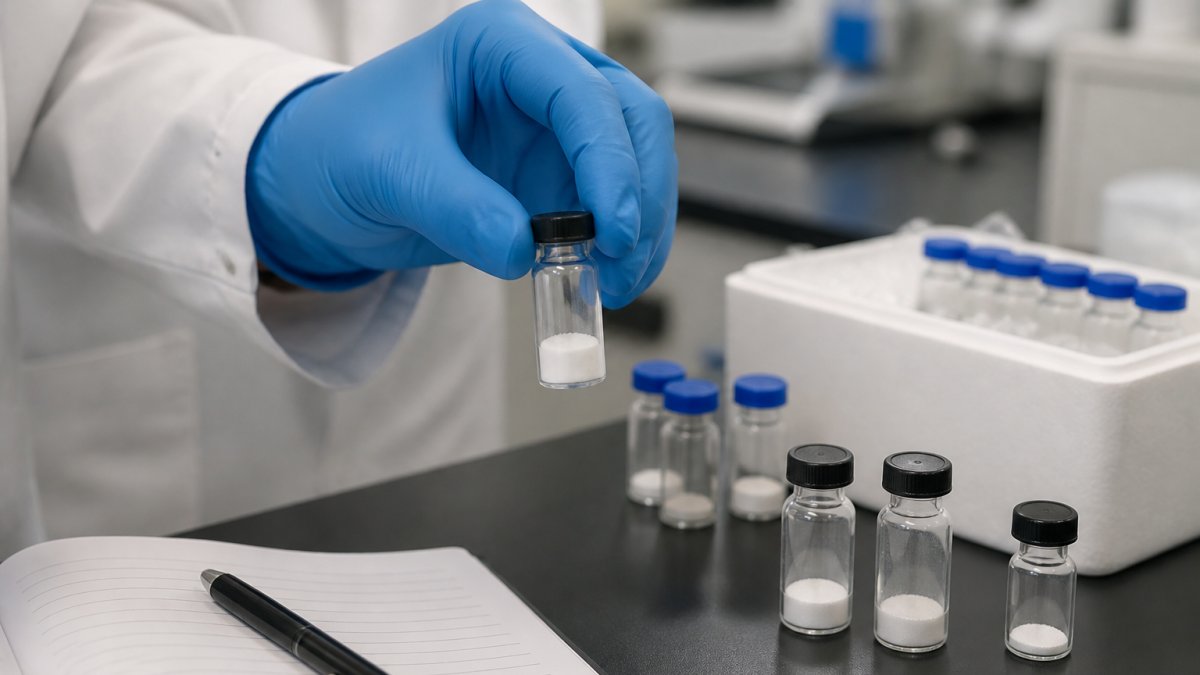
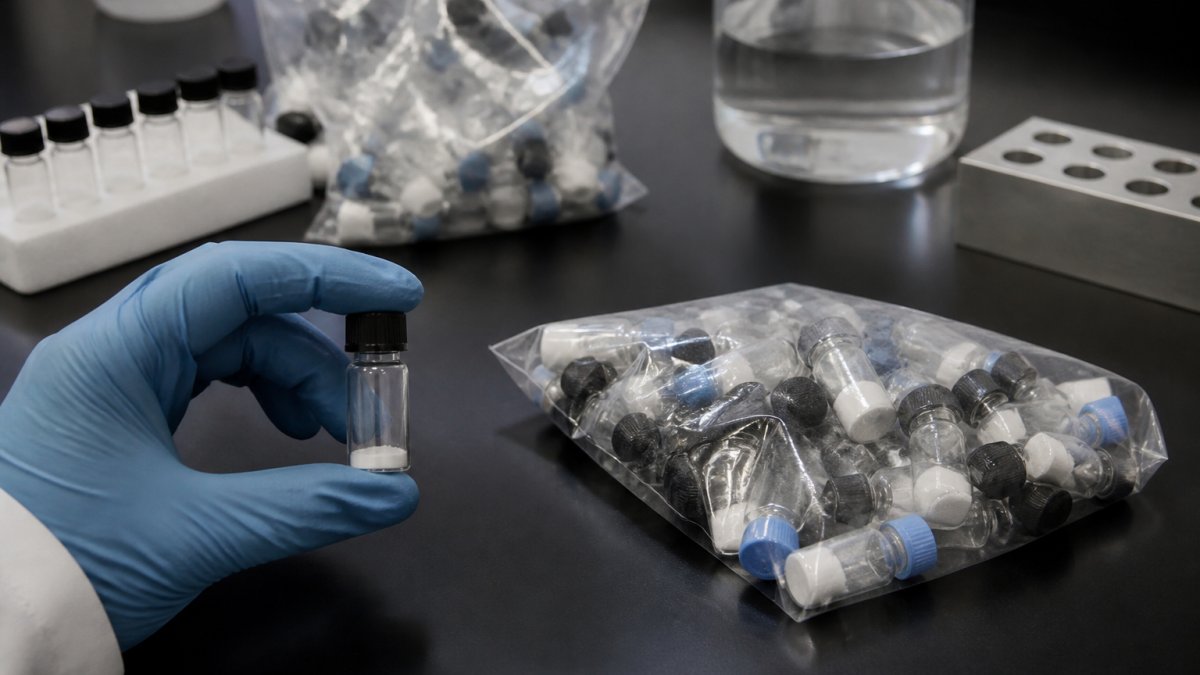
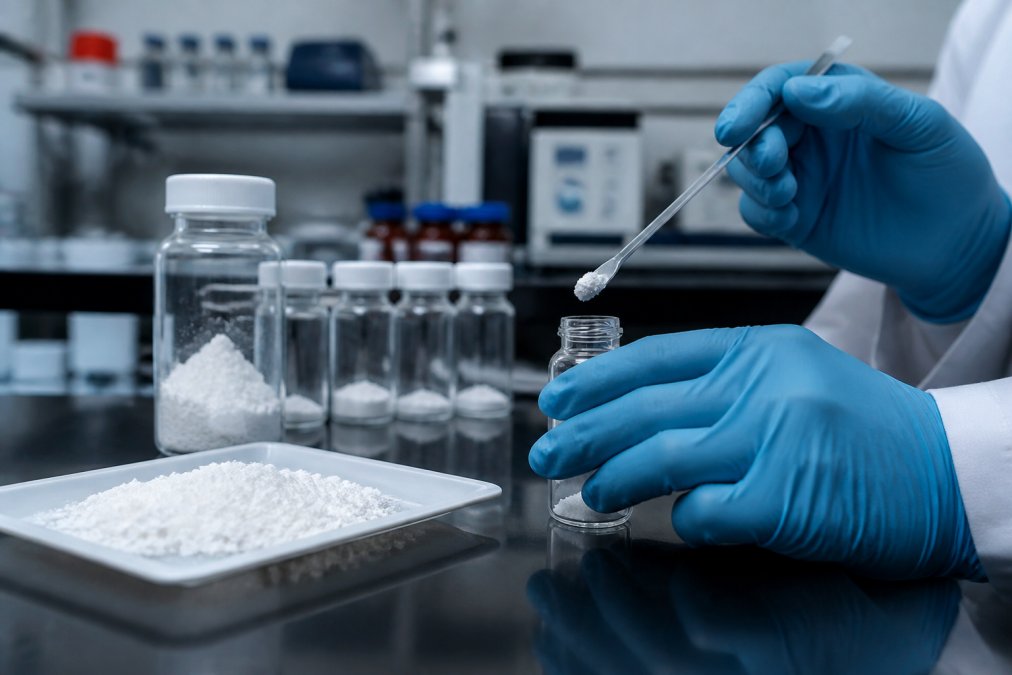
Research grade peptides are synthetic compounds manufactured and verified specifically for laboratory investigation, not for human use. That single distinction, intended use, drives every difference in testing, documentation, and legal standing that follows.
Here is the distinction that decides your data:
| Attribute | Research Grade | Pharmaceutical Grade |
|---|---|---|
| Intended use | Laboratory research only | Human administration |
| Oversight | Supplier quality systems | FDA-approved pathway |
| Documentation | Certificate of Analysis per lot | Full regulatory dossier |
| Purity specification | Typically 95%+ by HPLC | Tightened to pharmacopeial limits |
| Sterility testing | Not required | Required |
| Legal status for human use | Not approved | Approved where licensed |
Research Grade vs. Pharmaceutical Grade
A common mistake is treating "research grade" as a marketing tier above "pharmaceutical grade." It is not a tier at all, it is a different category with a different purpose. Pharmaceutical-grade material carries an approval that research-grade material was never designed to have, and research-grade material carries a flexibility that approved drugs cannot offer a discovery lab.
Why the Distinction Decides Your Data
If your methods section states that you used a research-grade compound, reviewers will expect characterization data that supports that claim. Purity, identity, and lot traceability all become part of your defensible record. When those records are missing, the finding itself becomes contestable, regardless of how carefully the assay was run.
Peptide Purity Standards That Hold Up in Review
Peptide purity standards are the analytical thresholds a compound must meet before it is released for research use, and they are only meaningful when the method behind them is disclosed. A purity figure without a method is an assertion, not evidence.
- Purity below specification suggests incomplete synthesis or failed purification
- A mass shift indicates a sequence error or a modified product
- Residual solvents and counterion content affect how the compound behaves in solution
- Endotoxins matter for cell-based work even when sterility is not claimed
Reading HPLC and Mass Spectrometry Results
An HPLC trace should show a main peak with clearly resolved shoulders and a stated integration method. A mass spectrum should show a single dominant ion at the expected mass, with the calculation shown. When a supplier reports purity without the chromatogram, you have a number you cannot audit.
Third-Party Peptide Verification: What a Real COA Shows
Third-party peptide verification means an independent laboratory, with no commercial stake in the sale, performed the analysis and signed the report. An in-house result from the party selling you the compound is a claim, not verification.
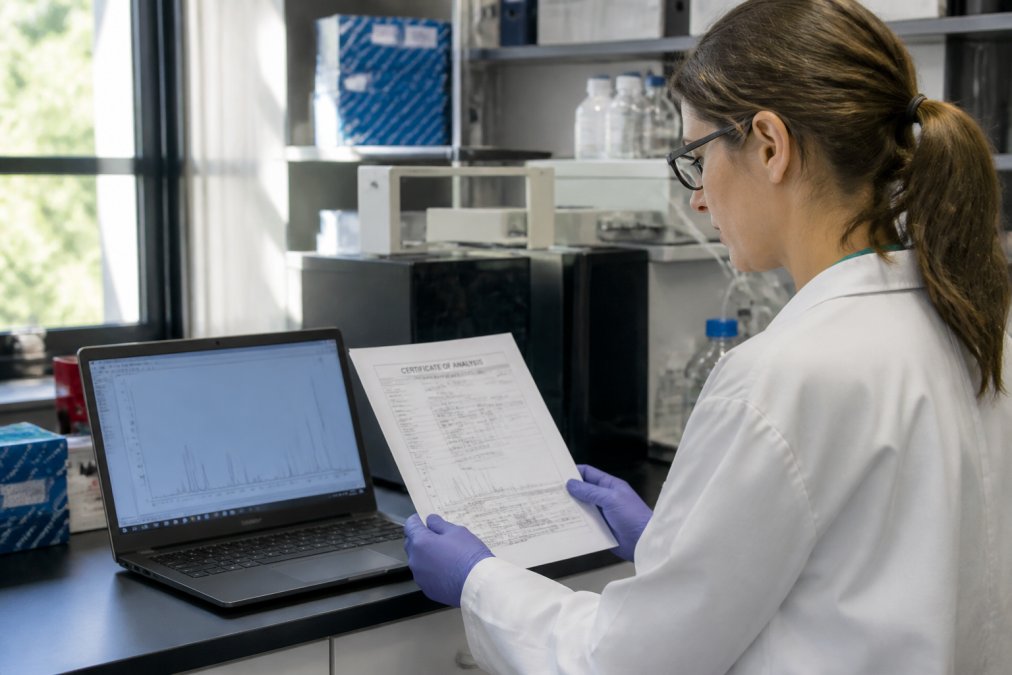
The Anatomy of a Certificate of Analysis
A defensible COA is a structured analytical report, and every field exists to answer a specific question. Read it in this order:
- Product name and sequence, the exact peptide, including modifications such as acetylation, amidation, or a non-natural residue. A generic name like "BPC-157" without a stated sequence is a red flag.
- Lot or batch number, the identifier that ties the report to the physical vial. No lot number means the document describes nothing in particular.
- Manufacturing or release date and retest date, establishes the age of the material and the supplier's stability window.
- Analytical method, the technique used (typically reverse-phase HPLC for purity, and either ESI or MALDI mass spectrometry for identity). A purity number with no method is an assertion.
- Specification and result, the acceptance criterion and the measured value side by side. "98.2% (spec: ≥95%)" is auditable; "high purity" is not.
- Instrument conditions, column type, mobile phase, gradient, and detection wavelength. This lets a reviewer judge whether the method could resolve your peptide from its impurities.
- Analyst signature, date, and lab identity, the accountability chain. An unsigned report has no author.
How to Read the HPLC Trace
An HPLC chromatogram is a plot of detector response against retention time. What matters is not the headline percentage but the shape of the trace:
- A single, well-resolved main peak with a flat baseline is the expected pattern for a clean lot.
- Shoulders on the main peak, or extra peaks eluting close to it, indicate related impurities the integration may or may not have captured.
- A stated integration method matters. If the supplier reports 98% but the trace shows an unintegrated shoulder, the number is not reproducible.
- The retention time should be consistent with the stated method and column. An unexplained shift suggests a different method was run than the one reported.
How to Read the Mass Spectrum
Mass spectrometry answers a different question than HPLC. HPLC tells you how much of the material is your peptide; mass spectrometry tells you whether that peptide is the sequence you ordered.
- The observed mass should match the calculated monoisotopic or average mass for the stated sequence, and the calculation should be shown.
- A single dominant ion at the expected mass is the expected result. Multiple unexplained ions suggest a mixture or a sequence error.
- A mass shift of roughly the weight of a single amino acid residue points to a deletion or substitution during synthesis.
- Adducts (sodium, potassium, or solvent adducts) are normal and should be labeled as such, not hidden.
Lot-Specific vs. Generic Documentation
How to Verify Peptide Quality Before You Run an Assay
Verification is a sequence of checks, not a single glance at a document. Run them in order, and record what you find.
- Confirm the lot number on the vial matches the lot number on the COA
- Check that the COA is issued by a laboratory independent of the supplier
- Verify the analytical method is stated, not just the result
- Confirm the reported purity meets your study's specification
- Check mass spectrometry data against the expected molecular weight for the stated sequence
- Record the storage conditions the supplier specifies and confirm they were maintained in transit
- Retain the COA with your lab records for the life of the study
Stability, Storage, and the Degradation Risk Nobody Tests For
Chemical stability is where research-grade materials diverge most sharply in practice, and it is the variable suppliers disclose least. A peptide that arrives at specification can fall out of specification during storage, and nothing on the COA tells you the rate at which that happens.
- Store lyophilized material cold and dry, per the supplier's specification
- Aliquot before freezing to avoid repeated freeze-thaw cycles
- Reconstitute with the solvent the supplier specifies for that sequence
- Record reconstitution dates and use material within a defined window
- Inspect for discoloration or incomplete dissolution before use
Legal and Liability Realities for Research Labs
Regulatory oversight of research peptides is real, and it operates differently than most buyers assume. Research-grade materials are not approved therapeutic agents, and labeling them as such creates exposure that falls on the purchaser as much as the supplier.
Research Chemical vs. Prescription Drug: The Legal Line
The distinction that matters legally is not purity or packaging. It is intended use and the pathway the product was cleared under.
- A prescription drug has been reviewed under an FDA approval pathway, carries an approved label with indications, dosing, and warnings, and may only be dispensed pursuant to a valid prescription. Its manufacturer bears ongoing obligations for labeling, adverse event reporting, and post-market surveillance.
- A research chemical has not been approved for any human use. It is sold for laboratory investigation, and the seller's labeling typically states that explicitly. That label is the legal basis on which the product is distributed.
Where Liability Actually Lands
For institutional purchasers, the exposure is layered:
- Procurement rules. Many institutions require documentation of intended use, supplier qualification, and lot traceability before a purchase order is issued. A casual supplier relationship will not satisfy those requirements.
- Hazardous material handling. Research peptides may fall under institutional chemical hygiene plans depending on the compound and quantity. Handling, storage, and disposal obligations follow the material, not the label.
- Record retention. Grant-funded work and studies intended for publication carry retention requirements. A COA that cannot be tied to a physical lot is not a record; it is a receipt.
- Export and shipping rules. Some peptides are subject to import or export controls depending on schedule and destination. A supplier that does not ask about end use is not screening for this.
Adverse Event Reporting: The Pharmacovigilance Gap
This is the part of the research chemical model that gets the least attention. Approved drugs operate inside a pharmacovigilance system: manufacturers collect adverse event reports, submit them to the FDA, and the agency can require labeling changes, boxed warnings, or withdrawal. That system exists because someone is legally responsible for tracking what happens after the product reaches a user.
Frequently Asked Questions
What are the differences between research-grade peptides and pharmaceutical-grade peptides?
Research-grade peptides are manufactured and tested for laboratory use, with purity confirmed through methods like HPLC and mass spectrometry. Pharmaceutical-grade peptides are produced under FDA current Good Manufacturing Practice (cGMP) requirements for human therapeutic use, which includes sterility testing, endotoxin screening, and clinical trial validation. Research-grade materials are not FDA-approved for human consumption, and the documentation that accompanies them reflects bench testing rather than clinical manufacturing standards.
Why is third-party analytical documentation critical for research peptides?
A Certificate of Analysis from an independent lab confirms the peptide sequence, molecular weight, and purity percentage of the specific lot you received. Without third-party verification, you cannot confirm whether a vial contains the correct compound, the right concentration, or contaminants like residual solvents and endotoxins. Lot-specific documentation ties the test results directly to your batch, so your experimental results are defensible if they are scrutinized during peer review or internal quality assurance.
How does peptide purity affect experimental reproducibility?
Impurities in a peptide sample can bind to receptors, interfere with assays, or introduce variables that change your results. If one lot is 95% pure and the next is 85%, the biological response in your model system can shift without any change to your protocol. Maintaining consistent peptide purity standards across lots, verified through batch testing, keeps your data reproducible and reduces the risk of false positives or inconsistent dose-response curves in metabolic studies.
What risks are associated with using non-verified peptide materials?
Non-verified peptides may contain incorrect sequences, truncated fragments, residual chemical synthesis byproducts, or bacterial endotoxins. These contaminants can cause adverse reactions in cell cultures, skew assay results, or damage sensitive instrumentation. Without a Certificate of Analysis and third-party verification, there is no chain of custody showing how the compound was synthesized, purified, or stored, which introduces liability if your research is published or audited.
Choosing peptide materials on price alone is the fastest way to end up with data you cannot defend. Bluegrass Research supplies research-grade peptides with lot-specific COAs, independent third-party analytical testing, discreet shipping with no external branding, and documentation built for labs that expect their results to be scrutinized. Get started with Bluegrass Research and give your next study a record that holds up.