 ultimate-guide
Scientific Peptides: Purity, Storage & Sourcing Guide
Table of Contents
- Scientific Peptides: What Separates Research-Grade from Consumer Hype
- Peptide Purity Verification: Reading COAs, HPLC, and Mass Spectrometry Data
- Pharmacokinetics and Bioavailability: Why Molecular Structure Affects Research Outcomes
- Research-Grade Peptide Storage: Temperature, Light, and Stability Protocols
- How to Evaluate Peptide Suppliers: A Framework for Laboratory Procurement
- The Regulatory Landscape: What Researchers Need to Know About Unregulated Compounds
- Conclusion: Building a Verified Supply Chain for Scientific Peptides
- Frequently Asked Questions
Last Updated: October 4, 2026
Scientific Peptides: What Separates Research-Grade from Consumer Hype
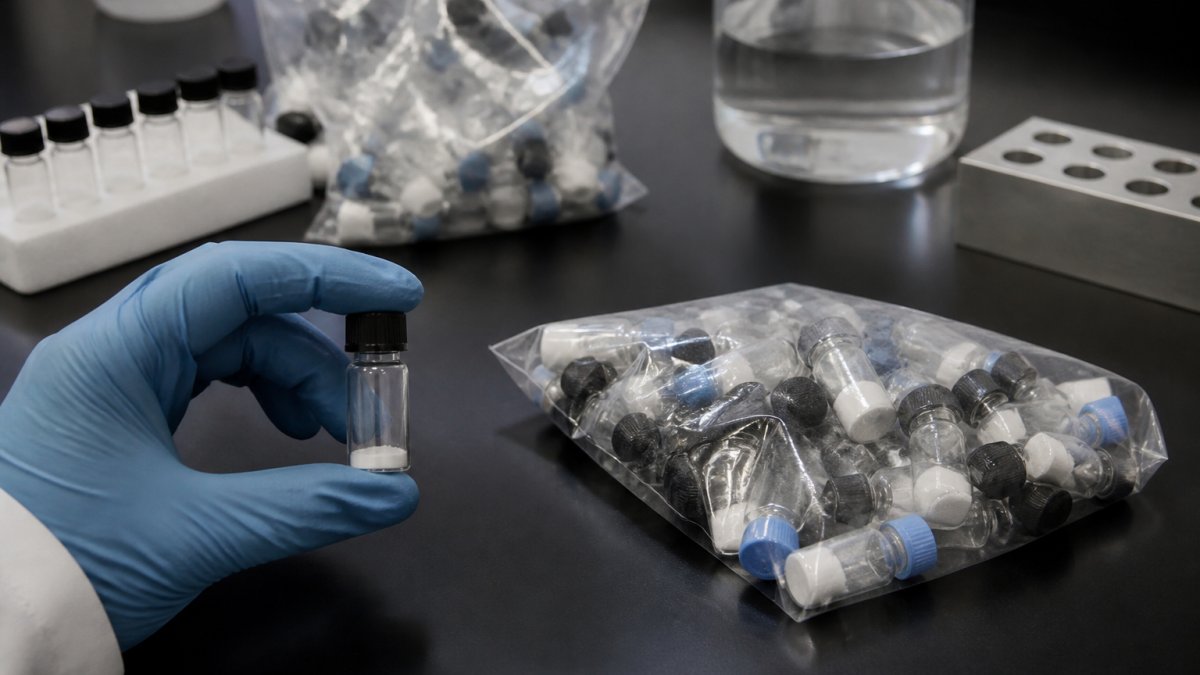
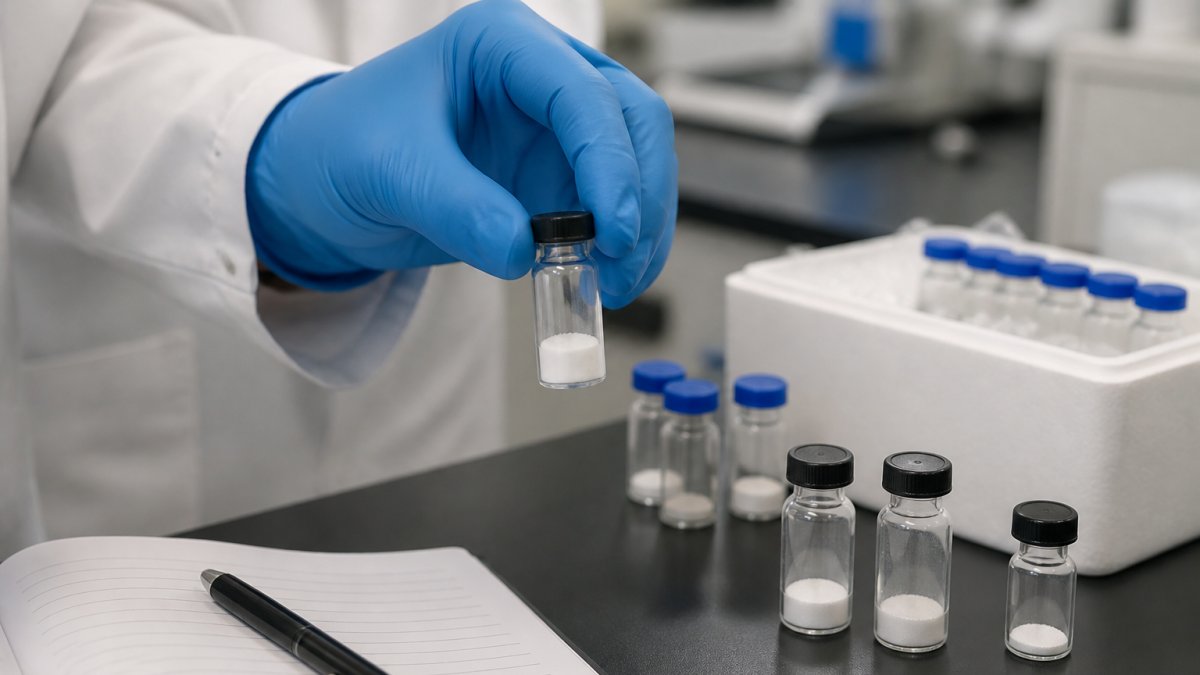
Scientific peptides are short chains of amino acids linked by peptide bonds, synthesized for laboratory investigation of cell signaling, protein synthesis, and biological activity. Bluegrass Research supplies academic and biotech laboratories that need lot-specific documentation, not marketing claims.
That gap decides whether your results hold up. A peptide is only as good as its chain of evidence: synthesis records, analytical testing, and handling history from production to bench.
Below, we break down what separates legitimate scientific peptides from unregulated compounds sold on wellness trends, and how to verify purity, storage, and sourcing before an assay runs.
FDA guidance on compounded and unapproved drug products
Amino Acid Chains and Biological Activity
Biological activity is the measurable effect a peptide has on a living system, and it depends almost entirely on the amino acid sequence.
Sequence determines three-dimensional shape, and shape determines what the molecule binds to, which is why one compound regulates metabolic function and its near-identical analog does not.
Two vials labeled with the same peptide name can behave differently if sequence, folding, or purity differs. Small structural variations produce large differences in biological activity.
Peptide Purity Verification: Reading COAs, HPLC, and Mass Spectrometry Data
Peptide purity verification starts with the certificate of analysis, or COA, a document reporting analytical results for a specific lot, including the method, instrument, and measured purity value.
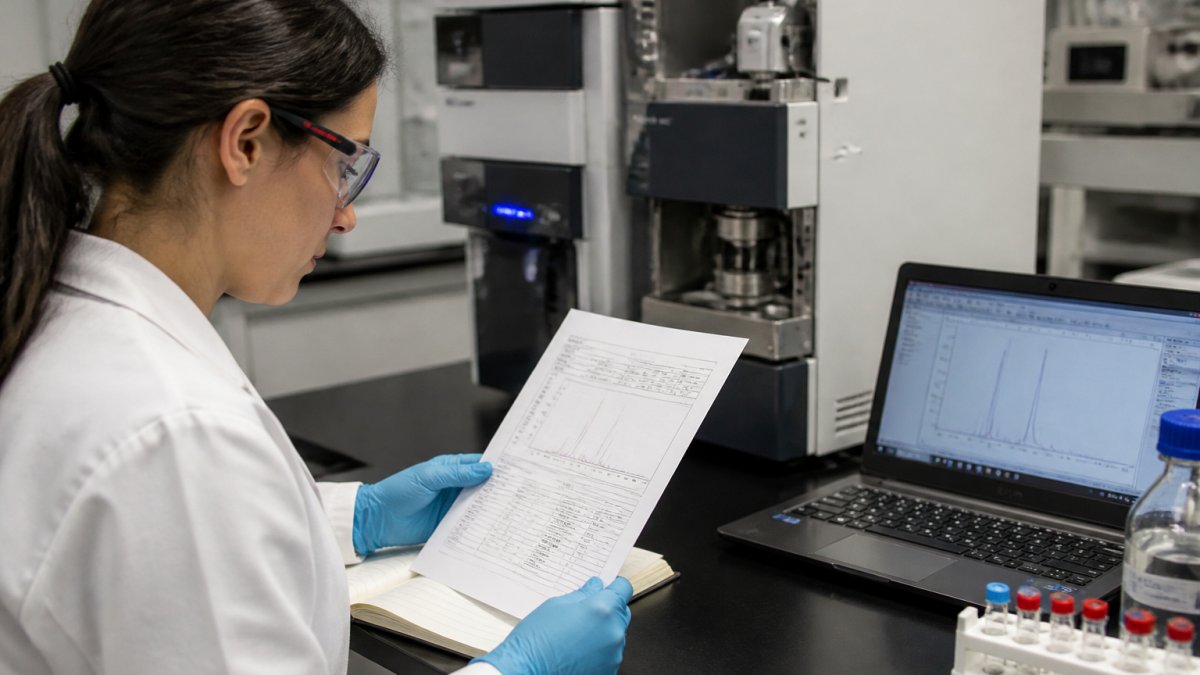
The two workhorses are HPLC analysis (high-performance liquid chromatography, which separates the peptide from impurities and reports a purity percentage) and mass spectrometry (which confirms the molecular weight matches the intended amino acid sequence).
A generic certificate that lists a purity figure with no lot number, method, or instrument is not verification. It is a marketing document.
Lot-Specific Documentation vs. Generic Certificates
Lot-specific documentation ties every analytical result to the exact batch you receive. Generic certificates apply to nothing in particular.
When you order, check three things: the COA lot number matches the vial label, the testing date is recent, and the report names the third-party laboratory. If any are missing, you cannot defend the material in a publication or regulatory review.
Pharmacokinetics and Bioavailability: Why Molecular Structure Affects Research Outcomes
Pharmacokinetics describes what a body does to a compound: absorption, distribution, metabolism, and excretion (ADME). Bioavailability is the fraction of an administered dose that reaches systemic circulation in an active form. For peptides, both are governed almost entirely by molecular structure, the difference between a clean in-vitro curve and a failed in-vivo study usually traces back here.
Why Peptides Are Fragile in a Living System
A peptide is a chain of amino acids held together by peptide bonds, and the body is built to break those bonds. Proteases in the stomach, gut wall, bloodstream, and liver cleave peptides at specific residues, giving most unmodified peptides a circulatory half-life of minutes, not hours. A compound that looks potent in a dish may never reach its target intact.
Three structural features drive how fast a peptide is cleared:
- Chain length and sequence, short chains are cleared quickly by the kidneys; longer chains are more exposed to proteolytic cleavage.
- Terminal residues, the N- and C-termini are common attack points for exopeptidases. Modifying them (for example, by acetylation or amidation) is a standard way to slow degradation.
- Backbone bonds, replacing a peptide bond with a non-native linkage can resist enzymatic attack, which is why many research peptides use modified backbones.
Route of Administration Changes Everything
The same peptide can behave like two different compounds depending on delivery route, the most misunderstood point in the current wellness conversation.
- Oral delivery, the harshest route. Stomach acid and gut proteases degrade most peptides before absorption, and survivors face first-pass liver metabolism. Oral bioavailability for unmodified peptides is typically very low, so consumer oral products rarely match injectable research exposure.
- Subcutaneous and intramuscular injection, bypass the gut and deliver the peptide into tissue or circulation. Absorption is slower than intravenous but far more complete, and this is the route used in most clinical peptide work.
- Intravenous, full and immediate bioavailability, but the shortest duration of action and the least practical for repeated dosing.
What This Means for Study Design
In-vitro results do not automatically translate to in-vivo efficacy; a peptide that performs beautifully in a dish may be destroyed within minutes in circulation. Before designing an in-vivo study, researchers typically ask three questions:
- What is the expected half-life of this sequence in the relevant matrix (serum, plasma, tissue homogenate)?
- Which route delivers the peptide to the target tissue at a measurable concentration?
- Does the study need a stabilized analog, a delivery vehicle, or a dosing schedule that accounts for rapid clearance?
Verifying Human Data Before You Trust a Claim
A peptide with strong animal or in-vitro data is not the same as one with human data. Before citing a compound as evidence-backed, check ClinicalTrials.gov for registered human trials, searching by compound name, intervention, or condition and filtering by phase and recruitment status. Only animal studies, cell-culture work, or no registered trials mean the human evidence base is thin, regardless of marketing.
ClinicalTrials.gov, search registered studies by intervention or compound
Research-Grade Peptide Storage: Temperature, Light, and Stability Protocols
Research-grade peptide storage controls three variables: temperature, light, and moisture. Get any wrong and the compound degrades before use.
Most lyophilized peptides tolerate short-term refrigeration and longer-term freezing. Once reconstituted, stability drops sharply, so aliquot before freezing to avoid repeated freeze-thaw cycles, a leading cause of degradation.
- Store lyophilized powder frozen for long-term stability
- Protect from light; many peptides are photosensitive
- Aliquot reconstituted material to avoid repeated freeze-thaw
How to Evaluate Peptide Suppliers: A Framework for Laboratory Procurement
Evaluating peptide suppliers comes down to documentation, not price. A supplier that cannot produce lot-specific third-party testing is not a research supplier, whatever the catalog says.
Here is the framework we would use to screen any vendor:
| Criterion | What to Check | Why It Matters |
|---|---|---|
| Lot-specific COA | Matches vial label, dated, names third-party lab | Confirms the material you hold was tested |
| Analytical methods | HPLC and mass spectrometry reported | Confirms purity and correct sequence |
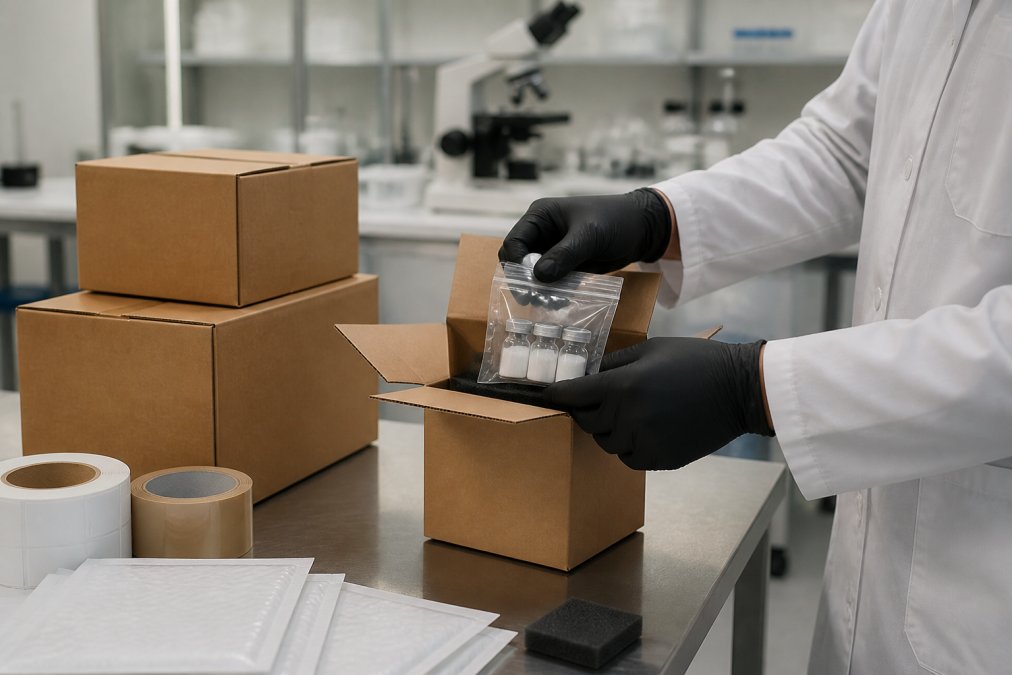
| Shipping controls | Temperature-controlled, discreet packaging | Prevents degradation in transit |
| Documentation trail | Records available on request | Supports publication and compliance review |
Bluegrass Research builds procurement around exactly this: lot-specific COAs, third-party analytical testing, and discreet US shipping with no external branding, to support institutional purchasing and compliance checks.
Red Flags in Supplier Documentation
Watch for certificates with no lot number, purity claims without a stated method, and testing attributed to an unnamed laboratory. Each one breaks the chain of evidence.
Another signal: a supplier who cannot tell you how the material was shipped or whether temperature was controlled. If they cannot describe the handling, they probably did not track it.
The Regulatory Landscape: What Researchers Need to Know About Unregulated Compounds
Many peptides sold online sit outside approved pathways, and the gap between a research chemical and an approved therapeutic is where most legal and scientific risk lives. The distinction determines what you can legally do with the material, how you must label it, and whether your results survive review.
The Categories That Actually Matter
Peptide products generally fall into one of a few buckets, and each carries different rules:
- FDA-approved drugs, peptides that have completed the approval process for a specific indication. These have defined labeling, dosing, and manufacturing standards.
- Compounded preparations, drugs mixed by a state-licensed compounding pharmacy under a prescription. The FDA has issued guidance on compounded and unapproved drug products and has warned about peptides that do not qualify for compounding.
- Research chemicals / research-grade materials, compounds sold for laboratory investigation only, not for human consumption. This is the category legitimate research suppliers operate in, and it depends on the material being labeled and used strictly for research.
What the FDA Has Actually Said
The agency has repeatedly warned that unapproved peptide products marketed for human use present safety concerns, and it maintains a category of compounds it considers unsafe for consumer marketing. Warning letters have targeted marketers making drug-like claims (treating disease, altering body structure) about unapproved products. The practical read: if a supplier markets a peptide for human consumption, it is not operating in the research channel.
FDA warning letters on unapproved peptide marketing
The Research-Use-Only Boundary
Research-grade material is intended for laboratory investigation, not human consumption. Labeling it otherwise, or using it in a way that implies human use, creates legal exposure for the researcher and the supplier. That is why legitimate research suppliers ship with research-use-only labeling, lot-specific documentation, and no consumer-facing health claims.
A Pre-Order Regulatory Checklist
Before you order any peptide, confirm the following:
- Regulatory status, is the compound approved, compounded, or research-only? Status varies by compound and by intended use.
- Intended-use documentation, can you document that your use is research, not human consumption?
- Supplier positioning, does the supplier market for research or for human use? The two are mutually exclusive.
- Labeling, does the material arrive with research-use-only labeling and a lot-specific COA?
- Enforcement history, has the compound or supplier been the subject of FDA warning letters?
Why This Matters for Publication and Compliance
Reviewers and compliance officers look not just at your results but at the chain of evidence behind the material. A peptide with no verifiable regulatory status, no lot-specific testing, and no research-use labeling is a weak link in any study, however clean the data. Treat regulatory status as the first gate in procurement, not an afterthought.
Conclusion: Building a Verified Supply Chain for Scientific Peptides
Consumer wellness trends have flooded the market with unregulated compounds, while legitimate research demands verifiable purity and a documentation trail that survives scrutiny. The two cannot be reconciled by price alone.
That is the gap Bluegrass Research exists to close.
If your next trial phase depends on material that holds up to review, start with a supplier that documents every lot.
Shop Now
Frequently Asked Questions
What criteria define research-grade scientific peptides?
Research-grade scientific peptides typically require purity levels of 95% or higher, verified through third-party analytical testing such as HPLC and mass spectrometry. Documentation should include lot-specific certificates of analysis that confirm amino acid sequence, molecular weight, and absence of contaminants. Unlike pharmaceutical-grade compounds, research-grade materials are not intended for human use and lack FDA approval, but they must meet laboratory standards for experimental reproducibility.
How do third-party analytical documents verify peptide purity?
Third-party labs use HPLC analysis to separate peptide chains by retention time, revealing purity percentages and impurity profiles. Mass spectrometry confirms molecular weight and amino acid sequence integrity. A legitimate COA includes the lot number, test date, method used, and a signature from an independent lab. When evaluating peptide purity verification, check that the COA matches your specific lot and includes raw data, not just a pass/fail summary.
How should research-grade peptides be stored to maintain integrity?
Lyophilized peptides remain stable for months when stored at -20°C. Protect compounds from light and moisture. Aliquot before freezing to avoid repeated freeze-thaw cycles, which degrade peptide bonds. Research-grade peptide storage also requires desiccants in sealed containers and temperature monitoring during transit. Request shipping documentation that confirms cold-chain integrity from supplier to lab.
What are the risks of sourcing peptides from non-verified suppliers?
Non-verified suppliers may provide compounds with incorrect amino acid sequences, low purity, or bacterial contamination. Without lot-specific COAs, you cannot confirm biological activity or reproduce experimental results. Unregulated compounds may also contain residual solvents or heavy metals not disclosed on generic certificates. For pharmacology research involving metabolic peptides, undocumented sourcing creates compliance risk and invalidates data. Always require third-party testing records before purchase.