 ultimate-guide
Research Peptide Documentation Requirements Guide
Table of Contents
- What Research Peptide Documentation Requirements Actually Include
- Peptide Certificate of Analysis Requirements: What a Valid COA Must Show
- The Research Peptide Quality Checklist for Vetting Suppliers
- Peptide Storage and Handling Protocols That Keep Documentation Valid
- Building SOPs and a Documentation Chain of Custody
- Digital Security and Regulatory Standards for Lab Records
- Frequently Asked Questions
Last Updated: September 16, 2026
What Research Peptide Documentation Requirements Actually Include
Research peptide documentation requirements are the verified records that prove a compound's identity, purity, and handling history from synthesis through delivery. At Bluegrass Research, we treat that paperwork as the product, not an afterthought: without it, a vial is just a vial. The core file should contain a lot-specific Certificate of Analysis, a batch or lot number traceable to the analytical run, and storage records covering the shipment's full journey.
The Core Documents Every Order Should Arrive With
A complete order file typically includes four items:
- A lot-specific Certificate of Analysis tied to the exact batch shipped
- The analytical method summary behind each reported value
- A chain-of-custody record covering packaging and transit
- Storage and handling instructions specific to the compound
If any one of those is missing or generic, treat the shipment as unverified until the supplier resolves it.
Peptide Certificate of Analysis Requirements: What a Valid COA Must Show
A valid peptide certificate of analysis requirements list is short but strict: lot number, test date, analytical methods used, measured values, and the identity of the testing laboratory. Anything less leaves you unable to connect the paper to the sample. The practical problem is that most researchers can confirm those fields are present without knowing whether the values behind them are meaningful.
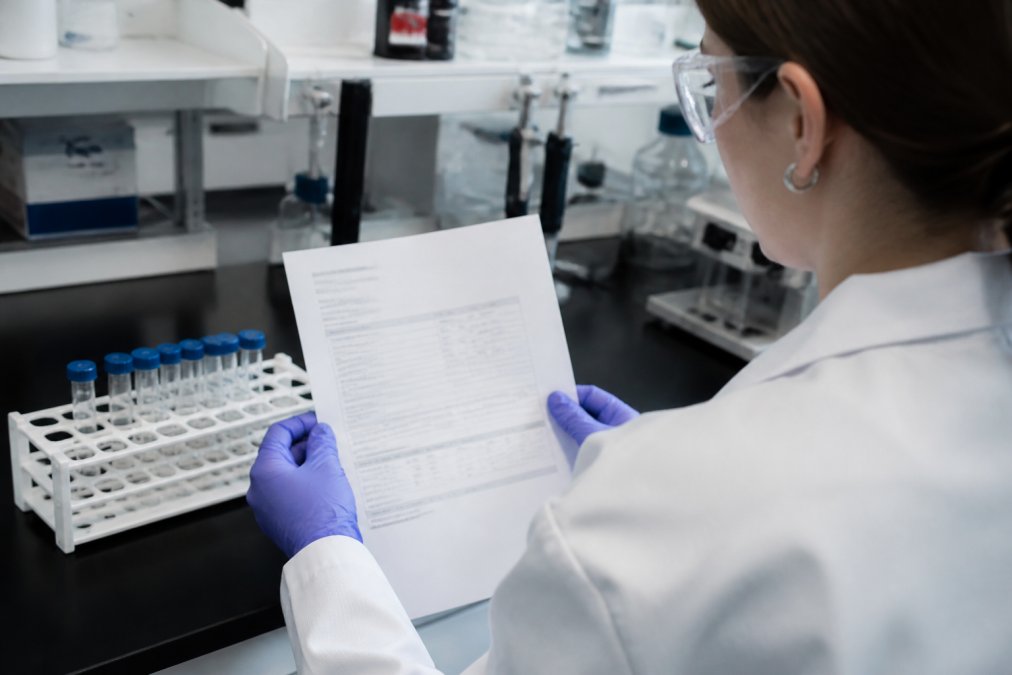
A Field-by-Field Reading of a Certificate of Analysis
Most COAs follow a similar layout. Read them in this order:
- Product name and lot number. The lot number is the anchor. It should appear on the COA, the vial label, and the packing slip. If any of the three disagree, stop and resolve before use.
- Testing laboratory identity. A named lab with a verifiable address or accreditation reference is worth more than an in-house "quality control" stamp. Third-party testing removes the conflict of interest that comes with a supplier grading its own material.
- Test date and report date. These are not the same thing. A test date tells you when the sample was run; a report date tells you when the paperwork was issued. A wide gap between them is worth a question.
- Analytical methods. Look for the specific technique, not just the acronym. "HPLC" alone is thin; "RP-HPLC, C18 column, UV detection at 214 nm" tells you what was actually measured and how.
- Measured values with units. Purity should be reported as a percentage with the integration method noted. Mass should be reported in the units the instrument produced, typically daltons or m/z, not rounded into a vague figure.
- Acceptance criteria or specification. A COA that reports a number without stating the pass threshold leaves you to guess whether the result was good. A specification column or footnote closes that gap.
Reading HPLC Purity and LC-MS Identity Data
High-performance liquid chromatography (HPLC) separates the components of a sample and reports purity as a percentage of the main peak. Liquid chromatography-mass spectrometry (LC-MS) confirms identity by measuring molecular weight against the expected value. Purity tells you how clean the sample is; identity tells you what it actually is. You need both, and a COA that reports only one is incomplete.
Batch Traceability, Lot Numbers, and Molecular Weight Validation
Lot number tracking is what makes every other document meaningful. A lot number links the vial to a specific synthesis run, a specific analytical result, and a specific shipping record. Molecular weight validation sits inside that chain: if the reported mass does not match the expected value for the compound, the identity confirmation fails regardless of how high the purity reads.
The Research Peptide Quality Checklist for Vetting Suppliers
Run this checklist before placing a first order, and again whenever a supplier changes its testing arrangements:
- COA is lot-specific, not a generic template reused across batches
- HPLC purity and LC-MS identity results both appear, with method details
- Testing laboratory is named and traceable
- Lot number on the COA matches the label on the vial
- Storage and handling instructions are compound-specific
- Reorder documentation matches the original batch record
Discrepancy Resolution: When the Paperwork Does Not Match the Sample
Discrepancies happen, and how a supplier handles them tells you more than the COA does. Document the mismatch, photograph the label and the document side by side, and request a written explanation with a replacement lot if needed. A supplier that stalls or hand-waves is telling you something about every future order.
Peptide Storage and Handling Protocols That Keep Documentation Valid
Documentation only stays valid if the physical handling matches what the paperwork claims. Storage temperature logs, desiccant control, and light protection all feed into whether a COA remains representative of the material months after delivery.
Temperature Logs and Chain of Custody
A chain of custody record should show who handled the shipment, when, and under what conditions. Temperature logs during transit and on-site storage create the paper trail that supports experimental reproducibility. Without them, a purity result from month one says nothing about the sample in month six.
Building SOPs and a Documentation Chain of Custody
Standard operating procedures turn good intentions into repeatable practice. A workable SOP template for peptide handling covers four areas: receipt and inspection, storage assignment, usage logging, and disposal. Each step should name who performs it and what gets recorded. The gap most labs run into is not knowing what a finished SOP should actually contain, so the structure below is written to be copied into a document and filled in.
A Fillable SOP Structure You Can Adopt Today
Each procedure below follows the same five-part pattern: purpose, scope, materials, step-by-step actions, and records generated. Keep the pattern consistent across every SOP so a new lab member learns one format instead of five.
1. Receipt and Inspection
- Purpose: Confirm the shipment matches its documentation before the material enters inventory.
- Scope: All incoming peptide shipments, regardless of size.
- Materials: Packing slip, COA, vial label, temperature indicator if included, camera or phone for photos.
- Steps: Photograph the sealed package before opening. Compare the lot number on the vial label to the lot number on the COA and packing slip. Record the arrival date, the condition of the packaging, and any temperature indicator reading. If any number disagrees, quarantine the vial and notify the supplier in writing before proceeding.
- Records generated: Receipt log entry, photographs, supplier correspondence if applicable.
2. Storage Assignment
- Purpose: Place each lot in a location that matches its stated storage conditions.
- Scope: All material that has passed receipt and inspection.
- Materials: Storage log, freezer or refrigerator thermometer, desiccant where required.
- Steps: Assign a storage location and record it against the lot number. Note the target temperature range from the supplier's handling instructions. Confirm the storage unit is within range at the time of placement. Record the placement date and the initials of the person storing the material.
- Records generated: Storage log entry, temperature reading at placement.
3. Usage Logging
- Purpose: Maintain a continuous record of who used which lot, when, and for what.
- Scope: Every withdrawal from storage, including partial use.
- Materials: Usage log, the experiment or protocol identifier.
- Steps: Record the date, lot number, amount removed, the researcher's initials, and the experiment the material was used in. Note any visible change in the material, such as discoloration or a change in texture, at the time of withdrawal.
- Records generated: Usage log entry linked to the experiment record.
4. Disposal
- Purpose: Document the end of a lot's lifecycle so the record is complete.
- Scope: Expired, degraded, or fully consumed material.
- Materials: Disposal log, applicable waste containers.
- Steps: Record the lot number, the reason for disposal, the date, and the method used. Note the final disposition, whether that is consumption in an experiment or physical disposal.
- Records generated: Disposal log entry, closing the chain of custody for that lot.
Turning the SOP Into a Chain of Custody
The four procedures above form a chain when they reference each other by lot number. Receipt creates the lot record. Storage assigns it a home. Usage ties it to experiments. Disposal closes it. If any link is missing, the chain has a break, and a break is exactly what an auditor or a skeptical reviewer will find first.
Digital Security and Regulatory Standards for Lab Records
Paper records get lost, coffee-stained, or quietly altered. Digital records solve those problems but introduce new ones: access control, version history, and backup integrity. Store COAs and logs in a system with role-based permissions and immutable timestamps, and keep an offline backup of critical batch records.
Frequently Asked Questions
What documentation should accompany high-quality research peptides?
Every order should arrive with a lot-specific Certificate of Analysis covering HPLC purity data, LC-MS identity confirmation, molecular weight validation, and the testing laboratory's name. You also want a batch or lot number that matches the vial label, plus storage and handling instructions. For research-use-only materials, the COA should state that designation explicitly. Keep these records with your sample handling logs so the documentation chain of custody stays intact from receipt through every experiment.
Why is third-party analytical documentation critical for peptide research?
In-house testing alone gives you a vendor's word, not independent verification. Third-party analytical testing means an outside lab ran the HPLC and LC-MS work and signed off on the results, so purity verification and identity confirmation rest on data you can defend. If your results are ever scrutinized during peer review or an internal audit, an independent COA is the difference between a documented material and an unverifiable claim.
How do you verify the purity and integrity of research-grade peptides?
Start with the COA: check that HPLC purity meets your study's threshold, that LC-MS identity confirmation matches the expected molecular weight, and that the lot number on the report matches the vial. Then confirm the material visually on arrival, log the storage temperature, and record everything in your research peptide quality checklist. If any figure looks off, request a fresh COA for that batch before using the compound.
What are the best practices for maintaining peptide research logs?
Log each vial by lot number the day it arrives, including receipt date, storage location, and temperature readings. Record every use with date, quantity drawn, and the experiment it supported. A documentation chain of custody means anyone reading your log can trace a compound from vendor to result without gaps. Digital logs work well if you back them up and control access, which also supports experimental reproducibility when a study is repeated months later.
Are there specific regulatory standards for peptide documentation in laboratory settings?
There is no single federal rule aimed only at research peptides, but documentation expectations come from several directions. Institutional review and safety committees set internal requirements, research-use-only labeling carries its own obligations, and if your work touches clinical studies, FDA good laboratory practice expectations apply to record keeping. The practical standard is a compliance framework that keeps batch traceability, stability testing records, and sample handling logs audit-ready at all times.
What should I do if the COA and the sample do not match?
Stop and quarantine the vial. Compare the lot number on the label against the COA, recheck the molecular weight validation figures, and photograph the discrepancy. Contact the supplier with the batch number and ask for a corrected or lot-specific COA. If the vendor cannot produce one, treat the material as unverified and do not use it in an experiment. Documenting the resolution, not just the problem, keeps your records defensible.