 ultimate-guide
Discreet Lab Chemical Shipping: A 2026 Guide
Table of Contents
- What Discreet Laboratory Chemical Supply Shipping Really Means
- Hazmat Shipping Rules Every Lab Buyer Should Know
- How to Verify Chemical Purity Certificates Before You Accept Delivery
- Bacteriostatic Water vs Sterile Water for Peptides: Shipping and Storage Implications
- Research Peptide Storage Protocols After Discreet Delivery
- Temperature Control, Tracking, and Packaging That Protects Compound Integrity
- Frequently Asked Questions
Last Updated: September 23, 2026
What Discreet Laboratory Chemical Supply Shipping Really Means
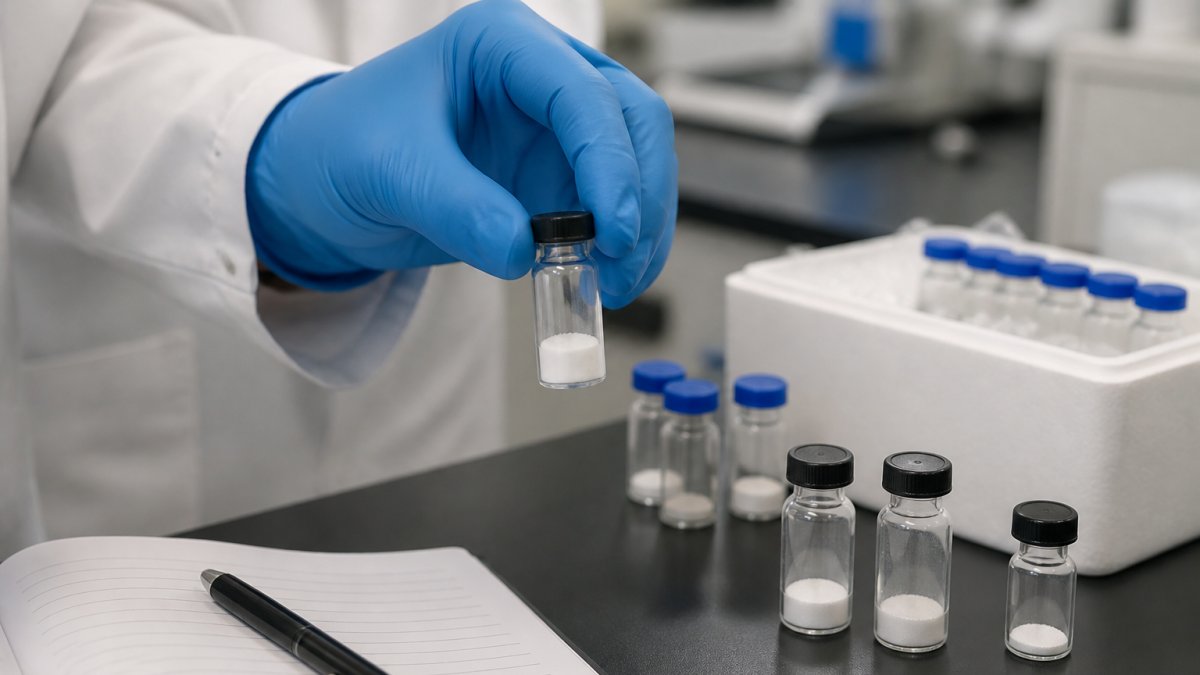
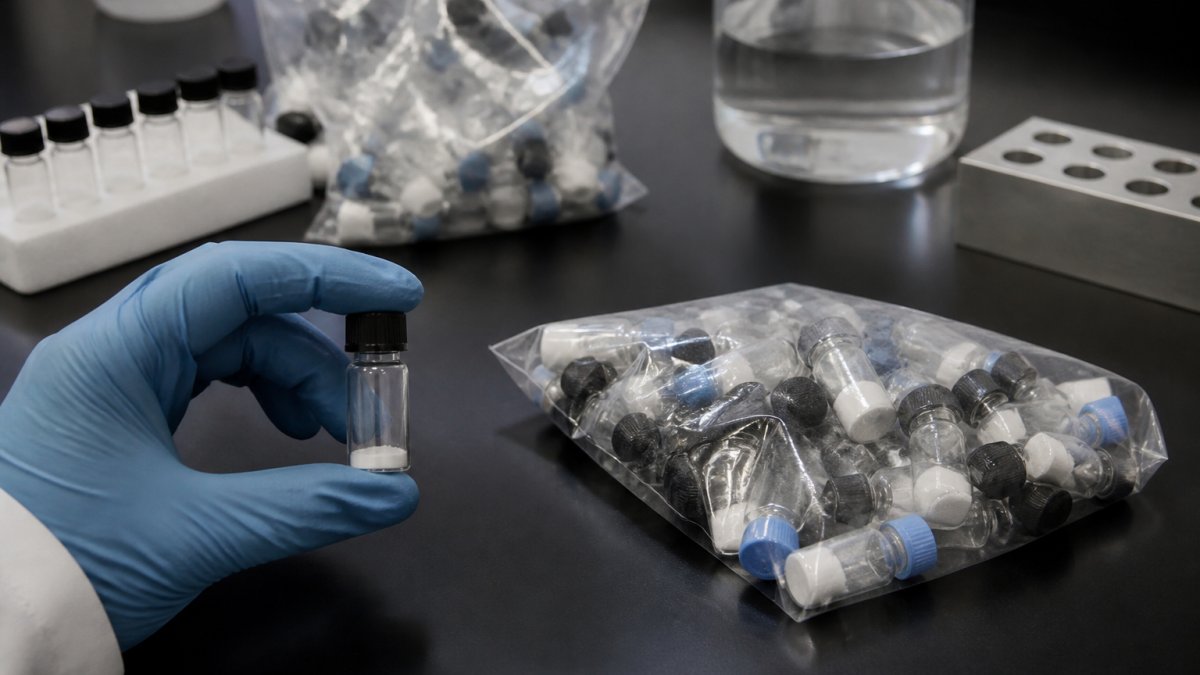
Discreet chemical shipping moves research-grade compounds and lab reagents in packaging with no external branding, no visible content labels, and no indication of what sits inside, so sensitive materials arrive without advertising their contents to the mailroom.
At Bluegrass Research, every order leaves in plain, unbranded packaging with lot-specific documentation enclosed inside.
A box stamped "research peptides" tells a carrier, a front-desk receiver, and anyone passing the loading dock exactly what your lab ordered. Discreet chemical shipping removes that signal entirely.
This guide covers what discreet shipping involves, how hazmat rules apply to lab buyers, how to verify purity certificates, and how storage and temperature control protect compound integrity.
Hazmat Shipping Rules Every Lab Buyer Should Know
Not every research chemical qualifies as a hazardous material, but many do, and transport rules come from federal regulators, not supplier preference.
The Pipeline and Hazardous Materials Safety Administration sets classification, packaging, and labeling requirements for dangerous goods moving through domestic carriers under the federal hazardous materials transportation law.
How Hazard Classes Actually Get Assigned
To judge whether a shipment was compliant, you need to know its class. The classes most common in lab supply are:
- Class 3 (flammable liquids), solvents such as ethanol, methanol, and acetone above their flashpoint thresholds
- Class 6.1 (toxic substances), many research-grade reference standards and analytical poisons
- Class 8 (corrosives), concentrated acids and bases, including some common buffer concentrates
- Class 9 (miscellaneous), dry ice, which is the class most relevant to cold-chain reagent shipments
Limited Quantity and Excepted Quantity Exceptions
Small volumes of many regulated chemicals move under reduced requirements. Limited quantity shipments allow smaller inner packagings inside a strong outer box with a limited-quantity mark instead of full hazard labels; excepted quantities permit very small amounts with minimal marking.
Step-by-Step Hazmat Compliance for Buyers
Buyers carry fewer obligations than shippers, but theirs are non-negotiable. The sequence that keeps a receiving lab clean:
- Confirm the supplier provides a safety data sheet before the order ships
- Verify the shipment's hazard classification matches the material ordered
- Check that inner packaging is intact and secondary containment is present
- Confirm the outer box carries whatever marking its shipping exception requires
- Log the receipt with date, lot number, and condition on arrival
- File the SDS and shipping papers with your chemical inventory records
- Store the material per the SDS storage requirements, not per habit
Training and the Human Side of Compliance
Federal rules place hazmat training obligations on employers whose staff handle or offer dangerous goods for transport, in a research setting, whoever signs for the delivery and moves the box into storage. Most institutions fold this into general lab safety training, but recognizing hazard markings, understanding segregation, and knowing when to refuse a shipment belong in your receiving SOP.
What Discretion Does Not Cover
Discretion protects your privacy from casual observers, not from regulatory inspection, carrier audits, or institutional compliance review. A supplier marketing "no labels, no questions" is describing a legal problem, not a feature. The right standard: plain on the outside, fully documented on the inside.
How to Verify Chemical Purity Certificates Before You Accept Delivery
A certificate of analysis is only as good as the lab that produced it. Verifying one takes about ten minutes and saves months of wasted work.
- Lot number on COA matches the vial
- Testing lab is independent of the supplier
- HPLC purity result is stated with method
- Mass spectrometry identity confirmation is included
- Certificate is dated and traceable to the analysis
Bacteriostatic Water vs Sterile Water for Peptides: Shipping and Storage Implications
The choice between bacteriostatic water and sterile water for peptides affects how you store and handle reconstituted material, and what shipping conditions make sense.
Storage protocols diverge too:
- Bacteriostatic water: store per label, typically room temperature, protect from light
- Sterile water: store per label, use promptly after opening
- Reconstituted peptide: refrigerate, follow the supplier's stability guidance
Research Peptide Storage Protocols After Discreet Delivery
Unboxing is when most storage errors happen. The packaging did its job; now the material needs a documented home.
A workable protocol looks like this:
- Inspect each vial for cracks, discoloration, or loose stoppers before logging
- Record lot number, receipt date, and condition in your chemical inventory
- Store lyophilized material per the supplier's stated storage requirements, typically frozen and protected from light
- Keep the COA filed with the inventory entry, not in a separate folder
- Reconstitute only what you need for the current phase of work
Temperature Control, Tracking, and Packaging That Protects Compound Integrity
Temperature-controlled shipping is where cheap suppliers cut corners, the first thing to interrogate before committing to a vendor.
The Cold-Chain Toolkit, Component by Component
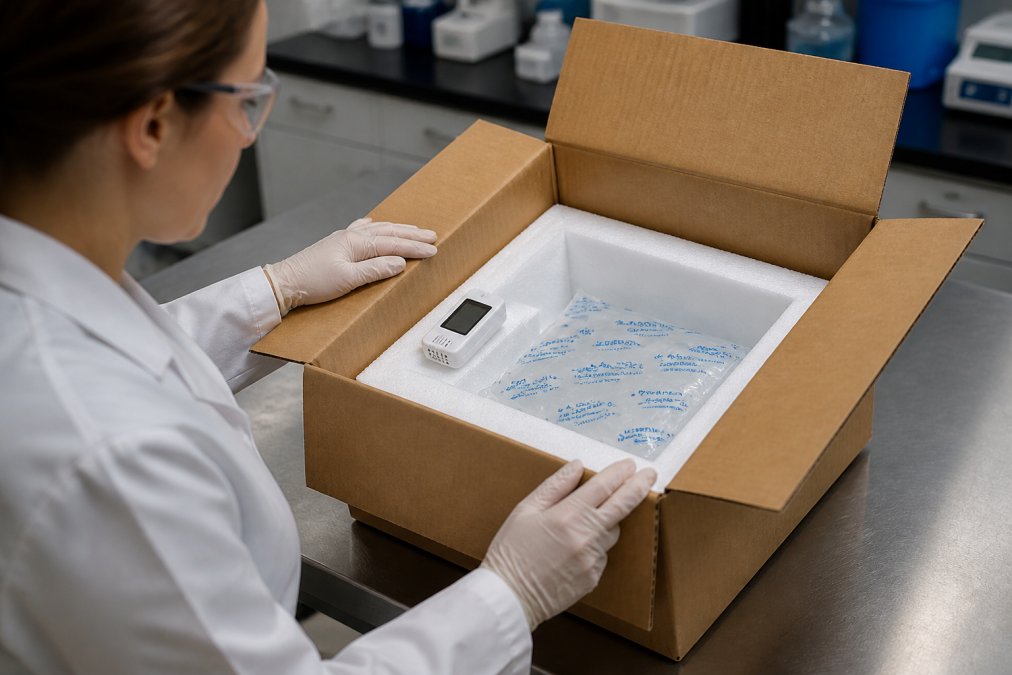
A properly built cold-chain shipment is a system, not an accessory. The key pieces:
- Phase-change materials, gel packs, eutectic plates, and dry ice each hold a different temperature band. Dry ice sits near -78°C and is itself a Class 9 hazardous material, which is why dry-ice shipments carry their own marking and ventilation requirements. Gel packs are tuned to 2-8°C or to ambient-hold ranges, and the wrong choice means the payload drifts out of spec even though the box felt cold on arrival.
- Insulation, expanded polystyrene is the workhorse for short transit; vacuum insulated panels hold temperature far longer and are the standard for multi-day or high-value shipments. The trade-off is cost and dimensional weight.
- Secondary containment, an absorbent pad and a sealed inner bag protect against a broken vial turning a temperature excursion into a contamination event.
- Temperature data loggers, single-use USB and Bluetooth loggers now cost little enough that most serious suppliers include one per shipment. The log, not the supplier's word, is what tells you whether the material was ever out of range.
What a Temperature Log Actually Tells You
A logger produces a time-stamped curve, and reading it is a skill. Ask:
- Did the payload stay inside the supplier's stated range for the entire transit, including the last-mile leg?
- How long was the box above range, and how far above?
- Did the excursion happen before or after the box was opened?
Tracking and Transparency Technology
Modern chemical logistics has moved past the tracking number. Tools worth asking about:
- Real-time GPS and cellular trackers for high-value or regulated shipments, giving position updates rather than scan events
- Chain-of-custody scanning at each handoff, so a shipment's location is documented rather than inferred
- Excursion alerts that notify the shipper mid-transit if a logger reads out of range, allowing a reroute or replacement before delivery
- Lot-level traceability linking the vial in your hand to the analysis record and the shipment that carried it
Discretion and Logistics Technology Are Not Opposed
This is the angle most shipping guides miss: a shipment can be fully tracked, logged, and documented while remaining completely plain on the exterior.
Here is how that works in practice:
- Tracking lives in the carrier's system and your account, not on the box. A tracking number does not require a brand name printed on the label.
- Return addresses can be a neutral fulfillment or logistics entity rather than the supplier's trading name, which keeps the contents and the vendor off the loading dock's radar.
- Data loggers and cold packs sit inside the outer box, invisible to anyone handling the shipment.
- Documentation travels inside, so the SDS, COA, and packing slip reach you without being readable by a mailroom screener.
Custom Packaging Serves Both Goals
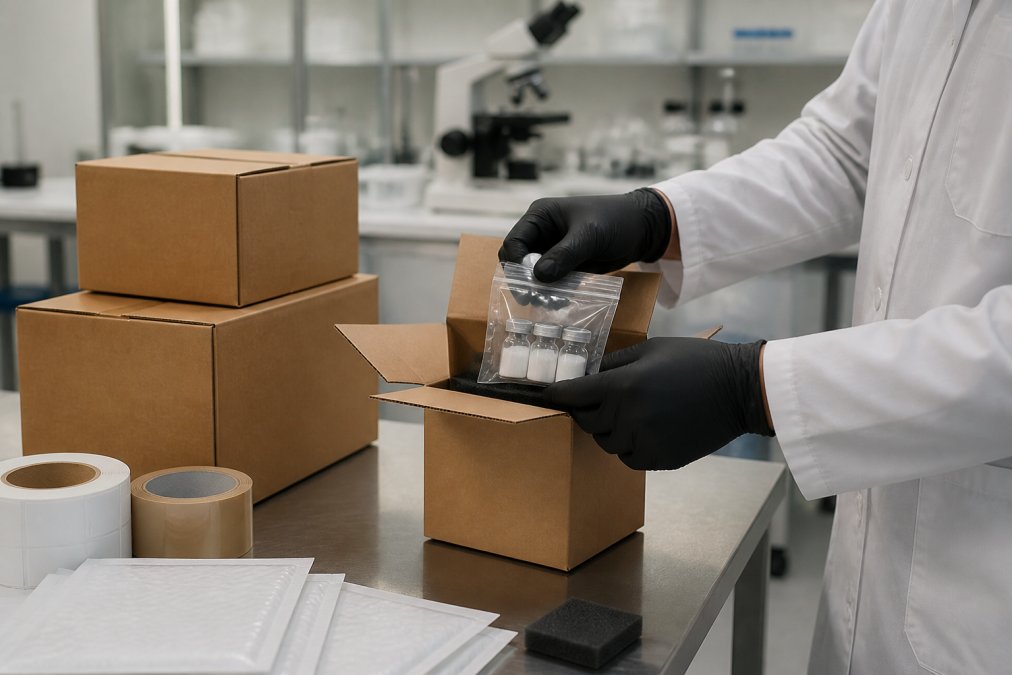
Custom packaging solves two problems at once: protecting the material with proper insulation, phase-change sizing, and secondary containment, and keeping the exterior completely plain. Both matter, integrity inside, discretion outside.
Discretion is an exterior property. Traceability is an interior one. A well-built shipment delivers both, and a supplier that can only offer one is telling you which one they cut.
Frequently Asked Questions
What are the standard shipping protocols for research-grade chemicals?
Research-grade chemicals ship under a set of standard protocols that cover classification, packaging, labeling, and documentation. The shipper must determine whether the material qualifies as a hazardous material under US Department of Transportation rules, select UN-rated packaging, and include a Safety Data Sheet. Temperature-sensitive compounds require insulated containers with phase-change packs or dry ice. Every shipment should arrive with a Certificate of Analysis tied to the specific lot number, and tracking should be active from pickup to delivery. Discreet chemical shipping adds plain outer packaging without compromising any of these requirements.
How do suppliers ensure the integrity of sensitive chemical shipments?
Suppliers protect sensitive compounds through three controls: temperature, packaging, and traceability. Temperature-controlled shipping uses insulated liners, gel packs, or dry ice to hold a defined range during transit. Packaging uses UN-rated containers with absorbent material and secure closures. Traceability relies on lot-specific Certificates of Analysis and, in some cases, temperature data loggers that record conditions from dispatch to arrival. A supplier that documents all three gives you a defensible chain of custody for your research records.
How can I verify a Certificate of Analysis is legitimate?
Check three things. First, the COA must reference a specific lot number that matches the vial label. Second, it should come from an independent third-party lab, not the supplier's own facility. Third, look for the analytical method used (HPLC, mass spectrometry, or both) and the measured purity percentage. If a supplier sends a generic COA without a lot number, treat it as unverified. Request the original PDF and, when possible, confirm the testing lab exists and is accredited.
What defines 'discreet' packaging in scientific supply chains?
Discreet packaging means the outer box carries no supplier branding, no product names, and no indication of the contents. The shipping label shows only the required carrier information and a return address. Inside, the material still meets all hazmat and safety requirements, including UN-rated containers, absorbent material, and a Safety Data Sheet. Discretion applies to the exterior only. It never overrides regulatory labeling, and it should not prevent you from receiving a Certificate of Analysis or tracking information.