 ultimate-guide
Ensuring Peptide Stability During Shipping: 2026 Guide
Table of Contents
- Why Peptide Stability During Shipping Is a Critical Concern
- Lyophilized Peptide Storage Temperature and Cold Chain Logistics
- Packaging and Sealing Techniques for Peptide Integrity
- Bacteriostatic Water vs Sterile Water for Peptides: Reconstitution and Shipping
- Peptide Degradation Signs: How to Troubleshoot and Verify Integrity
- Real-World Stress Testing and Customs Delays: What Researchers Must Know
- Post-Arrival Storage and Handling Protocols for Research Compounds
- Frequently Asked Questions
Last Updated: September 14, 2026
Why Peptide Stability During Shipping Is a Critical Concern
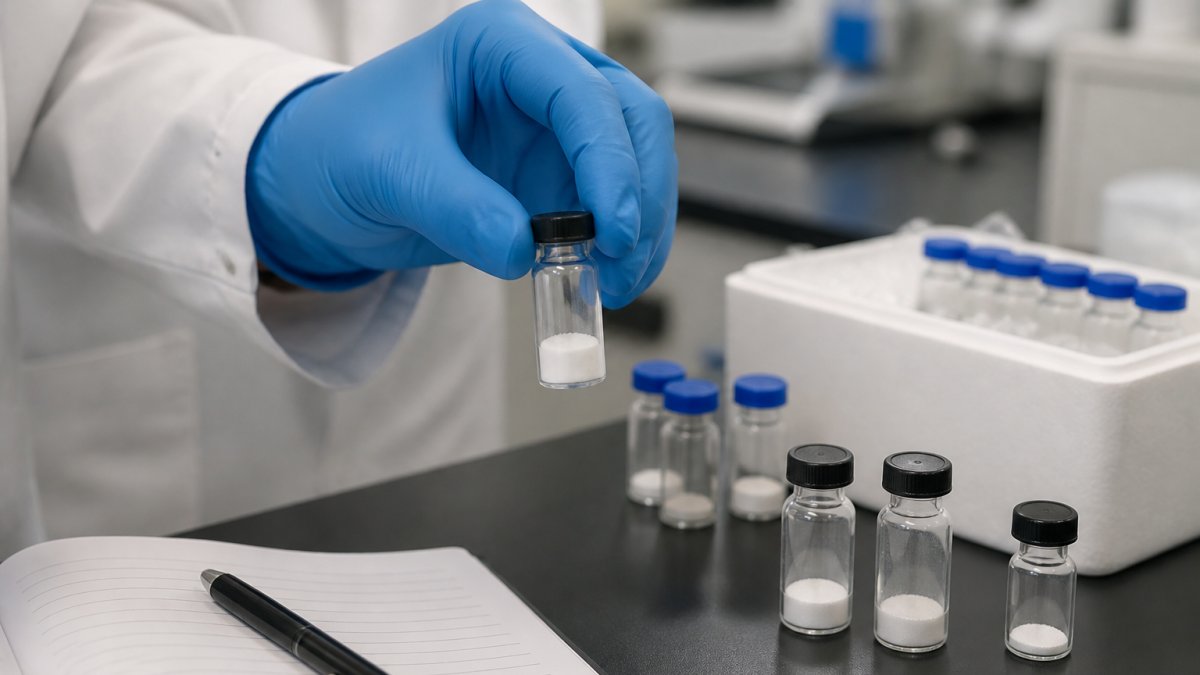
A peptide that leaves a supplier at 98% purity can arrive at your bench at 82% purity, and the difference is almost always the shipping environment, not the synthesis. Ensuring peptide stability during shipping means controlling temperature, moisture, and physical handling from the moment a vial is sealed to the moment it reaches your freezer.
Peptides are fragile in ways that are easy to underestimate. The amide backbone is vulnerable to hydrolysis when water is present, and methionine, cysteine, and tryptophan residues oxidize readily when exposed to air and warmth. Lyophilization, the freeze-drying process that removes water and leaves a stable powder, is the first line of defense, but not a permanent shield.
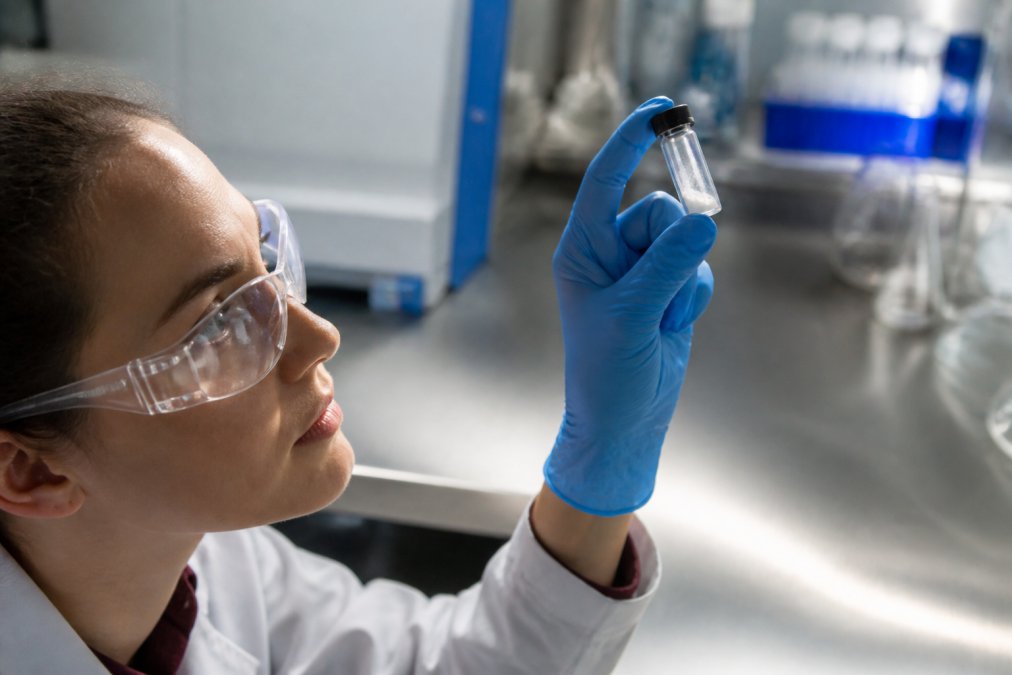
What most guides miss is that degradation is cumulative, not binary. A vial does not "go bad" at a single threshold. Every hour spent above its recommended storage temperature accelerates the degradation pathways already in motion, and repeated small excursions compound. A short delay at a sorting facility matters more than researchers assume.
Lyophilized Peptide Storage Temperature and Cold Chain Logistics
Lyophilized peptide storage temperature is the single biggest lever on shelf life. Most lyophilized research peptides remain stable for extended periods at -20°C, and stability improves further at -80°C, while short-term ambient exposure during handling is tolerable but should be minimized. The cold chain maintains those conditions from dispatch to delivery.
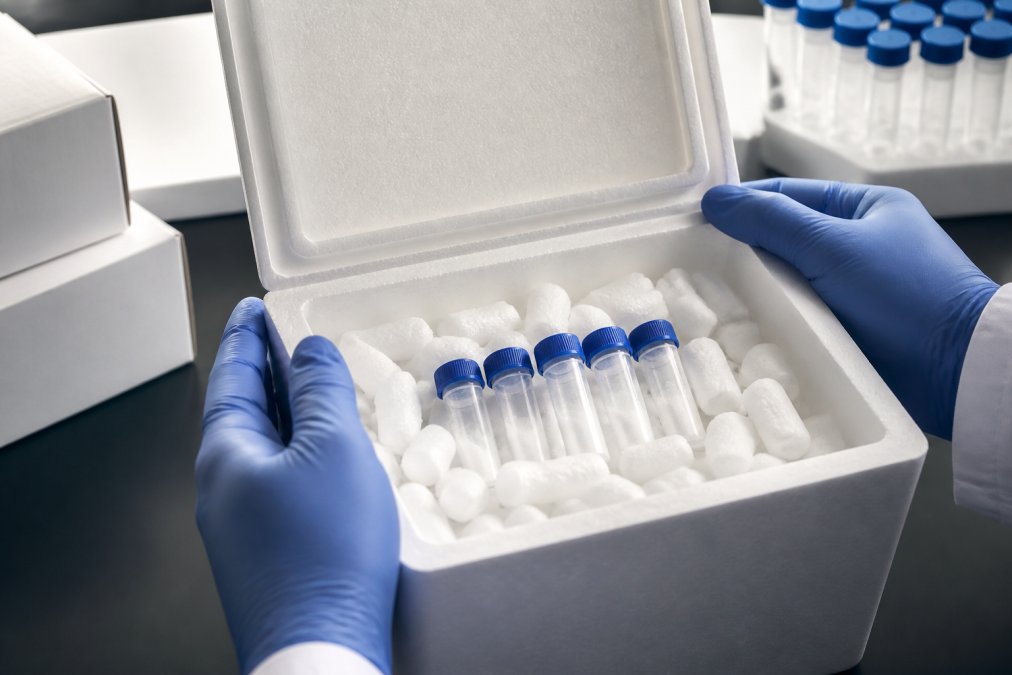
Cold chain logistics for research compounds typically rely on one of three approaches:
- Gel cold packs for short transit windows and moderate climates
- Dry ice for longer routes or temperature-sensitive sequences
- Phase-change materials that hold a target range rather than simply chilling
The trade-off is measurable. Dry ice delivers the coldest hold but sublimates at roughly 5 to 10 pounds per day in a typical insulated shipper, so a two-day ground route can arrive with the coolant gone (the CDC). Gel packs are lighter and cheaper but lose their hold faster in summer heat, often within 24 to 48 hours. Phase-change panels cost more and hold a narrower band more reliably, suiting sensitive sequences best.
| Coolant | Typical Hold | Temperature Band | Best Route |
|---|---|---|---|
| Gel packs | 24-48 hours | 2°C to 8°C | Overnight, moderate climates |
| Dry ice | 1-3 days (sublimates) | -78°C nominal | Multi-day, heat-sensitive |
| Phase-change panels | 48-96 hours | Tight target band | Sensitive sequences, long routes |
Temperature monitoring matters as much as the coolant itself. A small data logger inside the box records the actual thermal history, so you can confirm whether an excursion occurred rather than guessing. Look for loggers with a documented accuracy tolerance and a sampling interval short enough to catch a handoff delay, not just a daily average. A supplier who cannot produce that record is asking you to trust the unknown.
Packaging configuration drives hold time as much as coolant choice. A vacuum-panel liner holds a target band far longer than a standard foam liner of the same thickness, and grouping vials tightly reduces the air gaps that let heat migrate. The goal is a stable band, not the coldest possible box, over-cooling with excess dry ice can push a shipment below the intended range just as easily as under-cooling lets it drift above.
Packaging and Sealing Techniques for Peptide Integrity
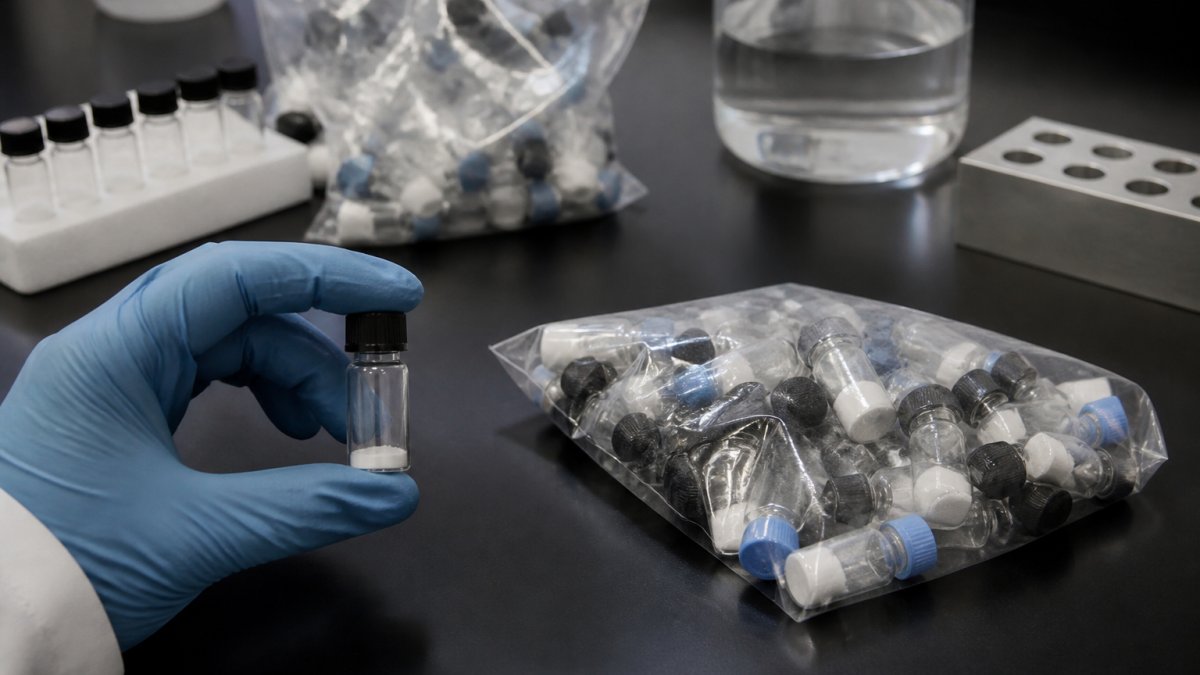
Packaging and sealing techniques determine whether the cold chain holds. A sealed container protects against moisture ingress, and moisture is the enemy of a lyophilized powder. The seal, desiccant, and insulation work as one system.
Three elements do the heavy lifting:
- Sealed containers. Vials are crimped with a stopper and seal that block air and humidity. A compromised seal lets ambient moisture reach the powder.
- Desiccants. A desiccant packet absorbs residual moisture inside the secondary packaging, acting as a humidity buffer if the outer seal is stressed.
- Thermal insulation. Foam or vacuum-panel liners slow heat transfer, buying time during handoffs.
Bacteriostatic Water vs Sterile Water for Peptides: Reconstitution and Shipping
The choice between bacteriostatic water vs sterile water for peptides changes how a reconstituted vial behaves, especially if it will move again after reconstitution. Bacteriostatic water is sterile water containing a small amount of benzyl alcohol, which inhibits bacterial growth and extends the usable life of a reconstituted solution (pubmed.ncbi.nlm.nih.gov). Sterile water contains no preservative and must be used promptly.
For shipping, the distinction matters. Lyophilized powder is the preferred form for transit because it is far more stable than any solution. Reconstituted peptide is more vulnerable to hydrolysis and microbial contamination, so ship in lyophilized form and reconstitute only after arrival.
If a reconstituted solution must be transported, bacteriostatic water offers a longer working window because the preservative slows microbial growth. Sterile water is appropriate for applications where the preservative itself is a concern, but it demands faster handling. Match the diluent to the timeline, not to habit.
| Diluent | Preservative | Best For | Handling Window |
|---|---|---|---|
| Bacteriostatic water | Benzyl alcohol | Multi-use reconstituted vials | Longer working window |
| Sterile water | None | Preservative-sensitive work | Use promptly |
Peptide Degradation Signs: How to Troubleshoot and Verify Integrity
Peptide degradation signs range from obvious to invisible, and the invisible ones cause the most trouble. Visible indicators include discoloration, cloudiness in a reconstituted solution, or clumped powder, but these are late-stage signals. By the time they appear, chemical purity has usually already dropped.
The degradation pathways to watch are hydrolysis, which breaks the peptide sequence at vulnerable bonds, and oxidation, which modifies sensitive residues. Both accelerate with heat and moisture. Neither is reliably visible.
Most guides stop at "run HPLC." That is correct but not actionable when a vial is on your bench and you need to decide whether to use it. A practical troubleshooting decision tree works better:
- Check the data logger first. If the recorded thermal history stayed within the compound's recommended band, the probability of significant degradation is low regardless of appearance.
- Inspect the seal and powder. A cracked crimp, a loose stopper, or powder that has pulled away from the glass wall suggests moisture ingress. Clumping in a lyophilized cake that was previously free-flowing is a warning sign.
- Reconstitute a small aliquot and observe. A solution that turns cloudy, shows particulates, or develops a color shift within minutes is a strong degradation signal. A clear solution is reassuring but not proof.
- Compare against lot documentation. Match the lot number to the supplier's certificate of analysis and confirm the purity value at release.
- Run independent analytical testing if the compound is central to your study. High-performance liquid chromatography confirms chemical purity; mass spectrometry confirms molecular identity.
What does a degraded peptide actually look like?
A degraded lyophilized peptide often looks identical to a pristine one, which is why visual inspection alone fails. When visible changes do appear, the most common are:
- Yellowing or browning of a powder that should be white, often an oxidation signal
- Clumping or a shrunken cake, usually moisture ingress through a compromised seal
- Cloudiness or particulates in a reconstituted solution, aggregation or incomplete dissolution
- A color shift after reconstitution, oxidation of sensitive residues such as methionine or tryptophan
None of these confirm degradation on their own, and their absence does not confirm integrity. Treat them as triggers to escalate to analytical testing.
How do you verify peptide integrity after shipping?
Verification relies on analytical testing, not inspection. Compare the vial against its lot-specific documentation and, where results are critical, run independent testing such as high-performance liquid chromatography to confirm chemical purity.
A practical troubleshooting sequence:
- Check the data logger for any temperature excursion during transit
- Inspect the vial seal and powder appearance for obvious damage
- Compare the lot number against the supplier's certificate of analysis
- Run independent analytical testing if the compound is central to your study
When a vial fails verification, document the lot number, the logger record, and the test result before discarding anything. That record is what lets a supplier trace the failure back to a specific shipment condition and correct it.
Real-World Stress Testing and Customs Delays: What Researchers Must Know
Customs and regulatory delays are the most underestimated threat to peptide integrity. A shipment can sit in a clearance queue for days with no coolant replenishment and no temperature control. The package is technically "in transit," but the cold chain has effectively ended.
Stress testing exists to model exactly this. A responsible supplier simulates extended transit, elevated ambient temperature, and humidity exposure, then measures purity before and after, establishing how much margin a packaging configuration actually provides rather than assuming it holds.
Sustainability is entering this conversation too. Dry ice carries a higher carbon and cost footprint than phase-change materials, and reusable insulated liners are gaining ground. The tension is that greener options sometimes hold a narrower temperature band, so the choice depends on compound sensitivity.
What can you do about delays you cannot control?
- Request temperature monitoring so you have a record if a delay occurs
- Choose suppliers who ship with documented cold chain validation
- Build a buffer into your timeline for clearance, especially for international routes
- Inspect and test on arrival rather than assuming transit was uneventful
U.S. Food and Drug Administration guidance on drug storage and transport offers useful context on temperature-controlled distribution standards, even for research-grade materials that fall outside direct regulation.
Post-Arrival Storage and Handling Protocols for Research Compounds
Handling protocols for research compounds start the moment the package is opened. The first hour after arrival is when most avoidable damage happens, because vials are often left at room temperature while paperwork is sorted.
A workable arrival sequence:
- Open the package promptly and confirm the coolant status
- Check the data logger before discarding any packaging
- Move lyophilized vials to -20°C or -80°C storage immediately
- Record the lot number and cross-reference the certificate of analysis
- Reconstitute only the vials you need, and store the rest sealed
For long-term storage, sealed containers with desiccant in a stable freezer protect molecular stability far better than a crowded shelf. Avoid repeated freeze-thaw cycles, which accelerate degradation.
At Bluegrass Research, every compound ships with lot-specific, third-party analytical documentation and discreet packaging with no external branding, so institutional receiving processes stay clean and the verification record travels with the material.
Shipping is where peptide integrity is most often lost, and it is the part of the supply chain researchers control least. The fix is not luck; it is choosing a supplier who treats transit as a documented, validated process. Bluegrass Research supplies research-grade peptide materials with lot-specific COA documentation, third-party analytical testing, and discreet shipping designed to protect compound integrity from dispatch to your freezer. Shop Now and give your next study a supply chain you can actually defend.
Frequently Asked Questions
Do peptides need to be refrigerated when shipped?
Lyophilized peptides are generally stable at ambient temperatures for short periods, but refrigeration or cold packs are recommended for longer transit, especially in warm climates. For reconstituted peptides, cold chain shipping with dry ice or gel packs is essential to prevent hydrolysis and oxidation. Always check the supplier's stability data for specific storage conditions.
How long can peptides remain stable at room temperature during transit?
Stability at room temperature depends on the peptide sequence and formulation. Many lyophilized peptides can withstand 1-2 weeks at ambient temperature without significant degradation, but this varies. For critical research, choose expedited shipping with temperature monitoring to minimize exposure. Always verify integrity upon arrival using analytical methods like HPLC.
What are the signs of peptide degradation after shipping?
Common signs include discoloration, cloudiness in reconstituted solutions, visible particles, and changes in consistency. A decrease in expected biological activity or altered HPLC profiles also indicate degradation. If you notice any of these, do not use the material for sensitive experiments. Document the issue and contact your supplier for a replacement.
How do you verify peptide integrity upon arrival?
Upon arrival, inspect packaging for damage and temperature excursion indicators. Reconstitute a small aliquot and check for clarity and pH. The most reliable method is analytical testing: reverse-phase HPLC for purity and mass spectrometry for molecular weight confirmation. Bluegrass Research provides lot-specific third-party COAs to help you verify identity and purity before use.
What is the difference between shipping lyophilized vs. reconstituted peptides?
Lyophilized peptides are dry powders and more stable, often shipped at ambient or with cold packs. Reconstituted peptides are in solution and highly susceptible to degradation, requiring strict cold chain with dry ice and insulated packaging. Shipping reconstituted peptides is riskier and should be minimized; if necessary, use overnight delivery and temperature monitoring.
How does temperature fluctuation affect lyophilized peptide stability?
Frequent temperature fluctuations can cause condensation inside the vial, leading to hydrolysis and aggregation. Even lyophilized peptides benefit from stable, cool conditions. During shipping, use thermal insulation and phase-change materials to buffer temperature changes. Upon arrival, store lyophilized peptides at -20°C or as recommended by the COA.