 how-to
Research Grade Peptide Storage Tips: A 2026 Lab Guide
Table of Contents
- Why Peptide Storage Conditions Decide Your Experimental Results
- How to Store Peptides Before Reconstitution
- Lyophilized Peptide Storage Temperature: Refrigerator or Freezer?
- Reconstituted Peptide Storage: 2-8°C, Aliquots, and Freeze-Thaw Limits
- Physical Organization: Vials, Foam Inserts, and Storage Cases
- Cold-Chain Transport and Temperature Excursions
- Research Peptide Storage Log Template: What to Record and Why
- Common Storage Mistakes That Compromise Compound Integrity
- Frequently Asked Questions
Last Updated: October 15, 2026
Why Peptide Storage Conditions Decide Your Experimental Results
Peptide storage is the set of handling practices that keep research-grade compounds stable between the day they arrive and the day you run an assay.
At Bluegrass Research, we ship every compound with lot-specific third-party documentation, and we still tell researchers the same thing: the vial is only as good as the shelf it sits on.
Here is what most guides get wrong.
How to Store Peptides Before Reconstitution
Lyophilized peptides are the most forgiving form you will handle.
The rules that matter most:
- Keep the vial sealed until you are ready to use it
- Store away from direct light, which can degrade light-sensitive residues
- Keep humidity low so the powder does not pull moisture from the air
- Let a cold vial reach room temperature before opening it
That last point trips people up constantly. A vial pulled straight from the freezer and opened immediately will draw condensation onto the powder. Once moisture is in, the clock starts ticking.
For general guidance on handling and storing laboratory reagents, the NIH Office of Research Facilities guidance on laboratory materials is a useful reference point.
Lyophilized Peptide Storage Temperature: Refrigerator or Freezer?
The answer depends on how long you plan to keep the powder, how sensitive the sequence is, and what the manufacturer's own documentation says. Generic temperature tiers are a starting point, not a verdict.
A standard refrigerator sits in the 2 to 8°C range, with 4°C as the usual target. A freezer runs at −20°C, and an ultra-low freezer runs at −80°C. The colder the storage, the slower the chemical processes that break a peptide down.
Why Colder Slows Degradation
Three mechanisms drive peptide loss in dry storage, and all three are temperature-dependent:
- Hydrolysis, residual water in the powder cleaves the peptide backbone. Lower temperature slows the reaction rate.
- Oxidation, oxygen attacks methionine, cysteine, tryptophan, and histidine residues. Cold storage reduces the rate but does not stop it.
- Deamidation, asparagine and glutamine residues lose an amide group, shifting the peptide's charge and often its activity. This is one of the most common degradation routes in stored lyophilized material.
Sequences rich in those residues are the ones that reward colder storage most. A short, hardy peptide may tolerate −20°C for a year; a methionine-heavy sequence may not.
Product-Specific Documentation Takes Precedence
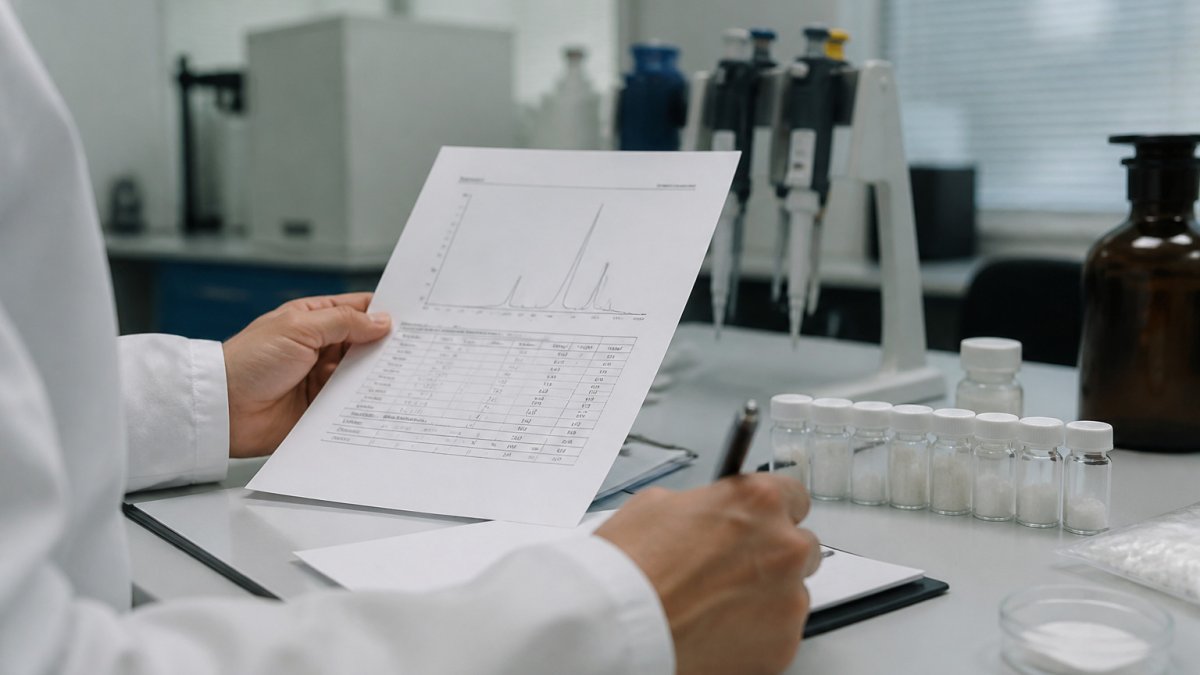
This is the point most guides skip. A certificate of analysis or technical data sheet from the manufacturer often states a recommended storage temperature for that specific lot. When the documentation and a generic rule disagree, follow the documentation. The supplier characterized that compound; a blog post did not.
If no product-specific guidance exists, default to the colder option for anything you intend to keep beyond a few weeks.
Short-Term Versus Long-Term Storage Windows
Think in tiers rather than a single number:
- Days to a few weeks: refrigerated storage at 2 to 8°C is usually fine
- Several months: −20°C freezer storage
- A year or longer: −80°C ultra-low storage for the most sensitive compounds
Storage Decision Matrix
Use this as a quick reference. It resolves the conflicting, generalized recommendations you will find elsewhere.
| Physical State | Short Term (days-weeks) | Long Term (months-1 year+) |
|---|---|---|
| Lyophilized powder | 2-8°C, sealed, desiccated | −20°C, or −80°C for sensitive sequences |
| Reconstituted solution | 2-8°C, single-use aliquots | −20°C or −80°C aliquots, minimize freeze-thaw |
Moisture Control and Desiccant Use
Moisture is the quiet killer of lyophilized peptides. A sealed vial with a desiccant pack inside a secondary container limits how much water vapor reaches the powder. Every time you open a vial, you trade a little stability for access.
- Store the vial inside a sealed secondary container with fresh desiccant
- Replace desiccant that has changed color or been exposed to open air
- Keep the primary vial capped except during the seconds it takes to withdraw material
- Never store a partially used vial loose in a freezer drawer
Reconstituted Peptide Storage: 2-8°C, Aliquots, and Freeze-Thaw Limits
Once a peptide is in solution, it is far less stable than the powder it came from.
The single best habit here is aliquoting. Split the solution into single-use volumes right after reconstitution, then freeze what you will not use within a few days.
Freeze-thaw cycles are the enemy. Each time a solution thaws and refreezes, you risk aggregation and loss of activity. A common mistake is freezing one large tube and thawing it repeatedly for each assay.
Aseptic Handling and Contamination Prevention
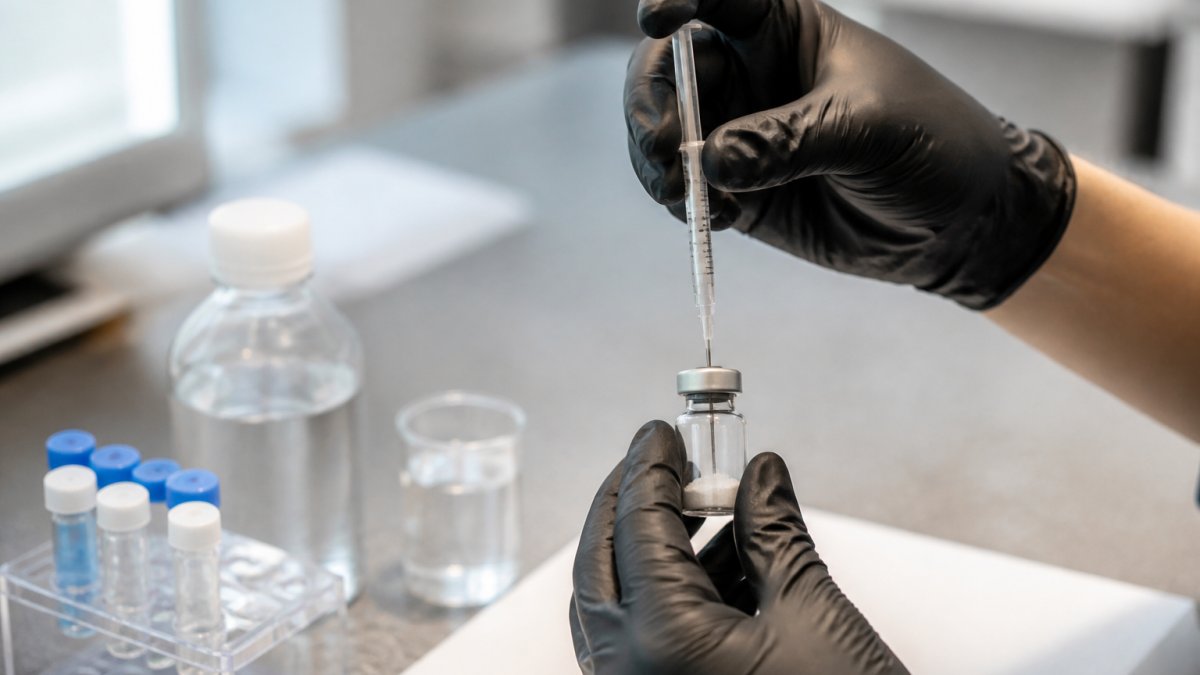
Contamination prevention starts with technique. Work in a clean area, use sterile filter tips, and wipe vial septa with an appropriate disinfectant before drawing.
- Never reuse a needle to puncture a septum
- Keep a dedicated set of pipettes for peptide work
- Label every aliquot with date, concentration, and lot
- Discard any solution that looks cloudy or shows particles
For background on sterile technique in research settings, the CDC guidance on safe laboratory practices covers the fundamentals.
Physical Organization: Vials, Foam Inserts, and Storage Cases
Organization is not cosmetic. A labeled, protected vial is a vial you can find, trust, and account for during an audit.
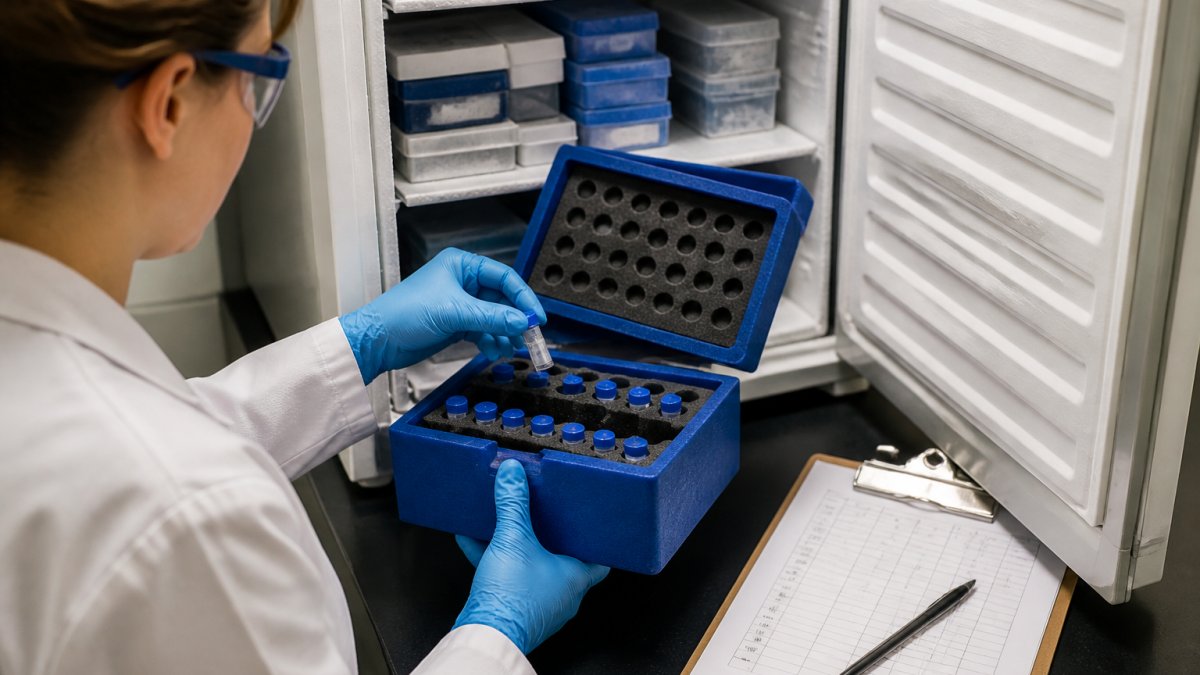
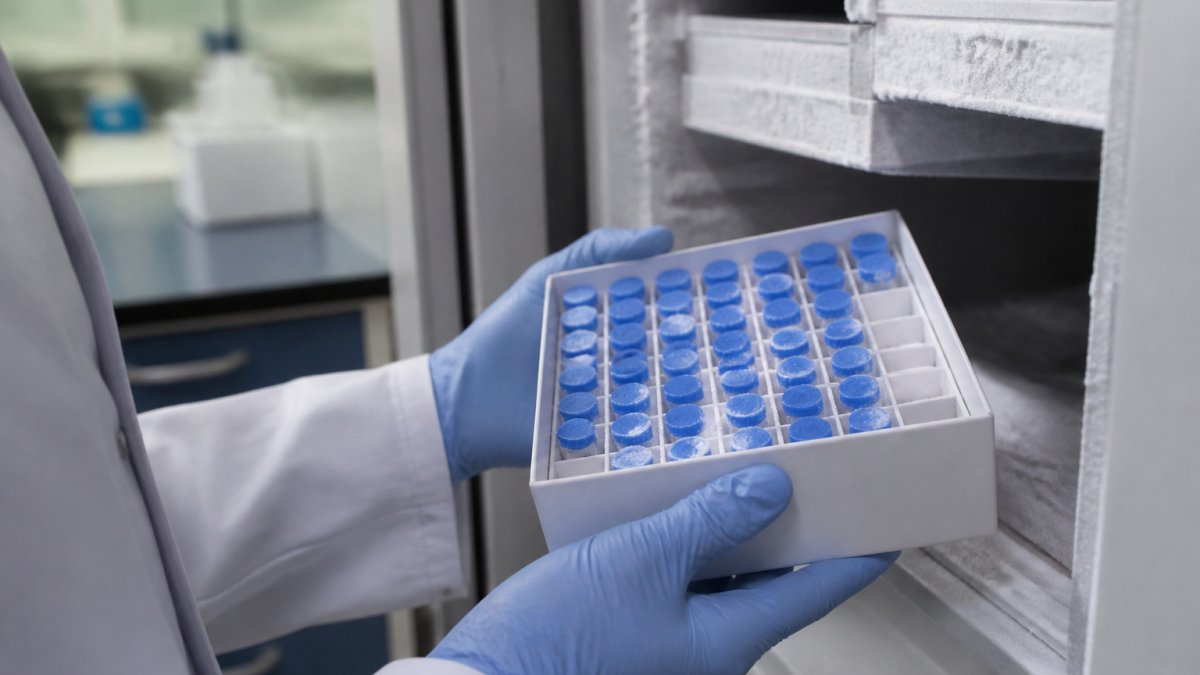
Foam inserts hold vials upright and stop them from knocking together. A dedicated storage case keeps light out and makes a freezer box portable when you need to move samples.
What most guides miss is that physical protection and temperature control work together. A vial that rolls loose in a freezer drawer is a vial that cracks or loses its cap seal.
Cold-Chain Transport and Temperature Excursions
Shipping is where storage discipline most often breaks down. A compound that leaves a supplier at −20°C can arrive warm if the cold chain fails somewhere along the route. Most guides mention this risk and stop there. The useful part is what you do about it.
Temperature excursions are the gaps between the conditions you specified and the conditions the package actually experienced. Insulated packaging and cold packs reduce the risk, but they do not eliminate it.
Time Outside Controlled Storage
Lyophilized powder is more forgiving of a short warm window than reconstituted solution. As a working rule:
- A sealed, desiccated lyophilized vial that sits at room temperature for a few hours during transit is usually still usable, but log it and inspect it.
- Reconstituted solution that warms above refrigeration range for more than a short period should be treated as suspect.
- Any vial that arrives visibly warm, wet, or with a failed cold pack should be quarantined until you decide.
The exact tolerance depends on the sequence and the formulation, which is why the manufacturer's documentation matters here too.
Responding to an Excursion
When a shipment arrives, work through this sequence before the vials go into storage:
- Check the cold pack state immediately, still frozen, partially thawed, or fully warm
- Note any signs of warming, condensation, or physical damage to the outer packaging
- Log the arrival condition, including an estimated time in transit if the carrier provides it
- Quarantine anything that looks compromised rather than shelving it with good stock
- Contact the supplier with the lot number and arrival condition if you have doubts
Quarantine means a separate, clearly labeled location, not the same box as your verified material. Mixing a suspect vial into good stock is how a single bad shipment contaminates months of work.
Packaging That Protects the Cold Chain
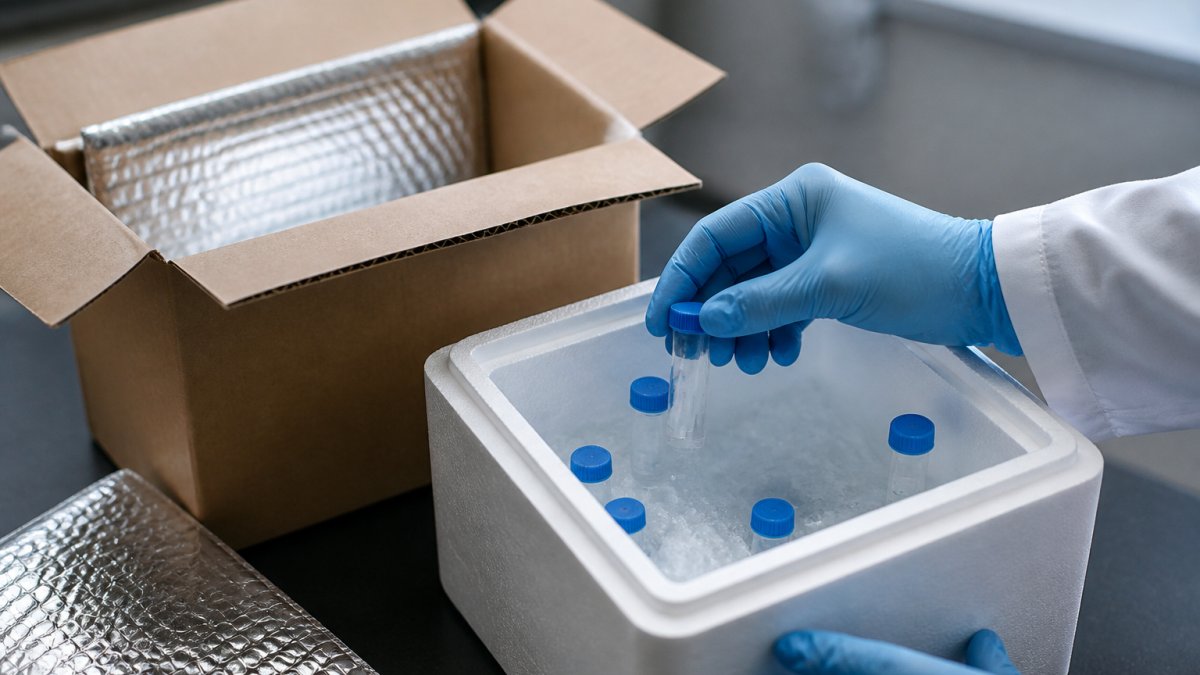
Insulated shippers with phase-change cold packs hold temperature longer than gel packs alone. For sensitive compounds, overnight or expedited shipping shortens the exposure window more than any packaging upgrade. If you order in warm months, plan for the package to sit on a dock or porch and time your receipt accordingly.
Bluegrass Research ships with discreet, unbranded packaging and cold-chain handling built for research use.
Research Peptide Storage Log Template: What to Record and Why
A research peptide storage log template turns a vague memory into a defensible record. If your results are ever scrutinized, the log is what shows your compounds were handled correctly.
Use this template for every vial:
| Field | What to Record | Why It Matters |
|---|---|---|
| Lot number | Supplier lot ID | Ties results to a specific batch |
| Arrival date | Day received | Starts the stability clock |
| Arrival condition | Cold pack state, damage | Flags transport problems |
| Storage location | Freezer, rack, box, position | Lets you find the vial fast |
| Storage temperature | 2-8°C, −20°C, or −80°C | Documents conditions |
| Reconstitution date | Day mixed | Starts solution stability window |
| Aliquot count | Number of tubes | Tracks freeze-thaw exposure |
| Freeze-thaw cycles | Running count | Caps degradation risk |
Keep the log with the storage unit, not in a drawer across the lab. A record you cannot find is a record you do not have.
Common Storage Mistakes That Compromise Compound Integrity
Most failures trace back to a handful of repeat offenders. Fix these and you remove the majority of storage-related risk.
- Opening cold vials before they warm up, causing condensation
- Storing reconstituted solution in one large tube and thawing it repeatedly
- Skipping labels, so vials become unidentifiable after a few months
- Leaving vials exposed to light on an open bench
- Ignoring moisture, with no desiccant and no sealed secondary container
- Failing to log anything, leaving no way to trace a bad result
The pattern behind all of them is the same: treating storage as a chore instead of a step in the experiment. For researchers working with metabolic compounds like Semaglutide and Tirzepatide analogs, that discipline is what makes a result defensible.
Frequently Asked Questions
What temperature should research peptides be stored at?
Lyophilized peptides are typically held at 2-8°C for short-term storage and at -20°C or -80°C for longer archival storage. Once reconstituted, most peptide solutions are kept refrigerated at 2-8°C and used within a defined working window rather than refrozen repeatedly. The right temperature depends on your physical state, your intended duration, and the specific compound, so confirm the handling guidance that ships with each lot before committing a vial to a shelf.
How should peptides be stored before reconstitution?
Keep the vial sealed, upright, and inside its original packaging until you are ready to work. Lyophilized powder is hygroscopic, so moisture is the bigger threat than cold: open a vial only in a dry environment and reseal it promptly. Store the sealed vial in the dark, either refrigerated or frozen depending on how long you plan to hold it, and let it equilibrate to room temperature before opening to avoid condensation forming on the powder.
Is it safe to leave peptides out of the refrigerator overnight?
A single overnight excursion does not automatically ruin a lyophilized vial, but it does introduce risk you cannot undo. Heat accelerates degradation, and repeated swings between warm and cold cause condensation inside the vial. If a vial sat out, inspect the powder for clumping, discoloration, or moisture, record the excursion in your storage log, and treat that lot as suspect for any results you plan to publish or defend.
What storage details should be recorded for research peptides?
A usable storage log captures lot number, receipt date, physical state, storage location and temperature, reconstitution date and diluent used, aliquot count, and every temperature excursion or freeze-thaw event. Add the initials of whoever handled the vial and the date of each withdrawal. Pairing that log with the lot-specific certificate of analysis gives you a defensible chain of custody from delivery to experiment, which matters if your data is ever scrutinized.
Storage discipline is the difference between data you can defend and data you have to explain away. Bluegrass Research supports that work with lot-specific COA documentation, third-party analytical testing, and discreet shipping that protects compound integrity from our facility to your bench. Every order comes with the verification records you need for rigorous, reproducible research. Get started with Bluegrass Research and keep your compounds, and your results, exactly where they should be.