 ultimate-guide
Peptide Documentation for Clinical Studies: 2026 Guide
Table of Contents
- Why Peptide Documentation for Clinical Studies Is Non-Negotiable
- Peptide Impurity Profile Documentation: What Regulators Expect
- Peptide API Sameness Requirements Across Lots and Vendors
- FDA Documentation Requirements for Peptide Drug Development
- Building a Clinical Trial Documentation Binder: Step-by-Step
- Digital Documentation Templates and EDC Integration
- Common Peptide Documentation Mistakes That Sink Studies
- Frequently Asked Questions
Last Updated: September 10, 2026
Why Peptide Documentation for Clinical Studies Is Non-Negotiable
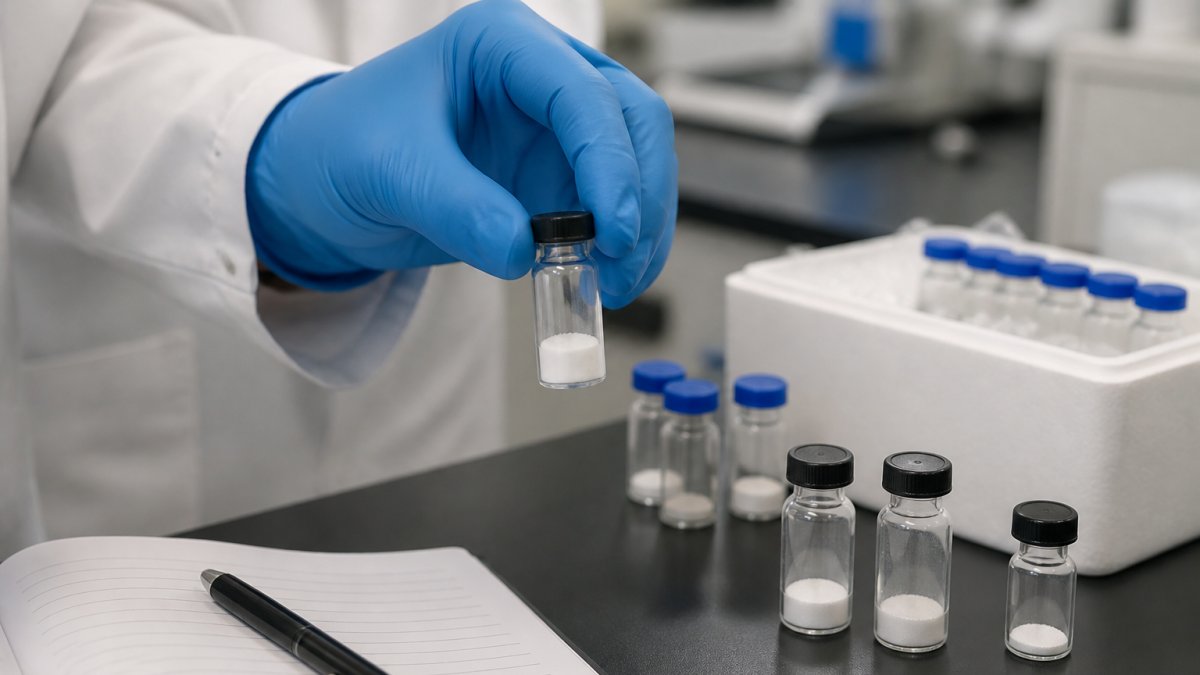
Peptide documentation for clinical studies is the controlled record of every analytical, regulatory, and safety detail attached to a peptide lot used in human research. It is the difference between a defensible dataset and an unpublishable one.
At Bluegrass Research, we supply research-grade peptides with lot-specific, third-party analytical records. A single missing Certificate of Analysis (COA) can stall an Institutional Review Board (IRB) review for weeks.
The stakes are simple: if you cannot prove what was in the vial, you cannot prove what happened in the trial. Below, we break down exactly which documents regulators and reviewers expect, and how to assemble them without guesswork.
Peptide Impurity Profile Documentation: What Regulators Expect
An impurity profile is the quantitative record of every non-target substance in a peptide lot, including deletion sequences, truncated fragments, and residual solvents. Regulators expect this profile to be method-specific and lot-specific, not a generic purity percentage.
The FDA guidance on drug substance chemistry treats impurity control as a core chemistry, manufacturing, and controls (CMC) requirement. Expect to document:
- Related substances and their retention times
- Residual solvents and reagents
- Counterion content and water content
- Heavy metals where synthesis reagents warrant testing
What most guides miss is that a single "purity: 98%" line tells a reviewer almost nothing. The profile must show which impurities exist and at what level.
Reading a Certificate of Analysis for Impurity Data
A COA is only as useful as the method behind it. Look for the analytical technique (typically RP-HPLC and mass spectrometry), the column and gradient, and the detection wavelength.
Practical checks to run on every COA:
- Is the lot number traceable to a synthesis batch?
- Are chromatograms included, not just a summary table?
- Is the testing lab independent of the manufacturer?
Peptide API Sameness Requirements Across Lots and Vendors
API sameness is the demonstration that the active pharmaceutical ingredient in one lot is equivalent to another, across sequence, stereochemistry, and impurity profile. Sameness is not assumed from a matching molecular formula.
When you switch vendors mid-study, sameness documentation becomes critical. Reviewers want to see that lot-to-lot and vendor-to-vendor material is comparable, which means comparing peptide synthesis routes, purification methods, and analytical results side by side.
| Documentation Element | Purpose | Who Reviews It |
|---|---|---|
| Sequence confirmation | Verifies correct amino acid chain | QA, regulatory |
| Impurity profile comparison | Confirms sameness across lots | CMC reviewer |
| Stability data | Supports shelf-life claims | Regulatory affairs |
| Lot traceability record | Links material to synthesis batch | QA, auditors |
| Analytical validation report | Proves method reliability | Regulatory |
Lot Traceability and Stability Testing Records
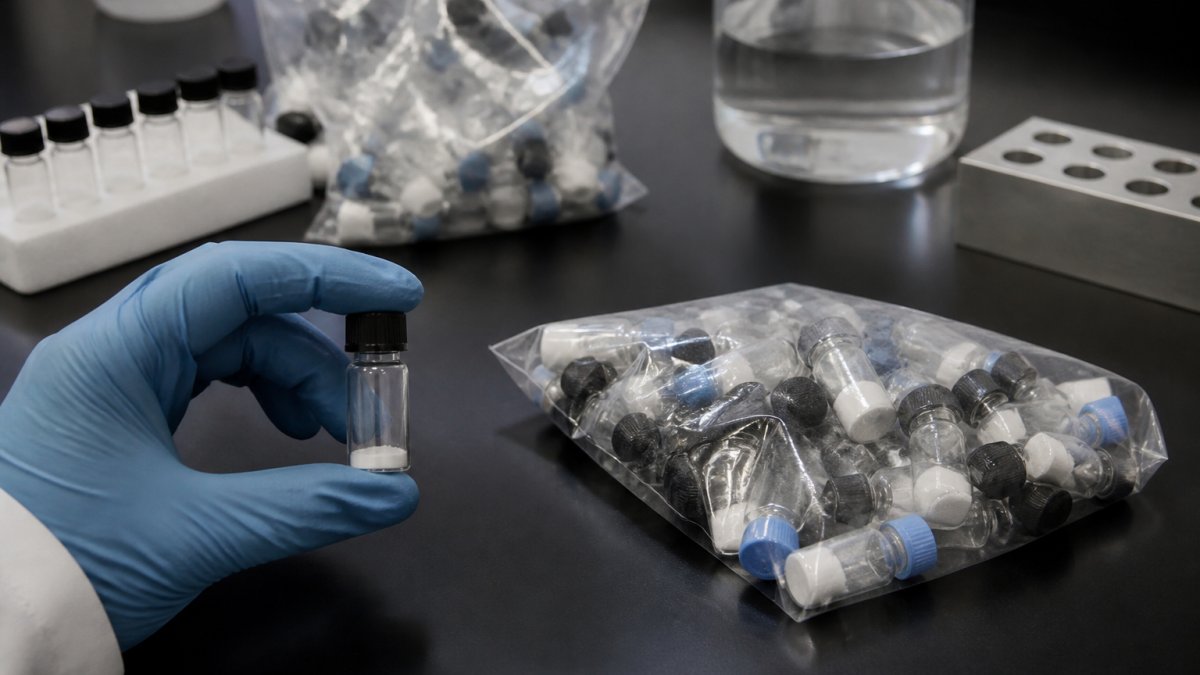
Traceability connects a finished vial to its raw materials, synthesis date, and purification run. Without it, a stability finding cannot be attributed to a specific batch.
Stability testing records should cover storage conditions, time points, and analytical results at each interval. For peptides, temperature and humidity control during transit matter as much as the label claim.
FDA Documentation Requirements for Peptide Drug Development
The FDA expects an Investigational New Drug (IND) submission to include CMC data, pharmacology and toxicology summaries, and a clinical protocol. For peptides, the CMC section carries the heaviest documentation load.
According to FDA's guidance on INDs for phase 1 studies, sponsors must describe drug substance and drug product composition, manufacturer, and stability. Under the FDA's current Good Manufacturing Practice regulations, manufacturing records must be complete and reviewable.
Key submission components for peptide work:
- Drug substance and drug product specifications
- Analytical method descriptions and validation
- Stability data supporting the proposed shelf life
- Container closure system documentation
The practical takeaway: build the CMC file as you go, not the week before submission.
Building a Clinical Trial Documentation Binder: Step-by-Step
A clinical trial documentation binder is the organized, indexed collection of every record a monitor, auditor, or regulator may request. Build it before enrollment, not after the first monitoring visit. The difference between a binder that survives an audit and one that stalls a monitoring visit is often whether each document is filed to a controlled index with a version, a date, and a retrievable location.

The Master Index Is the Binder
Start with a controlled master index, a single table that lists every required document type, its owner, its version, its filing location, and its retention period. Treat the index itself as a controlled document: give it a version number and a revision date, and update it whenever a document type is added or retired. When a monitor asks for a specific record, the index is what lets you produce it in minutes rather than hours.
A practical index for a peptide study typically includes these document families:
- Investigational product records, Certificate of Analysis (COA), impurity profile, lot traceability record, stability data, shipping and temperature-excursion logs.
- Regulatory records, the Investigational New Drug (IND) submission and amendments, IRB approvals and continuing reviews, and the clinical trial registry entry with its NCT ID and current recruitment status.
- Participant records, signed informed consent forms with protocol version and date, baseline labs and medical history, and adverse event (AE) and serious adverse event (SAE) logs.
- Operational records, delegation of authority log, training records, monitoring visit logs, and protocol deviation logs.
File by Lot, Then by Participant
Two filing axes keep a peptide binder navigable: lot number for product records, and participant ID for clinical records. File COAs by lot number in chronological order, with chromatograms attached behind the summary page, not in a separate folder. File participant records by ID, with the consent form first, baseline labs second, and the AE log last so the most recent entries are on top.
For each COA, confirm before filing that it shows the lot number traceable to a synthesis batch, the analytical method (typically RP-HPLC and mass spectrometry), the column and gradient, the detection wavelength, and the chromatograms themselves. A COA that lists purity without chromatograms or method details is effectively unverifiable, and it is the first thing a reviewer challenges.
Baseline Labs, Informed Consent, and Adverse Event Reporting
Baseline labs and medical history establish each participant's starting point, which is what makes later safety signals interpretable. Record them before the first dose, with the collection date, the reference range in use at the time, and the name of the reviewing clinician.
Informed consent documentation must show the correct protocol version, the date, and the participant's signature. Version control is where most consent binders fail: if the protocol was amended after a participant enrolled, the binder needs both the version that participant signed and the IRB approval letter for the amendment.
Adverse event reporting should follow the protocol's timeline precisely. For peptides, the events most likely to need careful documentation are injection-site reactions, hypersensitivity, and any unexpected change in a baseline lab value. Late entries raise data integrity questions, so timestamp each entry at the moment of the report, not at the end of the week.
A Retrieval Test You Can Run Today
Pick three documents at random, a COA, a consent form, and an AE log entry, and time how long it takes a colleague who did not build the binder to retrieve each one. If any takes more than a few minutes, the index is not doing its job. This is the same test a monitor runs on the first visit, and it is the fastest way to find gaps before someone else does.
Retention and the Records That Outlive the Study
Retention periods for trial records are set by the sponsor's standard operating procedures and by the applicable regulatory framework, and they commonly extend well past the last participant's final visit. Build the retention plan into the index from day one: mark which documents are permanent study records, which can be archived after database lock, and where the archive lives. A binder that is complete on the last day of enrollment but disorganized two years later is not a complete binder.
Digital Documentation Templates and EDC Integration
Electronic Data Capture (EDC) integration moves peptide documentation from paper binders into validated systems that timestamp every entry. This is where many research teams still lag, and where significant operational gains are available, because a well-built template can do more than replace paper. It can make risk-based monitoring possible, since monitors can query specific data points remotely rather than reviewing every page on site.
What a Peptide-Specific Template Actually Contains
A generic clinical template will not capture the fields a peptide study needs. A practical template structure includes:
- Product fields, lot number, COA reference, impurity profile reference, synthesis batch ID, and storage condition at receipt.
- Baseline fields, lab value, collection date, reference range in use, and reviewing clinician.
- Consent fields, protocol version, IRB approval date, signature date, and re-consent flag.
- Dosing fields, dose, route, time of administration, and the lot number administered.
- Safety fields, AE term, onset date and time, severity, relationship to product, and outcome, with automatic time-stamping on entry.
Two design choices matter more than the field list. First, make the lot number a controlled field that links to the COA record, so a query on a lot pulls every participant who received it. Second, make the AE onset field a required timestamp rather than a free-text date, because backdated entries are the most common data integrity finding in peptide studies.
How EDC Changes the Audit Trail
In a validated EDC system, every entry carries an audit trail: who entered the data, when, and what the previous value was. That trail is what turns a record into evidence. The practical requirements to confirm before you rely on a system are that it is validated for the intended use, that the audit trail cannot be edited or disabled by end users, and that electronic signatures meet the applicable requirements for attributability.
For teams sourcing material, the NIH's guidance on research documentation reinforces that records must be attributable, legible, contemporaneous, original, and accurate. EDC is the most direct way to satisfy the contemporaneous and attributable parts of that standard, because the system records the time of entry rather than the time the researcher remembers to write it down.
Risk-Based Monitoring: Documenting What Matters
Risk-based monitoring shifts effort toward the data points most likely to affect participant safety or the validity of the results. For peptide trials, the risk assessment should name the peptide-specific risks explicitly, injection-site reactions, hypersensitivity, immunogenicity concerns, and any impurity-related safety signal, and then specify which source documents a monitor will verify against those risks.
The documentation output of that assessment is a short, written risk plan that lists each risk, the data that would detect it, and the monitoring approach for that data. Keep the plan in the binder index alongside the monitoring visit logs. When a monitor arrives, the plan tells them where to look, and the index tells them where the records are.
Cross-Border Studies and Configurable Templates
Cross-border studies add another layer: documentation standards and submission formats differ by jurisdiction, so a template built for one regulator's expectations may not satisfy another. Build templates with configurable fields rather than fixed layouts, for example, a field for the local regulatory submission reference that can be relabeled per jurisdiction, and a consent module that can hold more than one version simultaneously. This is the difference between a template you can reuse across studies and one you rebuild every time.
Common Peptide Documentation Mistakes That Sink Studies
The biggest documentation failures are rarely dramatic. They are small omissions that compound.
- Generic COAs. A purity figure with no lot number or chromatogram is not traceability.
- Missing sameness evidence. Switching vendors without an impurity profile comparison leaves a gap reviewers will find.
- Paper-only records. Without EDC integration, timestamps and audit trails are weak.
- Late adverse event entries. Backdated logs undermine data integrity.
- No stability data for transit. Temperature excursions during shipping go undocumented.
A common mistake is treating documentation as an administrative afterthought. In practice, it is the evidence base for every claim your study makes.
Frequently Asked Questions
What FDA requirements apply to peptide drug documentation?
The FDA requires an investigational new drug application for clinical studies, including chemistry, manufacturing, and controls data. For peptides, this means lot-specific certificates of analysis, impurity profiles, stability testing results, and API sameness documentation. Each lot must be traceable to its synthesis batch. Documentation must show the peptide meets identity, purity, and potency specifications. Under 21 CFR Part 312, sponsors must also maintain records of adverse event reporting and protocol adherence throughout the trial.
How do you document peptide purity and impurity profiles for clinical studies?
Purity documentation typically comes from HPLC analysis showing the percentage of the main peptide peak. Impurity profiles require additional methods like mass spectrometry to identify related substances, truncation products, and oxidation variants. Each certificate of analysis should list the analytical method used, the specification limit, and the actual result for that lot. For clinical studies, you need this data for every lot used, not just a representative sample. Keep records organized by lot number and study phase.
Why is third-party analytical documentation critical for research peptides?
Third-party testing provides independent verification that a vendor's purity and identity claims are accurate. In-house testing by the supplier can be biased or inconsistent. For clinical studies, regulators expect data from accredited external laboratories using validated methods. Third-party documentation also protects your research: if results are questioned, you have independent evidence that the starting materials met specifications. This is especially important for peptide API sameness requirements, where you must prove consistency across lots.
What documentation is required for API sameness in peptide research?
API sameness documentation must demonstrate that different lots of the same peptide are chemically identical within defined tolerances. This includes comparative HPLC chromatograms, mass spectrometry data, amino acid analysis, and impurity profiles for each lot. You also need synthesis method records showing the same process was used. For clinical trials, the FDA expects a justification for any specification changes between lots. Stability testing data supports sameness claims by showing the peptide degrades at the same rate across lots.
How should peptide storage and handling be documented for clinical trials?
Storage documentation should record temperature conditions from receipt through use, including any deviations. Lyophilized peptides typically require storage at -20°C or below, while reconstituted peptides may need refrigeration. Each temperature excursion must be logged with duration and corrective action. Handling records should note who accessed the material, when, and for what purpose. For clinical studies, these records support data integrity and help explain any unexpected results. Include equipment calibration records for freezers and refrigerators used.
Are peptides legal for research purposes in the United States?
Research peptides are legal to purchase and use for laboratory research, but they are not approved for human consumption unless they have gone through the FDA drug approval process. Clinical studies using peptides require an investigational new drug application or an exemption. Researchers must follow institutional review board requirements and federal regulations for human subjects research. Vendors selling research-grade peptides should provide documentation that supports legitimate research use, including certificates of analysis and purity data.
Peptide research moves fast, and your documentation has to keep pace without cutting corners. Bluegrass Research supplies research-grade peptides with lot-specific, third-party analytical documentation, discreet US shipping with no external branding, and professional storage solutions, so your records are defensible from the first vial to the final report. Get started with Bluegrass Research and build a documentation trail that holds up to scrutiny.