 how-to
How to Know if a Peptide Is Legit: 7 Verifications
Table of Contents
- Why Peptide Verification Matters for Research Integrity
- How to Read a Peptide COA: A Step-by-Step Walkthrough
- HPLC vs Mass Spectrometry for Peptides: What Each Test Proves
- Peptide Vendor Red Flags: Payment, Address, and Registration Checks
- Storage, Stability, and Visual Inspection Indicators
- Legal and Regulatory Landscape for Research Peptides
- Reporting Fraudulent Peptide Vendors
- Conclusion
- Frequently Asked Questions
Last Updated: September 28, 2026
Why Peptide Verification Matters for Research Integrity
A legit peptide is a research compound whose identity, purity, and documentation can be independently confirmed before it enters your study. This guide breaks down the seven checks that separate a verifiable supplier from an anonymous one.
Getting this wrong costs months of lab time and every result built on a bad batch.
A vial label is just a claim, anyone can print "99% pure" on a box.
How to Read a Peptide COA: A Step-by-Step Walkthrough
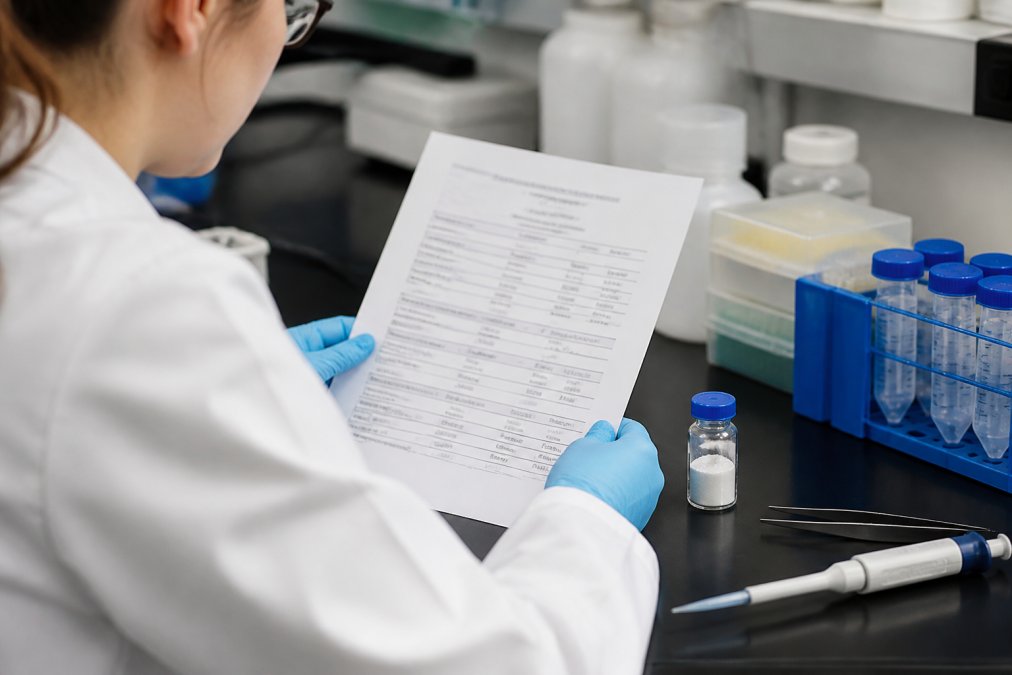
A Certificate of Analysis (COA) is a document from an analytical lab reporting what was actually found in a specific batch. Reading one takes about five minutes once you know what to look for.
What a Batch-Specific COA Must Contain
A batch-specific COA should include:
- The exact peptide name and sequence
- Your batch or lot number
- The analytical method used (HPLC, Mass Spectrometry, or both)
- A purity percentage with the chromatogram attached
- The testing lab's name and credentials
- A test date and a report or sample ID
If any of these are missing, ask the vendor for a complete document. A supplier with nothing to hide will send it.
Independent Laboratory Credentials to Verify
The lab named on the COA should be findable on its own, search its name and check for a real website, physical address, and history of analytical work.
HPLC vs Mass Spectrometry for Peptides: What Each Test Proves
HPLC and Mass Spectrometry answer different questions, and a serious COA uses both. High-Performance Liquid Chromatography (HPLC) measures purity: how much of your sample is the target compound. Mass Spectrometry confirms identity: whether the molecule's mass matches the peptide it claims to be.
Reading Purity Percentage and Impurity Profile
A purity percentage means little without the impurity profile showing what the remaining percentage actually is.
Peptide Vendor Red Flags: Payment, Address, and Registration Checks
Vendor vetting comes down to three checks: how they take payment, where they say they are, and whether that business exists on paper. Fail one, and the relationship is built on sand.
Crypto-Only Payments and Missing Physical Addresses
Crypto-only payment is a red flag because it is irreversible by design, no chargeback, no dispute process, no paper trail tied to a bank.
Other red flags worth noting:
- No batch numbers on vials or COAs
- The same COA reused across every product
- Pressure to buy in bulk before you have tested anything
- Contact only through a chat widget, with no email or phone
Storage, Stability, and Visual Inspection Indicators
A clean COA describes the vial when it left the lab, not what happened en route to your bench. Degradation in transit is a common reason a documented, legitimate peptide still fails, and the failure mode most guides never teach you to spot.
What a Healthy Lyophilized Vial Looks Like
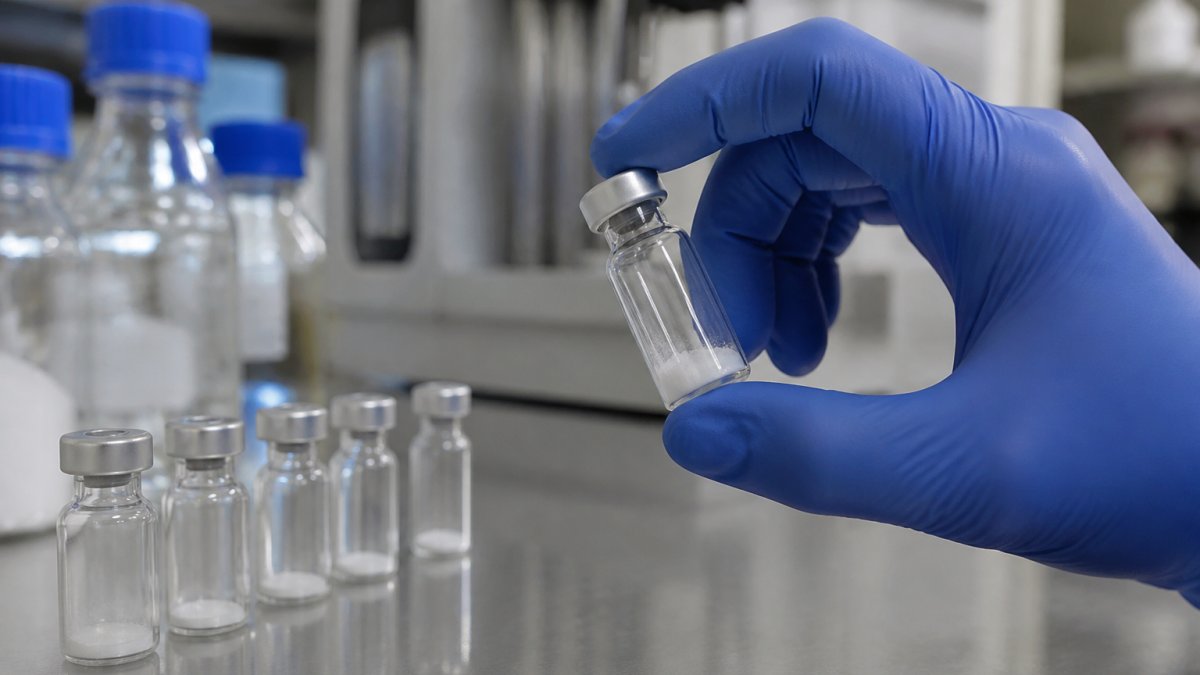
Lyophilization (freeze-drying) leaves the peptide as a cake or plug, a porous, uniform solid at the bottom of the vial. A properly processed vial typically shows:
- A uniform white to off-white color across the entire cake
- An intact structure that holds its shape when the vial is upright
- No visible moisture, frost, or condensation inside the vial
- A clean, dry stopper and crimp with no residue on the walls
The Degradation Checklist
Inspect the vial before reconstituting, in good light against a white background. Flag any of the following:
- Collapse or melting. A cake that has shrunk, pooled, or turned glassy indicates it was exposed to heat or moisture. This is the single most common transit failure.
- Discoloration. Yellowing, browning, or any color shift away from white/off-white suggests oxidation or heat damage. The darker the shift, the more likely the peptide has degraded.
- Clumping or stickiness. A cake that has become gummy or clumped has absorbed moisture. Moisture is the enemy of stability.
- Frost or condensation. Ice inside the vial means it was exposed to a freeze-thaw cycle, which can denature the peptide.
- Residue on the vial walls. Powder clinging high on the walls rather than sitting as a cake suggests the vial was mishandled or the fill was poor.
After Reconstitution
After adding solvent, inspection continues:
- A properly reconstituted solution is clear and colorless (or matches the expected color for that compound).
- Cloudiness, haze, or visible particles are stop signs. Do not proceed to assay. Document and contact the vendor.
- Precipitate that does not dissolve with gentle swirling indicates the material will not go into solution cleanly, a stability or purity problem.
Storage Conditions That Preserve What You Bought
Lyophilized powder is stable long-term when kept cold, dry, and dark. Once reconstituted, stability drops sharply:
- Keep lyophilized vials refrigerated or frozen per the vendor's specification, protected from light.
- Avoid repeated temperature swings. A vial that goes from freezer to bench to freezer repeatedly degrades faster than one kept cold.
- Reconstituted solutions are typically less stable than powder and should be handled per your protocol's timeframe, not stored indefinitely.
Document Everything on Arrival
Photograph each vial on arrival with the batch number visible, noting date and packaging condition. If a vial later fails testing, that record separates "the vendor shipped bad material" from "you stored it wrong." A vendor who stands behind their product will not object.
Legal and Regulatory Landscape for Research Peptides
Most guides treat "research peptide" as one category. It is not. Legal status depends on what the compound is, how it is labeled, and how it is sold, three things that can put visually identical vials in completely different legal buckets.
The Three Buckets a Peptide Can Fall Into
1. Approved prescription drugs. Some peptides are the active ingredient in FDA-approved products. Sold without a prescription and outside approved labeling, you are buying an unapproved drug, regardless of the label.
What Actually Determines Status
The FDA looks at intended use, not just the label. If a vendor's site describes dosing, cycles, or human outcomes, that is evidence of intended human use, and can reclassify the product no matter what the vial says.
A few concrete things to check before you order:
- Search the compound name against the FDA's approved-drug and compounding lists. If it appears as an approved product, a "research" sale is a red flag on its own.
- Check whether the compound is a controlled substance under the DEA's schedules. Some peptide-derived compounds are scheduled; most are not. The distinction is not something to guess at.
- Confirm your state's rules. State pharmacy and controlled-substance laws can be stricter than federal law, and they apply to your facility, not the vendor's.
Why This Matters for Institutional Buyers
At a university, hospital, or federally funded lab, procurement and compliance will ask two questions: what is this compound's regulatory status, and can you document chain of custody? A vendor who cannot answer the first in writing will be rejected.
The Practical Takeaway
Before you vet a vendor, vet the compound: confirm its regulatory bucket, check the federal lists, and check your state. Only then does the COA conversation matter, a perfect COA for a compound you cannot legally possess is a liability with a chromatogram attached.
Reporting Fraudulent Peptide Vendors
Reporting a fraudulent vendor protects the next researcher and takes less time than you would expect. If a supplier sent failed material, reused COAs, or vanished after payment, you have options.
Conclusion
The hardest part of peptide verification is not the science. It is the discipline to check every link in the chain, every time, even when a vendor looks fine on the surface.
Frequently Asked Questions
How can you tell if a peptide is legit before buying?
Request a batch-specific Certificate of Analysis before ordering and check that it lists the exact batch number, HPLC purity percentage, mass spectrometry confirmation, and the name of an independent testing laboratory. Verify that the vendor has a physical address, a registered business entity, and accepts traceable payment methods. A legit peptide supplier will provide this documentation without hesitation, while fraudulent vendors often send generic COAs that do not match the specific lot you receive.
What are the biggest peptide vendor red flags?
The most common peptide vendor red flags include crypto-only payment with no refund option, missing or vague physical addresses, no business registration records, generic COAs reused across products, and purity claims above 99.9% without third-party verification. Vendors that refuse to share the testing laboratory name or cannot answer batch-specific questions should be treated as high risk. Checking Whois records and searching the vendor name alongside terms like 'scam' or 'complaint' often surfaces prior issues.
Is HPLC or mass spectrometry more important for verifying peptides?
Both tests serve different purposes and you need both. HPLC (High-Performance Liquid Chromatography) measures purity percentage and reveals the impurity profile, showing how much of the sample is the target compound. Mass spectrometry confirms molecular identity by measuring the mass-to-charge ratio, proving the peptide is actually what the label claims. A COA with only one of these tests leaves a gap: HPLC alone cannot confirm identity, and mass spec alone cannot confirm purity.
What should I do if I receive a fraudulent or mislabeled peptide?
Stop using the material immediately and document everything: photos of the vial, the label, the batch number, and the COA you were sent. Report the vendor to the Federal Trade Commission at ReportFraud.ftc.gov and to your state attorney general's office. If the product was sold as a dietary supplement, file a complaint with the FDA through its MedWatch program. Notify your institutional procurement office if the purchase went through a university or lab account, and share the details with colleagues who may have ordered from the same source.