 ultimate-guide
High Purity Peptide Pricing Analysis: 2026 Cost Guide
Table of Contents
- Why High Purity Peptide Pricing Analysis Matters for Your Lab Budget
- Peptide Purity Standards: What You're Actually Paying For
- Custom Peptide Synthesis Cost: Key Drivers and Pricing Models
- Third-Party Analytical Verification: The Hidden Value in Your Invoice
- Cost-Per-Purity-Percentage: A Smarter ROI Metric for Researchers
- Supply Chain Volatility and Regulatory Compliance Costs in 2026
- How to Build a Standardized Cost-Comparison Calculator for Peptide Procurement
- Conclusion: Making Informed Procurement Decisions in a Shifting Market
- Frequently Asked Questions
Last Updated: September 21, 2026
Why High Purity Peptide Pricing Analysis Matters for Your Lab Budget
High purity peptide pricing analysis means breaking a vendor quote into its measurable parts, purity level, analytical documentation, synthesis complexity, and batch consistency, so you can compare suppliers on verified value rather than headline price.
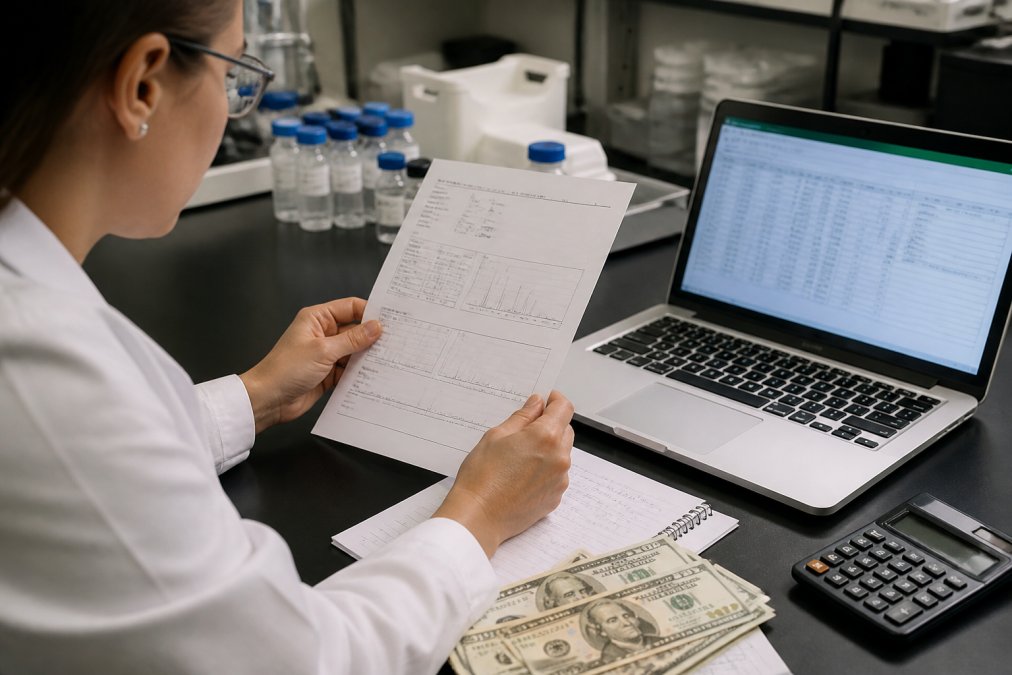
Peptide Purity Standards: What You're Actually Paying For
Peptide purity standards describe how much of a sample is the target sequence versus related impurities, expressed as a percentage from methods like HPLC-UV or LC-MS. A "98% pure" peptide and a "95% pure" peptide are not interchangeable, and the price difference reflects real separation work.
- Crude peptide: the raw synthesis product, often 60-80% target sequence, with deletion and truncation impurities present
- Desalted or partially purified: impurities reduced, but not fully resolved
- Research-grade purified: typically 95% or higher by HPLC-UV
- High-purity grade: 98% or higher, often with mass confirmation by LC-MS
What the Purity Number Actually Measures
A purity percentage is only meaningful when you know the method behind it. Most certificates report purity by HPLC-UV, which separates components on a reversed-phase column and quantifies them by absorbance, typically at 214 nm for the peptide backbone or 220 nm for aromatic residues. The figure is the target peak area divided by total integrated area, so it depends on the gradient, column, and integration window.
- Deletion and truncation sequences: peptides missing one or more residues from failed coupling steps
- Insertion and substitution products: wrong residues incorporated during chain assembly
- Oxidized species: methionine, cysteine, and tryptophan residues modified by exposure to air or reagents
- Diastereomers: epimerized residues from racemization during coupling
- Aggregates and dimers: non-covalent or disulfide-linked species that form during purification or storage
Crude vs. Purified: The Price Gap Explained
The jump from crude to purified is where most of the cost lives. Purification by preparative HPLC is slow, solvent-intensive, and yield-limiting: every additional percentage point of purity costs disproportionately more material and time. An easily purified peptide might scale linearly; a hydrophobic or aggregation-prone sequence might lose most of its yield in the column.
Matching Purity Tier to Application
The right purity tier depends on what the data has to survive. A screening assay that only needs a yes/no signal can tolerate 90-95% material. A quantitative dose-response study, a stability study, or anything headed for external review usually needs 98% or higher with mass confirmation, because impurity peaks can shift apparent potency or introduce artifacts a reviewer will question.
Custom Peptide Synthesis Cost: Key Drivers and Pricing Models
Custom peptide synthesis cost depends on sequence length, amino acid count, synthesis complexity, reagent costs, and the purification method required to hit your target purity. Amino acid count is the first lever: longer sequences mean more coupling cycles, lower yield, and a higher chance of failure at any step.
Per-Milligram vs. Per-Peptide Pricing
Per-milligram pricing scales with quantity, so the more you order, the lower the unit cost. Per-peptide pricing bundles a fixed quantity and purity into one number, simpler to budget but harder to compare across vendors.
Here is how the two models behave in practice:
| Pricing Model | How It Scales | Best For | Watch Out For |
|---|---|---|---|
| Per-milligram | Unit cost drops with quantity | Variable-scale studies, pilot runs | Minimum order quantities |
| Per-peptide | Fixed quantity, fixed price | Budgeting a single defined batch | Hidden purity assumptions |
| Bulk tiered | Discounts at set thresholds | Repeated assays, long studies | Storage and stability limits |
Third-Party Analytical Verification: The Hidden Value in Your Invoice
Third-party analytical verification is independent testing of a peptide lot by a lab with no stake in the sale, and it is the difference between a purity claim and a purity proof. A vendor's in-house analysis is useful, but independent testing removes the conflict of interest reviewers and auditors care about.
HPLC-UV vs. LC-MS: What Each Test Costs and Why It Matters
HPLC-UV separates components by retention time and quantifies purity by UV absorbance, making it the workhorse method for purity assessment. LC-MS adds mass spectrometry, confirming the dominant peak has the expected molecular weight. The two answer different questions: HPLC-UV tells you how clean the sample is, LC-MS tells you whether the main peak is actually your compound.
Cost-Per-Purity-Percentage: A Smarter ROI Metric for Researchers
Cost-per-purity-percentage ROI divides the effective cost of a lot by its verified purity, giving a single number that accounts for both price and quality. It is not perfect, but it exposes quotes that look cheap until you read the specification.
Supply Chain Volatility and Regulatory Compliance Costs in 2026
Supply chain volatility and regulatory compliance costs are now material line items in peptide procurement, not rounding errors. Reagent availability, shipping conditions, and documentation requirements all move the effective price of a lot, sometimes more than the synthesis itself. Most pricing guides stop at the synthesis quote; the layers below are where the real variance lives.
Where the Volatility Comes From
Peptide synthesis depends on a small set of inputs whose prices move independently of the peptide itself: protected amino acid derivatives, coupling reagents such as HATU and HBTU, resins, and the solvents used in synthesis and preparative HPLC, chiefly acetonitrile and trifluoroacetic acid. Acetonitrile is tied to industrial chemical demand and has seen repeated supply tightness, raising the cost of every purification run.
The Compliance Cost Stack
The largest hidden layer is the manufacturing standard. Non-GMP research-grade synthesis and GMP manufacturing are not the same product at different prices; they are different processes with different documentation, facility requirements, and cost structures. GMP adds validated equipment, environmental monitoring, batch record review, deviation handling, and sometimes independent release testing. Those layers can multiply the cost of a lot well beyond the synthesis itself, which is why a GMP lot and a research-grade lot of the same sequence are not comparable per milligram.
- In-house COA only: lowest cost, but the analysis is performed by the party selling the material
- Third-party analytical testing: adds an independent lab fee per lot, and is the layer most reviewers care about
- Lot-specific traceability records: batch numbers, synthesis dates, and chain-of-custody documentation that tie the vial to the analysis
- Stability and storage documentation: accelerated or real-time stability data, which is expensive to generate and rarely provided at research grade
Shipping, Cold Chain, and Customs
Temperature control during transit is a genuine risk. Lyophilized peptides are generally more stable than solution, but a lot that sits in a warm distribution hub can degrade before it reaches your bench. Cold-chain shipping adds refrigerant, insulated packaging, and expedited freight, all of which show up in landed cost rather than the quote. For international shipments, customs clearance, import documentation, and delays add another layer domestic vendors do not carry.
Building Volatility Into Your Budget
A practical approach is to separate the quote into three buckets: synthesis, purification, and logistics-and-documentation. The first two are relatively stable per sequence; the third is where volatility concentrates. Budgeting a contingency on the logistics-and-documentation bucket, and asking vendors to quote shipping and testing separately rather than bundling them, shows what you are actually paying for and where a price increase comes from.
The cheapest quote and the lowest total cost are rarely the same number. Landed cost, verified purity, and documentation quality all belong in the comparison.
How to Build a Standardized Cost-Comparison Calculator for Peptide Procurement
A standardized cost-comparison calculator turns vendor quotes into comparable numbers, so your lab stops deciding on gut feel. Build it once, and every future order runs through the same scoring.
- Landed cost per mg: quote price plus shipping and handling, divided by milligrams received
- Verified purity: the independently measured purity percentage, not the vendor's claim
- Cost-per-purity: landed cost divided by verified purity
- Documentation score: does the COA include method, column, gradient, and mass confirmation?
- Batch consistency history: has this vendor delivered consistent lots across prior orders?
- Turnaround time: quoted lead time versus actual delivery on past orders
- Storage and stability: does the lot fit your storage capacity and study timeline?
Conclusion: Making Informed Procurement Decisions in a Shifting Market
Peptide pricing will keep moving as reagent costs, shipping conditions, and documentation standards shift. The labs that handle it well compare verified value, not headline numbers, and build a repeatable method instead of renegotiating from scratch every cycle.
Frequently Asked Questions
How much does it cost to test a peptide for purity?
Third-party purity testing costs vary by method and vendor. HPLC-UV analysis typically runs $50-$150 per sample, while LC-MS confirmation can cost $100-$300 depending on the lab and turnaround time. These costs are often bundled into the peptide purchase price when you buy from a supplier that provides lot-specific COAs. For researchers running multiple batches, establishing a direct relationship with an analytical lab can reduce per-sample costs through volume agreements.
What factors influence the price of high-purity peptides?
The main cost drivers are sequence length (amino acid count), synthesis complexity, purification method, and purity level. Longer sequences and difficult couplings increase reagent costs and lower synthesis success rates. HPLC purification to 98%+ purity adds significant processing time. Third-party analytical verification, certificate of analysis documentation, and batch consistency testing also contribute. Supply chain volatility for raw amino acids and regulatory compliance costs add further variation.
Is 98% purity the industry standard for research-grade peptides?
Yes, 98% purity by HPLC is widely accepted as the minimum for research-grade compounds. Some applications, such as receptor binding studies or in vivo work, may require 99% or higher. The price difference between 95% and 98% purity can be substantial because achieving that last few percent requires additional purification cycles. Always verify purity claims with a lot-specific certificate of analysis that includes the analytical method used.
How do third-party analytical reports impact peptide pricing?
Third-party analytical verification adds cost because the supplier pays an independent lab for HPLC-UV, LC-MS, or mass spectrometry testing on each lot. This typically increases the per-milligram price by 10-20% compared to suppliers who self-certify. However, the documentation provides defensible proof of identity, purity, and molecular weight verification. For researchers whose results may face scrutiny, this cost is often justified by the reduced risk of wasted experiments and invalid data.