 ultimate-guide
Peptide Storage Protocols for Labs: A Complete Guide
Quick Summary
Peptide storage for labs means keeping lyophilized peptides frozen at -20°C or colder, dry and tightly sealed, and holding reconstituted solutions at 2-8°C for short-term use. Aliquoting stock solutions avoids damaging freeze-thaw cycles, and documented storage logs confirm the material stays usable.
- Store lyophilized peptides at -20°C or colder, dry and tightly sealed.
- Keep reconstituted solutions refrigerated at 2-8°C for short-term use.
- Aliquot stock solutions into single-use volumes before the first freeze.
- Label reconstituted vials with reconstitution date, diluent and concentration.
- Record temperature logs and review them against each compound's lot documentation.
Table of Contents
- Why Storage Conditions Determine Peptide Integrity
- Peptide Storage Temperature by Form: Lyophilized vs. Solution
- Handling Peptide Storage After Reconstitution
- Managing Peptide Freeze-Thaw Cycles Through Aliquoting
- Receiving and Shipping Peptides Without Losing Integrity
- Building a Peptide Storage SOP Template for Your Lab
- Documenting Storage Logs and Spotting Degradation
- Putting Your Peptide Storage Protocol Into Practice
- Frequently Asked Questions
Peptide Storage Protocols for Labs: A Complete Guide
Last Updated: October 31, 2026
Why Storage Conditions Determine Peptide Integrity
Peptide storage protocols for labs decide whether an experiment produces meaningful data or wasted material. A peptide that has degraded before the first assay is no longer the molecule the study was designed around. Many laboratories find that losses trace back to handling and environment rather than to the synthesis.
Peptides are chains of amino acids, and their stability depends on temperature, moisture, light exposure and repeated handling. Each of these factors can break bonds, promote aggregation or reduce the effective concentration of the material in a vial. A common mistake is assuming that a sealed vial protects the peptide indefinitely, when the sealed state only slows change.
Good peptide storage protocols for labs address these factors in a documented, repeatable way. The sections below cover temperature by form, post-reconstitution handling, aliquoting, shipping, a storage SOP template and logging. Each step is written so a lab manager can adapt it to their own equipment and audit requirements.
Peptide Storage Temperature by Form: Lyophilized vs. Solution
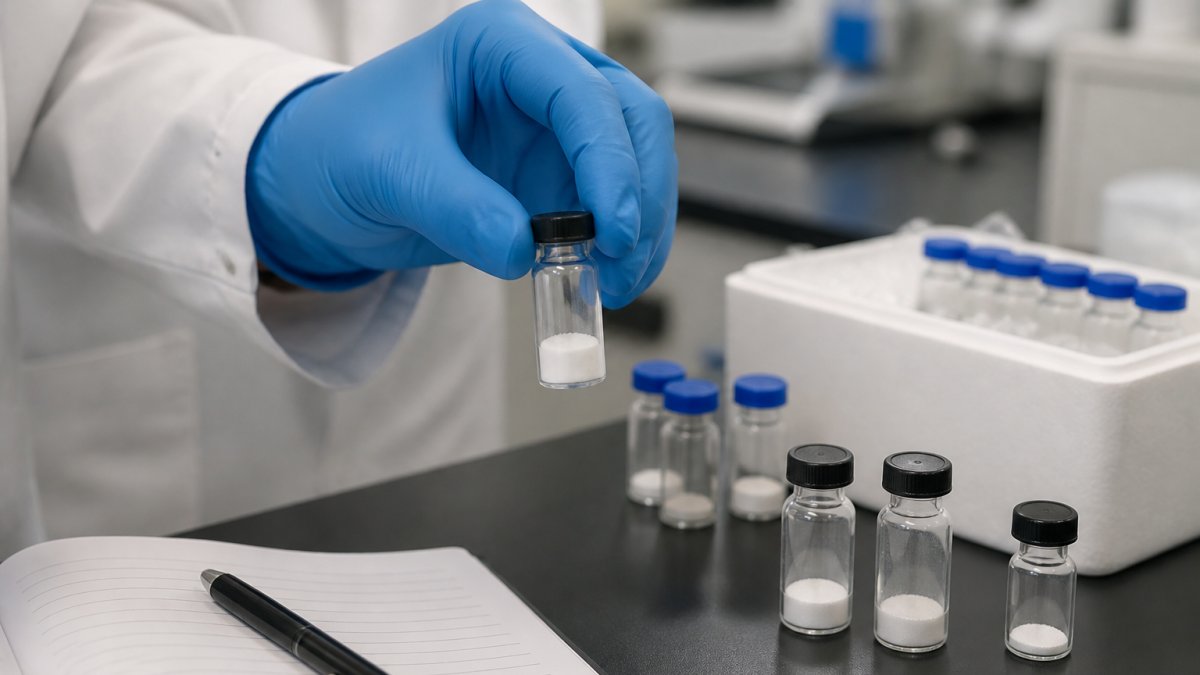
Lyophilized (freeze-dried) peptides are generally more stable than peptides in solution, because removing water removes the main medium for hydrolysis and microbial growth. Lyophilized material is typically stored frozen, at or below -20°C, and kept dry, with the vial tightly sealed. Once a peptide is dissolved, its stability window shortens considerably.
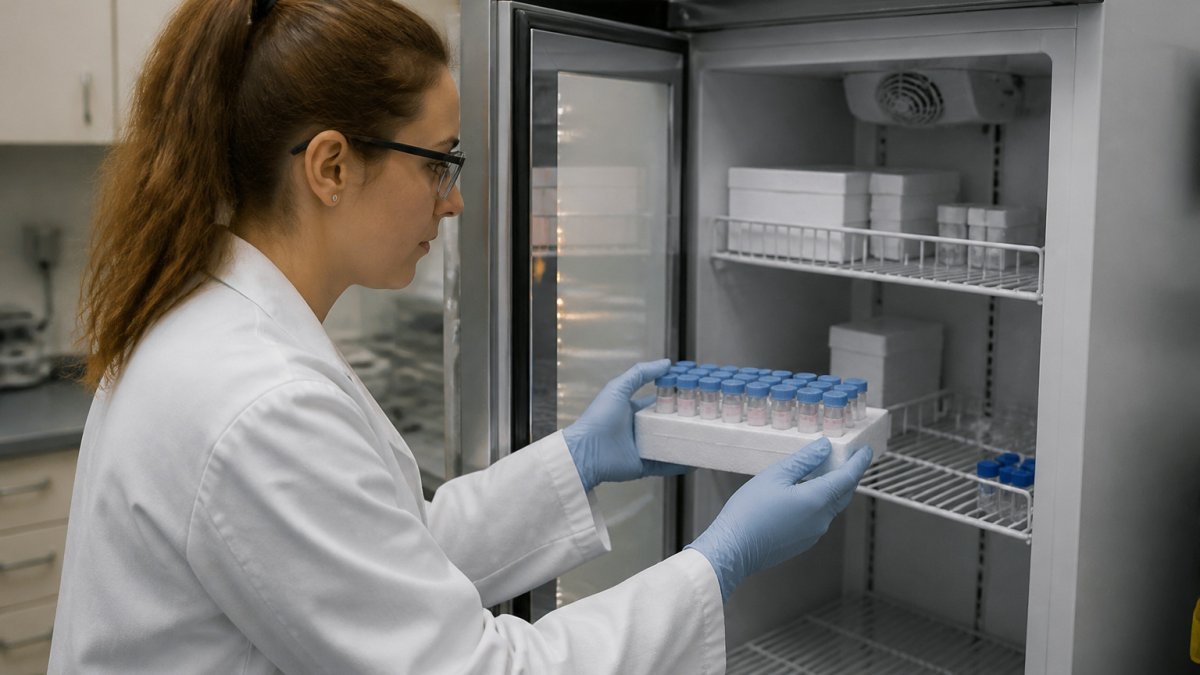
Solutions should be kept refrigerated at 2-8°C for short-term use, or aliquoted and frozen for longer holding periods. Confirm the specific temperature requirement on the Certificate of Analysis for each lot, since sequence and formulation change the recommended conditions.
| Form | Typical Storage | Key Risk |
|---|---|---|
| Lyophilized | -20°C or colder, dry, sealed | Moisture uptake on opening |
| Reconstituted solution | 2-8°C short-term | Hydrolysis and microbial growth |
| Aliquoted frozen solution | -20°C or colder | Freeze-thaw damage |
Watch out: letting a cold vial warm to room temperature before opening invites condensation inside the vial, which reintroduces the moisture the lyophilized form was meant to exclude.
Handling Peptide Storage After Reconstitution
Once reconstituted, a peptide begins to lose stability at a faster rate, so the handling decisions made in the first hours matter. Record the reconstitution date, the diluent used and the concentration on the vial label. Without these details, it becomes impossible to judge how long the solution can be trusted.
Store reconstituted material at the temperature specified for that peptide, protect it from light where the lot documentation requires it, and avoid leaving it at room temperature between uses. Before reconstituting, review safe reconstitution best practices that cover the steps that come before storage. Keep the time out of refrigeration as short as possible during each withdrawal.
Managing Peptide Freeze-Thaw Cycles Through Aliquoting
Repeated freezing and thawing is one of the most common causes of avoidable peptide loss. Each cycle exposes the material to ice crystal formation and concentration shifts that can cause aggregation. The practical solution is aliquoting: dividing a stock solution into single-use volumes before the first freeze.
Plan aliquot volumes around your planned experiments so that each aliquot is used once. Label each aliquot with the peptide name, lot number, concentration and date. Many labs find that this single change removes most freeze-thaw damage from their workflow.
Receiving and Shipping Peptides Without Losing Integrity
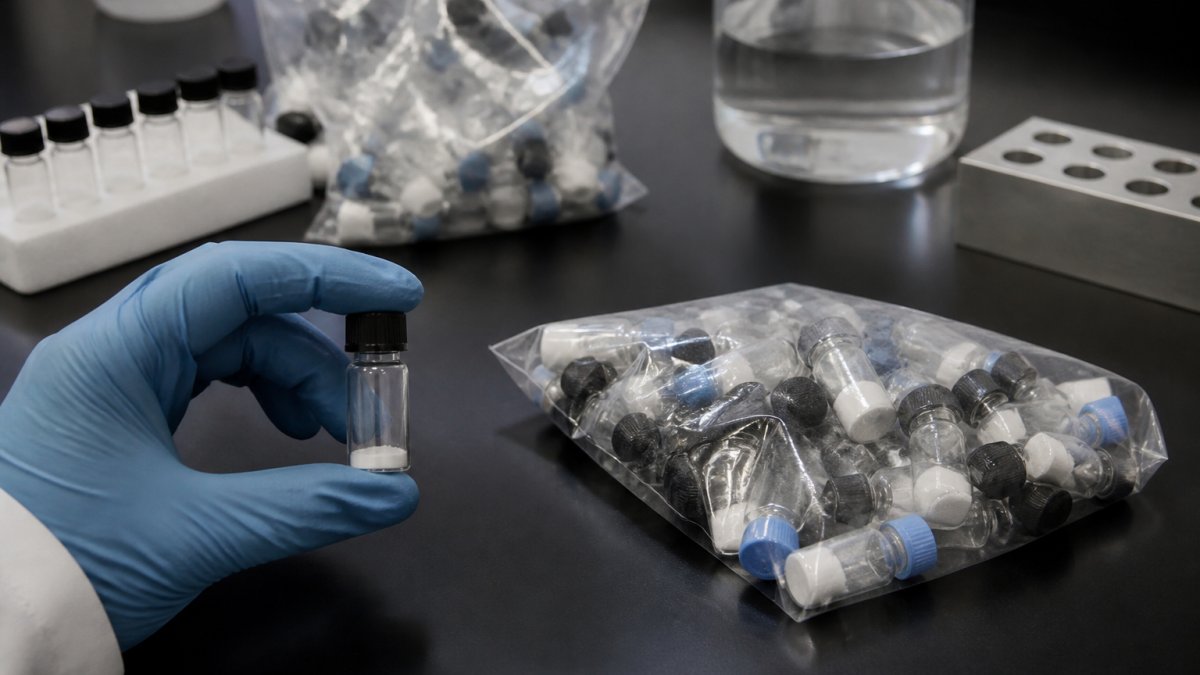
Temperature excursions during transit are a frequent source of compromised material. On receipt, check the packaging for condition, confirm that any cold-chain indicators are intact, and move the material to the required storage condition promptly. Read about avoiding degraded peptide samples during shipping to protect material in transit. Document the arrival time and condition in your records.
When shipping materials between sites, use validated cold packaging and track the shipment. For current shipping details, check the Bluegrass Research website or request a quote for your order.
Building a Peptide Storage SOP Template for Your Lab
A standard operating procedure turns good intentions into consistent practice. A workable peptide storage SOP template should include the following sections:
- Scope: which peptide forms and storage locations the SOP covers
- Storage conditions: target temperature, humidity and light requirements per form
- Receiving: inspection steps and documentation on arrival
- Reconstitution and aliquoting: diluent, concentration and aliquot labeling rules
- Freeze-thaw limits: maximum thaw events permitted per aliquot
- Logging and review: temperature monitoring frequency and who reviews the records
Review the SOP at least annually and after any equipment change, so that it reflects how the lab actually operates.
Documenting Storage Logs and Spotting Degradation
Storage logs are the evidence that protects your data. Record temperature readings from monitored units at a defined frequency, note any excursions with the time, duration and corrective action, and keep these records alongside the lot documentation for each compound.
Signs of degradation can include changes in appearance, unexpected precipitation or cloudiness in solution, and assay results that drift from baseline. When a result looks inconsistent, check the storage log first. Accurate records let you determine whether a material is still suitable or should be quarantined.
Putting Your Peptide Storage Protocol Into Practice
Strong peptide storage protocols for labs combine the right temperature for each form, disciplined reconstitution and aliquoting, careful receiving, a clear SOP and complete logs. Start by auditing your current storage against the sections above, then close the gaps one at a time. Bluegrass Research supplies lot-specific Certificates of Analysis, so that your documentation starts from verified material.
Frequently Asked Questions
How should research peptides be stored in a laboratory?
Store lyophilized research peptides in tightly sealed, labeled vials in a dedicated, temperature-monitored freezer or refrigerator, away from light and moisture. Keep the original packaging or desiccant where possible, and log each unit's location and receipt date. Reconstituted peptides should be handled under separate conditions, typically refrigerated and used within a documented window. Limit unnecessary door openings and separate stored compounds from food or consumables. Reviewing your lab's storage SOP at regular intervals keeps practices consistent across users and staff.
What temperature should peptides be stored at?
Peptide storage temperature depends on the form and the manufacturer's documentation. Lyophilized peptides are commonly stored frozen for long-term use, while short-term storage at refrigerated temperatures is often acceptable. Reconstituted peptides generally require refrigeration and shorter use windows than dry powder. Always follow the storage conditions stated on the lot-specific certificate of analysis for each compound. Use a continuously monitored unit with alarms so deviations are detected and recorded promptly.
How should peptides be aliquoted to avoid repeated freeze-thaw cycles?
Divide reconstituted peptide into single-use aliquots immediately after preparation, sized to match planned experiments. Use sterile, low-binding tubes and label each aliquot with compound name, concentration, preparation date, and aliquot number. Store aliquots at the appropriate temperature and thaw only the volume needed for a given run. Discard any unused thawed material rather than refreezing it, and record each thaw event in your storage log.
What information should a peptide storage log include?
A complete storage log should record the compound name, lot number, supplier, receipt date, storage location, and current quantity. For reconstituted material, include the diluent used, preparation date, concentration, and expiry or discard date. Log every freeze-thaw event and any temperature excursion with the date, time, and staff initials. Keep the lot-specific certificate of analysis linked to each entry so the compound's verified purity and documentation can be confirmed during audits.
How can a lab tell whether a peptide has degraded?
Visual inspection can reveal obvious problems such as discoloration, clumping in a lyophilized cake that was dry, or cloudiness in a solution. However, degradation often has no visible sign, so storage history matters as much as appearance. Review the temperature log, the number of freeze-thaw cycles, and the time elapsed since reconstitution. When integrity is in doubt, compare results against the certificate of analysis and consider re-testing before using the material in a study.