 blog
Is Peptide Research Documentation Worth It
Table of Contents
- What Peptide Research Documentation Actually Protects
- How to Read a Peptide COA and What It Tells You
- Lot-Specific Peptide Testing: Why Batch Records Matter
- The Cost-Benefit Reality: Time, Money, and Reproducibility
- Peptide Research Documentation Checklist for Lab Standards
- Common Documentation Mistakes That Undermine Research Integrity
- Frequently Asked Questions
Last Updated: October 10, 2026
What Peptide Research Documentation Actually Protects
Proper peptide research documentation creates an audit trail proving what you used, its purity, and whether your results can be trusted by peers or regulators.
Documentation protects research integrity, compound safety, and your ability to defend findings. Without it, reviewers question your methods, regulators reject conclusions, and you lose the ability to replicate your own work.
Researchers who maintain detailed peptide research documentation from day one spend far less time troubleshooting later. They can pinpoint when a batch degraded, which supplier variation caused a problem, or whether a protocol error skewed results.
How to Read a Peptide COA and What It Tells You
A Certificate of Analysis (COA) is third-party verification that your peptide batch meets stated purity and identity standards. It provides independent verification of what you actually received and forms the foundation of your documentation system.
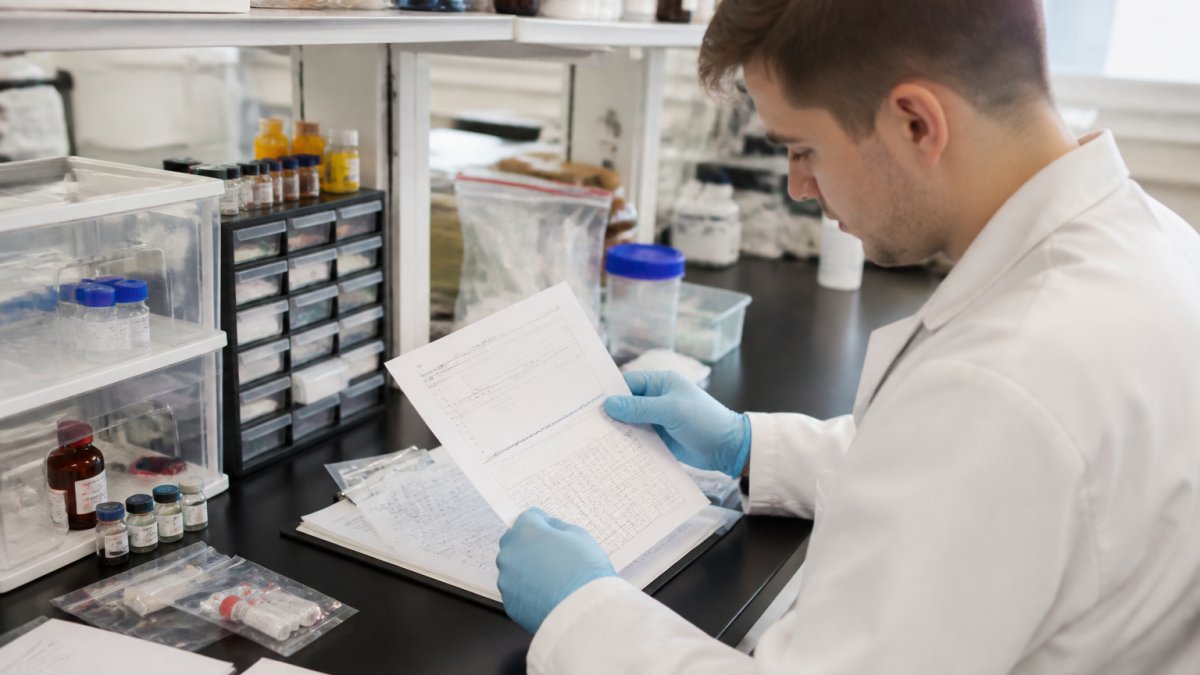
Essential COA Sections and What They Mean
The most important sections of a COA are:
- Lot number and date tested: Confirms which batch you received and when analyzed. A COA without a lot number is not useful for traceability.
- Purity percentage: Shows actual purity (typically 95%+ for research-grade peptides) by HPLC. A range (e.g., "97-99%") suggests batch-to-batch variation; a single value may indicate a typical specification rather than the actual result.
- Test methods used: Lists analytical techniques applied (HPLC, mass spectrometry, amino acid analysis, etc.). A COA using multiple methods is more comprehensive than one using a single method.
- Pass/fail status: Indicates whether the batch met minimum standards. A "fail" or "conditional pass" should raise questions about why the supplier is offering a batch that didn't meet specifications.
- Expiration or stability data: Shows how long the compound remains stable under specified storage conditions (e.g., "stable for 24 months at 2-8°C"), critical for planning your research timeline.
- Reference standards and acceptance criteria: Shows what standards were used to verify identity and acceptable ranges for each test.
Evaluating COA Quality: Red Flags and Green Flags
A weak COA provides only purity numbers. A strong COA includes test methodology, reference standards, detailed impurity breakdown, and analyst certification.
Red flags that indicate a weak COA:
- No lot number or date. You can't verify that you received what was tested.
- Purity only, no impurity breakdown. A COA stating "98% pure" without listing the other 2% tells you nothing about whether those impurities affect your research.
- No test method listed. You can't assess the reliability of the result.
- Generic acceptance criteria. A COA stating "meets specifications" without actual numbers is not useful.
- No signature or certification. Suggests the COA may not have been independently verified.
- Vague stability claims. "Stable under normal storage conditions" is not useful; you need specific temperature ranges, humidity limits, and duration.
Green flags that indicate a strong COA:
- Specific lot number, test date, and expiration date. This creates a clear audit trail.
- Detailed impurity profile. The COA lists not just purity percentage but also the identity and percentage of each major impurity. This helps you understand whether impurities could affect your research.
- Multiple test methods. A COA that includes HPLC purity, mass spec confirmation, and water content analysis is more comprehensive than one using a single method.
- Acceptance criteria clearly stated. The COA shows the acceptable range for each test (e.g., "Purity: 95-102% by HPLC") and confirms the batch met those criteria.
- Analyst certification and lab accreditation. The COA is signed by a qualified analyst and references lab accreditation (e.g., ISO 17025 certification), indicating independent verification.
- Storage and handling recommendations. The COA includes specific guidance on temperature, light exposure, and humidity, plus information about re-testing if storage conditions were exceeded.
Using COA Data to Inform Your Documentation
When you receive a peptide batch, photograph or scan the COA and store it linked to the lot number. Extract key information into your lab's master inventory: lot number, supplier, purchase and COA dates, purity percentage and test method, expiration date, storage requirements, and special handling notes. This 5-10 minute step creates a searchable record you can reference months later.
Comparing Suppliers by COA Depth
Request a sample COA from new suppliers and assess it against the red flags and green flags above. A supplier refusing to provide a sample COA or offering only a generic purity number signals they don't prioritize quality verification or transparency.
Lot-Specific Peptide Testing: Why Batch Records Matter
Lot-specific peptide testing ties unique test results to each production run. Batch records matter because peptide quality varies from run to run. Documenting lot-specific results lets you track variations and identify patterns.
Traceability to specific lot numbers lets you flag quality patterns with suppliers and correlate anomalous results to specific batches, what separates defensible research from guesswork.
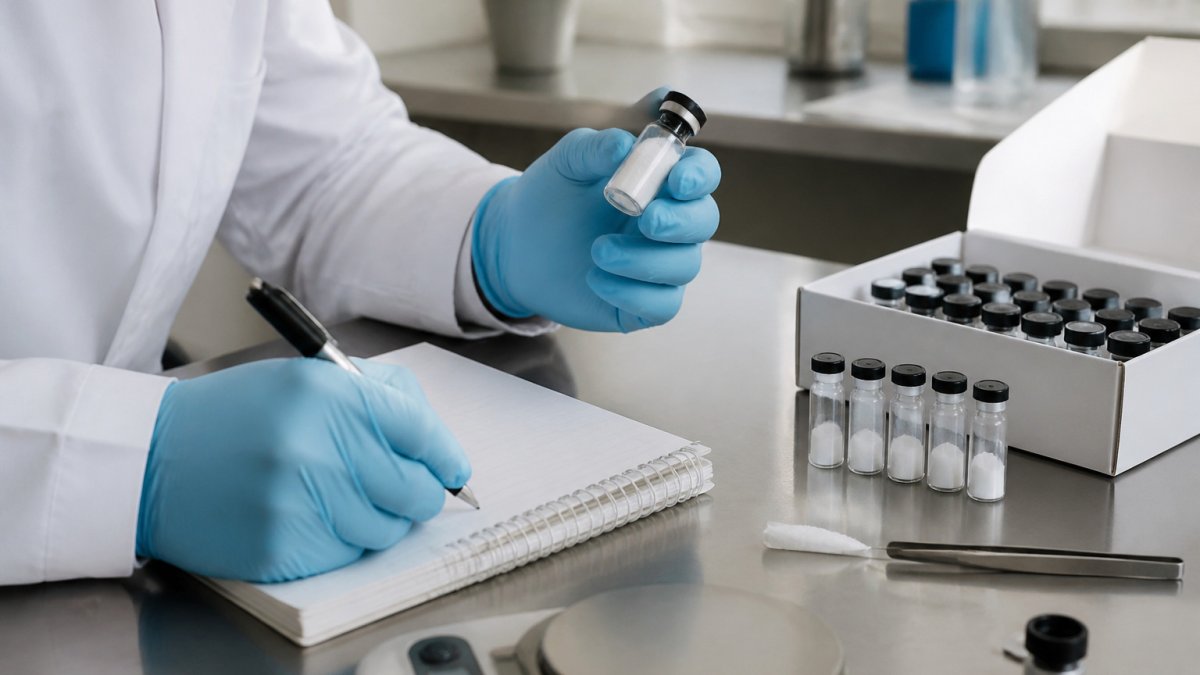
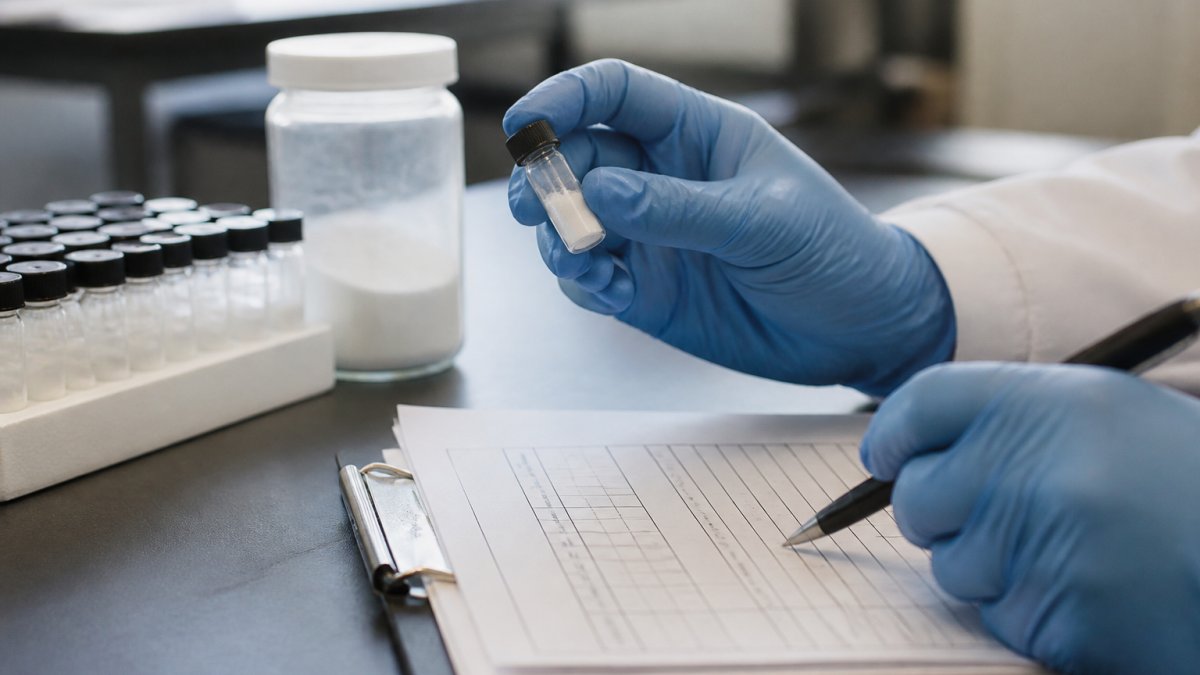
Label storage containers with lot number, purchase date, and COA date. Record which lot you used in each experiment. This creates the documentation trail that makes your research reproducible and credible.
The Cost-Benefit Reality: Time, Money, and Reproducibility
Building a documentation system requires upfront investment in templates and record organization. Most researchers build on previous work, run follow-up studies, or collaborate with other labs, at which point poor documentation becomes a bottleneck.
Quantifying the Real Cost of Inadequate Documentation
Consider what happens when documentation fails:
Experiment repetition due to unclear methods. You run an 8-week stability study but have no record of exact temperature and humidity conditions. You repeat the entire experiment. Cost: 40-60 hours plus $200-500 in compound waste.
Batch quality issues you can't trace. Without lot-specific documentation, you can't determine whether inconsistent results came from a degraded batch, protocol drift, or storage problems. You repeat all experiments. Cost: 30-50 hours plus $300-800 in compounds.
Peer review rejection due to insufficient methods detail. Reviewers request detailed information about peptide sourcing, purity verification, storage conditions, and lot numbers. You scramble to reconstruct this from scattered notes. The revision takes 20-30 hours and delays publication by 2-3 months.
Regulatory or audit failure. If your research will eventually support a regulatory submission (even indirectly), missing documentation can invalidate months of work. The FDA and other regulatory bodies expect traceable records of compound identity, purity, storage, and handling. Without them, your data may be deemed unreliable.
The Documentation Investment
A solid documentation system requires: initial setup (3-5 hours), per-experiment maintenance (20-40 minutes), and monthly review (30-45 minutes). Over a year of 20 experiments, that's approximately 50-70 hours total. One failed experiment due to unclear methods costs 40-60 hours, paying back your entire year of documentation effort.
When Documentation Becomes Non-Negotiable
Documentation becomes essential when: you use multiple batches of the same peptide (batch-to-batch variation is real), you collaborate with other labs (they need exact details), your work will be peer-reviewed or published (reviewers expect detailed methods), you're running follow-up studies (memory fades after 6-12 months), your peptides are expensive (avoid wasting compound on repeated experiments), or you work with unstable peptides (require detailed storage and handling records).
The Reproducibility Dividend
Documentation creates a reproducibility dividend: validating unexpected results by repeating experiments with the same lot and protocol, troubleshooting protocol changes, and building institutional knowledge for new team members.
The math shifts decisively in favor of documentation when you're working with expensive compounds, running multiple experiments, or planning to publish. Documentation becomes non-negotiable when your research will be reviewed by regulators, peer reviewers, or collaborators.
Peptide Research Documentation Checklist for Lab Standards
A functional documentation system doesn't need to be complex. It needs to be consistent and complete. Use this checklist to build a system that works for your lab:
- Assign unique lot numbers to every peptide batch upon arrival
- Create a master inventory log with lot number, purchase date, supplier, and quantity
- Store the COA (or photograph it) in a dedicated folder linked to the lot number
- Record storage conditions: temperature range, light exposure, humidity level
- Date every experiment and record which lot number was used
- Document the exact protocol followed, including any deviations
- Note any observations about compound appearance, solubility, or stability
- Record final results and tie them back to the specific lot used
- Flag any batches that show unexpected behavior or degradation
- Review your documentation monthly to catch gaps while memory is fresh
This checklist covers the essentials. More advanced labs may add additional layers: stability testing over time, detailed impurity tracking, or statistical analysis of batch variation. But these ten items form the foundation of defensible peptide research documentation.
Common Documentation Mistakes That Undermine Research Integrity
Most researchers don't intentionally create poor documentation. They make mistakes born from habit or time pressure. Recognizing these patterns helps you avoid them.
Storing COAs separately from research notes. Your peptide research documentation is only useful if you can find it.
Assuming you'll remember the details later. You won't. Write down storage conditions, handling notes, and any observations immediately. What seems obvious today becomes unclear in three months.
Using generic batch descriptions instead of lot numbers. "The peptide from Supplier X" is not documentation. "Lot BR-2026-0847 from Bluegrass Research, tested October 2026" is. Always use the specific identifier.
Skipping documentation for "quick experiments." There's no such thing as a quick experiment that doesn't matter. If it doesn't matter enough to document, it doesn't matter enough to run.
Failing to track storage conditions. A peptide stored at room temperature for three weeks may have degraded significantly. If you don't document where and how long it was stored, you can't evaluate whether degradation affected your results.
Not updating documentation after experiments conclude. Documentation isn't complete when you finish an experiment. Add notes about what worked, what didn't, and what you'd change next time. That reflection is where reproducibility insights live.
Peptide research documentation is worth the effort because it transforms scattered experiments into credible science.
At Bluegrass Research, every peptide batch arrives with lot-specific third-party analytical documentation that gives you the foundation to build your own system. When your documentation starts with reliable source data, the rest of your record-keeping becomes exponentially more valuable. Shop Now to get started with compounds you can document with confidence.
Frequently Asked Questions
Why do peptides come labeled 'for research purposes only'?
This labeling indicates the peptides are experimental compounds not approved for human consumption and are intended solely for controlled laboratory study. Research-purposes-only labeling protects both suppliers and researchers by establishing that the material is for scientific investigation, not clinical use. It clarifies the legal status and reinforces that documentation, purity verification, and controlled conditions are essential for legitimate research work.
What should a peptide certificate of analysis include to be defensible?
A complete COA must include lot-specific batch number, purity percentage (typically HPLC or mass spectrometry results), identity confirmation, testing date, expiration or stability data, and the third-party laboratory's credentials and accreditation. It should also show the exact compound tested, molecular weight verification, and any detected impurities. This documentation proves your peptide source was verified at receipt and supports reproducibility if your research results face scrutiny.
Does third-party testing make peptide documentation more reliable?
Yes. Third-party analytical testing removes conflict of interest because the lab testing the peptide has no financial stake in the result. Independent verification establishes an unbiased purity and identity record that holds up under peer review or regulatory examination. When your supplier provides third-party COAs rather than in-house testing alone, you gain documented accountability and traceability that strengthens the credibility of your research findings.
Is peptide research documentation worth the added cost?
Documentation costs are justified if your research will be published, reviewed, or used to inform clinical decisions. Verified lot-specific records prevent costly failed experiments from degraded compounds, support reproducibility claims, and protect against liability if results are challenged. For small independent labs or preliminary studies, minimal documentation may suffice; for rigorous trials or institutional research, third-party verification and batch traceability are essential investments in research integrity.