 blog
How to Compare Research Peptide Suppliers Before You Order
Last Updated: October 29, 2026
Quick Summary
Compare research peptide suppliers by documentation before price: request the certificate of analysis for the exact lot you will receive, then check that it reports identity and purity, names the testing lab, and carries a date and batch number. A supplier that cannot produce these details gives you no way to verify what is in the vial.
- Ask for the COA for the specific lot, not a sample or generic sheet.
- A usable COA reports lot number, identity by mass spectrometry, and purity by HPLC.
- Confirm the lot number on the COA matches the label on your vial.
- Compare cost per milligram, not cost per vial, using identical specifications.
- Confirm the supplier describes the product as research-use-only before ordering.
Table of Contents
- Why the American Peptides vs Kylo Peptides Comparison Matters for Lab Buyers
- What a Peptide Supplier Certificate of Analysis Should Contain
- How Third-Party Peptide Testing Verifies Purity and Identity
- Research Peptide Storage Guidelines for Lyophilized and Reconstituted Compounds
- Research Peptide Shipping and Packaging: What Protects Compound Integrity
- Pricing, Minimum Orders and Institutional Purchasing Considerations
- Choosing a Supplier for Your Next Order With Bluegrass Research
- Frequently Asked Questions
Why the American Peptides vs Kylo Peptides Comparison Matters for Lab Buyers
Most comparisons of research peptide suppliers focus on catalog size and price. Those factors matter less than whether the supplier can prove what is in the vial. For a lab running a study, a compound with uncertain identity or purity can invalidate weeks of work.
We recommend treating any supplier comparison as a documentation review first. Ask for the COA for the specific lot you will receive, not a sample sheet. Check whether the testing lab is named, whether purity and identity are both reported, and whether the report carries a date and batch number. If a supplier cannot produce these details, the price difference is irrelevant.
This framing applies equally to any two suppliers you are weighing. The question to ask is always the same: what evidence supports this product's identity and purity?
What a Peptide Supplier Certificate of Analysis Should Contain
A usable COA identifies the compound, the lot, and the analytical methods used. At minimum, look for:
- Lot or batch number that matches the label on your vial
- Identity confirmation, typically by mass spectrometry
- Purity percentage, usually by high-performance liquid chromatography (HPLC)
- Testing laboratory name and date
- Net quantity and appearance of the lyophilized material
A COA that lists purity without a method, or omits the lot number, gives you less to verify. Treat it as a starting point, not proof.
Reading Lot-Specific Versus Generic COAs
A lot-specific COA is tied to the batch you receive. A generic COA describes a compound in general and may come from an earlier production run. The difference matters because purity can vary between batches.
To check, compare the lot number printed on the COA against the number on your vial. If they do not match, or the document says "representative" or "typical," ask the supplier for the batch-specific report before you rely on it.
The table below summarises what a usable certificate of analysis should show, so you can check each supplier's documents against the same list.
| Item | What to look for | Why it matters |
|---|---|---|
| Lot or batch number | Matches the label on your vial | Confirms the report covers your batch |
| Identity confirmation | Typically by mass spectrometry | Confirms the compound is the one ordered |
| Purity percentage | Usually by HPLC | Shows how much of the sample is the target compound |
| Testing laboratory and date | Named lab with report date | Lets you verify the result directly |
| Net quantity and appearance | Stated on the COA | Checks the material matches the order |
How Third-Party Peptide Testing Verifies Purity and Identity
Third-party testing means an independent laboratory, not the seller, analyzes the material. This separation reduces the risk that results are shaped by the party selling the product. But "third-party tested" is a claim, not a result, the value comes from what was tested, how, and whether you can verify it.
The Two Core Assays and What They Actually Prove
Most research-grade peptide COAs rely on two analytical methods:
- High-performance liquid chromatography (HPLC) separates the components of a sample and reports the relative area of the main peak as a purity percentage. A "98% pure" result means 98% of the detected UV-absorbing material eluted as the target peak, it does not identify what that peak is, and it does not detect non-UV-absorbing contaminants.
- Mass spectrometry (MS), most commonly electrospray ionization (ESI) with a single-quadrupole or time-of-flight analyzer, measures the mass-to-charge ratio of the ions and confirms the molecular weight matches the expected compound. A match on mass supports identity but says nothing about purity.
That is why a credible COA reports both. Purity without identity can describe the wrong compound; identity without purity can describe a contaminated one. Neither assay, on its own, confirms sterility, endotoxin content, or heavy metals.
Reading the Numbers Competitors Don't Explain
When you compare two COAs side by side, look past the headline purity figure:
- Purity percentage and method. A 99% HPLC result at 214 nm is not directly comparable to a 95% result at 220 nm; wavelength and gradient method affect the number. Ask for the chromatogram, not just the summary line.
- Identity confirmation. The reported mass should match the theoretical molecular weight of the peptide (plus or minus the instrument's tolerance). A COA that lists a mass without the expected value gives you nothing to check.
- Lot traceability. The lot number on the COA must match the vial label. A COA marked "representative" or "typical" describes a batch, not your batch.
- Testing lab name and report date. A named lab with a dated report can be contacted for verification; an unnamed "independent lab" cannot.
Verifying the Report Itself
A named lab with a traceable report gives you more confidence than an unnamed "independent test." Where the lab publishes a verification portal or report ID, use it. Where it does not, ask the supplier for the lab's contact information and confirm the report directly. This step takes minutes and is the single highest-value check in a supplier comparison.
Some labs also run endotoxin (LAL) testing or heavy-metal screens by ICP-MS. These are not standard for every compound, so check which tests were run rather than assuming all of them were. For cell-culture or in vivo work, the absence of an endotoxin result is a real gap, not a formality.
FDA guidance on analytical procedures and methods validation
Research Peptide Storage Guidelines for Lyophilized and Reconstituted Compounds
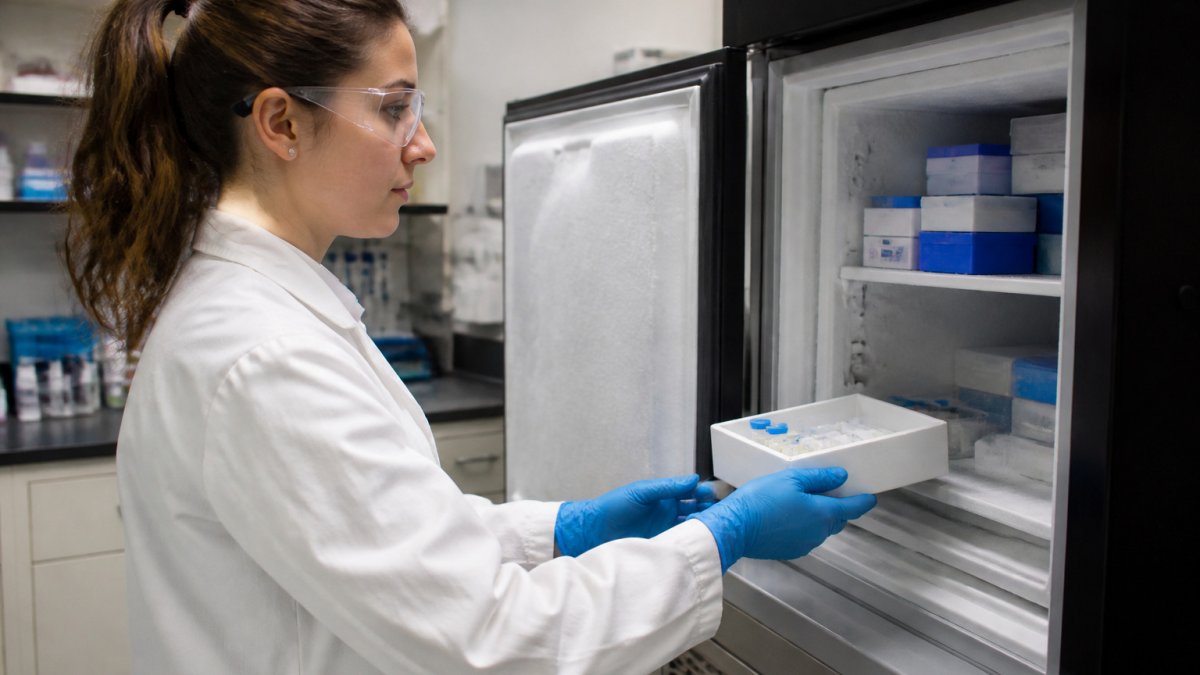
Storage conditions affect whether a compound stays usable after delivery. Lyophilized (freeze-dried) peptides are generally more stable than reconstituted solutions, which degrade faster and are sensitive to repeated freezing and thawing.
A few practical rules apply to most lab settings:
- Store lyophilized material sealed, cold, and protected from light, following the supplier's stated temperature.
- Keep vials dry, since moisture is a common cause of degradation.
- Aliquot reconstituted solutions into single-use portions to avoid repeated freeze-thaw cycles.
- Label every vial with the compound name, lot number, reconstitution date, and concentration.
Storage recommendations differ by compound and by research peptide suppliers, so always follow the guidance printed with your specific lot.
Research Peptide Shipping and Packaging: What Protects Compound Integrity
Transit is a stress point for any compound. Temperature swings, delays, and rough handling can all affect the material on arrival.
When comparing suppliers, ask how they control temperature during transit, what packaging they use, and whether they track shipments. Clear answers on these points indicate a supplier that has thought about compound integrity beyond the sale itself. Bluegrass Research offers discreet US shipping with no external branding.
If a supplier cannot describe its shipping process, factor that uncertainty into your decision, especially for time-sensitive orders.
Pricing, Minimum Orders and Institutional Purchasing Considerations
Pricing depends on quantity, dates, and delivery, so compare quotes for the same specification rather than list prices alone. Price comparison only works if you normalize the unit.
Normalizing Price Before You Compare
Ask each supplier to quote the same three things: compound, quantity in milligrams, and lot. Then calculate cost per milligram, not cost per vial. A 5 mg vial at one price and a 10 mg vial at another are not comparable until you divide. Factor in shipping and any handling or documentation fees.
Ask each supplier whether it has minimum order quantities, since terms can differ for small and high-volume buyers.
What Institutional Buyers Should Confirm
Institutional buyers should confirm that a supplier's invoicing, packaging, and documentation fit their procurement and compliance process. In practice that means:
- A formal quote with a quote number and expiration date, not just a cart total.
- Payment terms, whether the supplier accepts purchase orders, net terms, or card only.
- Documentation package, COA per lot, and packing slip that matches the PO.
- Receiving requirements, confirm delivery and receiving details directly with the supplier.
For current pricing and a quote, see the Bluegrass Research website.
The Regulatory Context That Affects Purchasing
Research peptides sit in a regulatory gray area that affects how they can be bought and sold, so the buyer's intended use, the supplier's claims, and the documentation trail all matter.
Before you compare price, confirm the supplier's terms describe the product as research-use-only, that its claims stay within that framing, and that your institution's own compliance office is comfortable with the category. Price is the last variable in the decision, not the first.
Choosing a Supplier for Your Next Order With Bluegrass Research
The best supplier is the one whose documentation you can verify. Start with the COA for the exact lot, confirm the testing lab, check storage and shipping practices, and then compare price on equivalent specifications.
If you are ready to review current options, you can browse Bluegrass Research's current product listings before choosing a supplier.
For independent verification,
Choose the supplier whose records hold up under scrutiny, because a result is only as reliable as the material behind it.
Frequently Asked Questions
How can researchers compare peptide suppliers?
Start with the documentation. Ask each supplier for a lot-specific certificate of analysis that lists the lot number, identity confirmation, purity by HPLC, and the testing laboratory's name. Then check whether third-party testing is offered, how storage and shipping temperatures are controlled, and whether the supplier's documentation can withstand institutional procurement review. Compare the full package, not only the price per milligram, because a lower price with weak verification can cost more in failed experiments and repeat orders.
What documentation should a research peptide supplier provide?
A complete package should include a lot-specific certificate of analysis, identity confirmation such as mass spectrometry data, purity results, and the test method used. Ideally the document also names the testing laboratory and shows the date of analysis. Researchers should confirm that the COA matches the exact lot shipped, not a generic template for the compound. Documentation that cannot be traced to a specific lot is harder to defend in a peer review or an institutional audit.
How can you verify a peptide certificate of analysis?
Check that the lot number on the COA matches the label on your vial. Confirm the purity percentage and the analytical method, such as HPLC, and look for identity data from mass spectrometry. If the supplier offers third-party testing, verify that the testing laboratory is named and that its report can be requested independently. Any COA that is generic, undated or missing a lot number should be treated as incomplete until the supplier clarifies it.
How should research peptides be stored?
Lyophilized peptides are generally kept cold, sealed and protected from light and moisture until use. Once reconstituted, solutions are less stable and should be refrigerated and used within the period the supplier or published stability data supports. Store vials in an organized, labeled system with the lot number and receipt date recorded. Consult the supplier's storage recommendations for each compound, since stability varies by sequence and formulation.