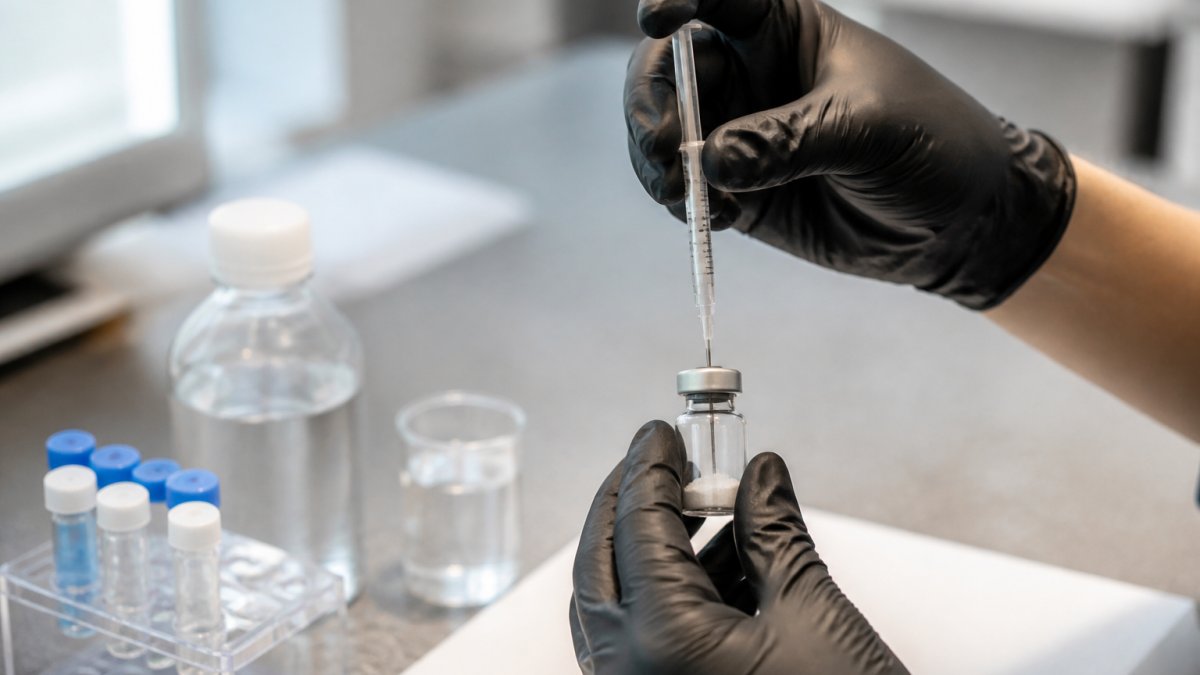
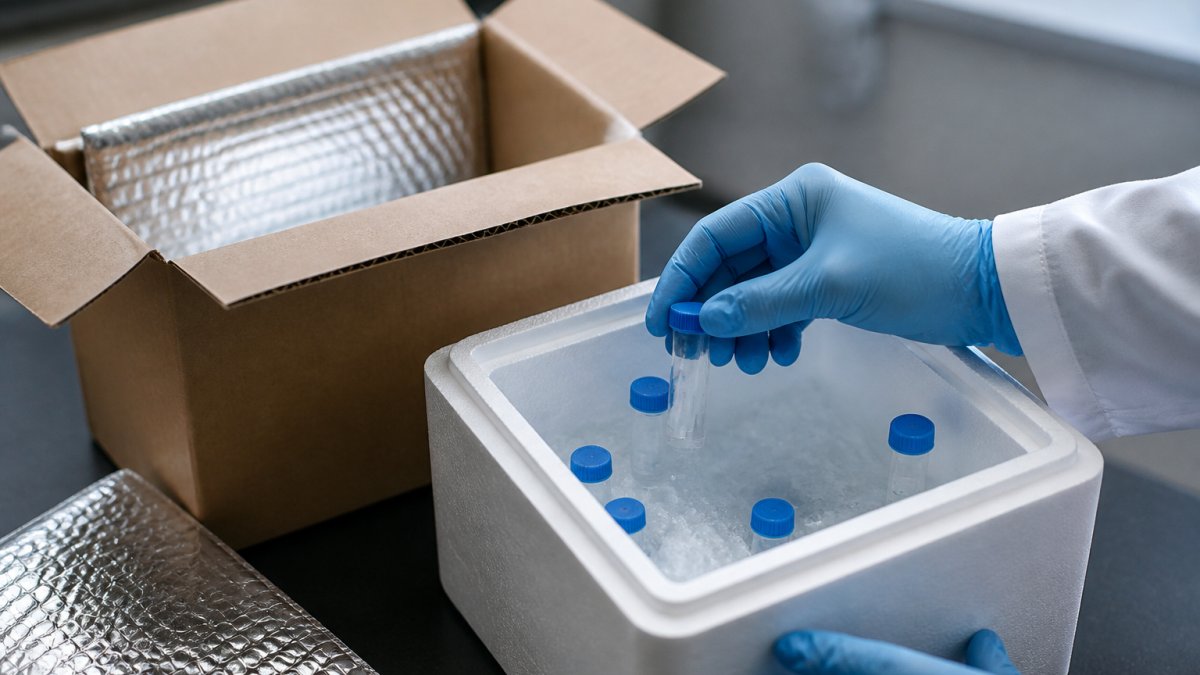
 how-to
How to Verify Ethical Sourcing of Lab Materials
Table of Contents
- Why Ethical Sourcing Verification Matters for Research Integrity
- What You'll Need Before You Start Verifying Suppliers
- Step 1: Build an Ethical Sourcing Checklist for Laboratory Materials
- Step 2: Ask the Right Questions to Ask Laboratory Suppliers
- Step 3: Map Supply Chain Traceability for Research Materials
- Step 4: Review Ethical Sourcing Documentation and Certifications
- Step 5: Set Up Ongoing Verification and Review
- Common Mistakes to Avoid When Verifying Ethical Sourcing
- Frequently Asked Questions
Last Updated: October 9, 2026
Why Ethical Sourcing Verification Matters for Research Integrity
A supplier sends a certificate of analysis. It looks official. It has a lot number, a purity figure, and a signature. But does it actually prove anything?
That question sits at the center of how to verify ethical sourcing of laboratory materials. Ethical sourcing is the practice of confirming that research materials come from suppliers who can document their origin, purity, and handling at every stage. At Bluegrass Research, we built our entire supply model around lot-specific, third-party documentation because a paper trail is only as good as the lab that produced it.
Get this wrong and the cost is real. Retracted findings. Failed trials. Wasted grant money.
Below, we break down a five-step process you can run before your next order ships.
What You'll Need Before You Start Verifying Suppliers
Verification runs on paperwork and records, not guesswork. Gather these items first so you can move fast once you start contacting suppliers.
- Your current supplier list, with order history
- A folder for certificates of analysis (COAs) and safety data sheets
- The catalog numbers and lot numbers of every material in use
- Your institution's procurement and compliance rules
- A simple scoring sheet for ranking suppliers
The FDA guidance on current good manufacturing practice explains what documentation a legitimate manufacturer should be able to produce on request. Read it once. It sets the baseline for everything that follows.
Step 1: Build an Ethical Sourcing Checklist for Laboratory Materials
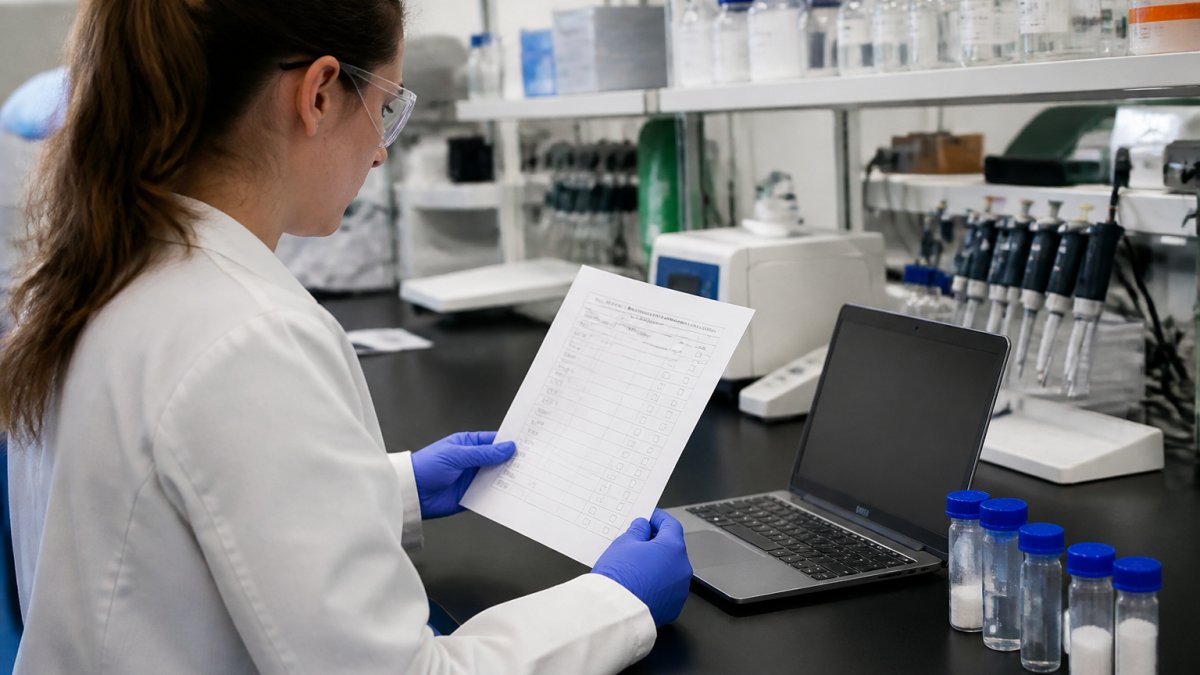
An ethical sourcing checklist for laboratory materials is a written list of the documents and answers you require from every supplier before you place an order. It turns a vague feeling of trust into a repeatable test.
Build yours around the items below, then score each supplier against it.
Core Items Every Checklist Should Cover
- Lot-specific certificate of analysis, not a generic one
- Third-party test results for purity and identity
- Country of origin for raw materials
- Storage and shipping conditions in writing
- Handling of temperature-sensitive compounds
- A named contact for compliance questions
- A stated policy on recalls and returns
A generic COA that covers a whole product line tells you almost nothing. A lot-specific COA ties results to the exact batch in your hands.
Adapting the Checklist to Peptide and Compound Orders
Peptides and similar compounds need extra scrutiny. Add these lines to your checklist when you order them:
- Purity figure with the test method named
- Mass spectrometry and HPLC results
- Peptide sequence confirmation
- Batch-specific storage temperature
- Stability data for the shipping window
For metabolic compounds used in long studies, the documentation has to survive scrutiny from reviewers, not just your own files. If your results get challenged, the COA is the first thing anyone asks for.
Step 2: Ask the Right Questions to Ask Laboratory Suppliers
The questions to ask laboratory suppliers should force a specific answer. If a vendor can only reply in general terms, that tells you something.
Send the same set of questions to every supplier. Compare the answers side by side.
Questions That Reveal Sourcing Practices
- Who manufactures the compound, and where?
- Can you send the COA for the exact lot before I buy?
- Which third-party lab runs your testing?
- What happens if a batch fails purity testing?
- How do you pack temperature-sensitive orders?
- What is your policy if a shipment arrives degraded?
Ask for the lot-specific COA in advance. A supplier who cannot produce one before payment is asking you to buy blind.
Red Flags in Supplier Responses
- Vague answers about who makes the product
- A COA with no lot number or test date
- Purity claims with no method listed
- Pressure to buy before you see documents
- No named lab behind the testing
One weak answer can be an oversight. Three weak answers is a pattern.
Step 3: Map Supply Chain Traceability for Research Materials
Supply chain traceability for research materials means you can follow a compound from raw material to your bench. Every handoff should have a record.
Map it in four stages:
- Raw material source - who supplied the starting materials
- Manufacturing - who synthesized or processed the compound
- Testing - which lab verified purity and identity
- Distribution - how it was stored and shipped to you
If any stage has no documentation, that is your gap. Ask the supplier to close it. If they cannot, weigh that against how critical the material is to your work.
The NIST reference materials program shows how rigorous traceability looks in practice. Most commercial suppliers will not match that standard, but the gap tells you how much trust to extend.
Step 4: Review Ethical Sourcing Documentation and Certifications
Ethical sourcing documentation and certifications are the paper proof behind a supplier's claims. Read them closely, because a certificate is only useful if it is specific.
Check for these:
| Document | What It Proves | Watch For |
|---|---|---|
| Lot-specific COA | Purity and identity of that batch | Missing lot number |
| Third-party test report | Independent verification | In-house testing only |
| Safety data sheet | Handling and hazard info | Outdated revision dates |
| Certificate of origin | Where materials came from | Blank origin fields |
| Quality system certificate | Process consistency | Expired or generic scope |
A certificate that names no testing lab, no date, and no lot is decoration. Ask for the version that does.
Step 5: Set Up Ongoing Verification and Review
Verification is not a one-time task. Suppliers change hands, formulas shift, and quality drifts.
Set a review rhythm:
- Every order: confirm the lot-specific COA matches your material
- Every quarter: spot-check one batch against its documentation
- Every year: re-score all suppliers against your checklist
- After any failure: pause orders until the issue is resolved
Keep a simple log. Date, supplier, lot number, result. When something goes wrong, that log is your evidence.
Common Mistakes to Avoid When Verifying Ethical Sourcing
Most verification failures come from the same handful of shortcuts. Here is what to watch for.
- Trusting a generic COA. It must match your lot.
- Skipping the paper trail on small orders. Small batches still need records.
- Ignoring shipping conditions. A perfect compound can degrade in transit.
- Never re-checking a long-term supplier. Trust should be renewed, not assumed.
- Filing documents where no one can find them. If a reviewer asks, you need it in minutes.
A supplier who welcomes these checks is usually the one worth keeping. The ISO 9001 quality management standard is a useful reference for what a documented quality process looks like, even if your supplier is not certified to it.
At Bluegrass Research, every compound ships with lot-specific third-party analytical documentation, so the verification work starts from a complete record. We also ship discreetly with no external branding and provide professional storage solutions.
Frequently Asked Questions
What does ethical sourcing mean for laboratory materials?
Ethical sourcing for lab materials means the supplier can show where raw compounds come from, how they were produced, and that labor and environmental standards were met. It covers traceability from origin to delivery, documented testing, and transparent business practices. For research-grade peptides, this includes lot-specific certificates of analysis and third-party verification. Without these records, you cannot confirm the material's history or defend your results if questioned.
How can I verify a laboratory supplier's sourcing claims?
Ask for lot-specific documentation, not generic certificates. Request third-party analytical testing reports that match your exact batch number. Cross-check the supplier's claims against public records, such as business registrations and any audit summaries they can share. If a supplier cannot provide batch-level traceability, treat the sourcing claim as unverified. A short phone call to the supplier's technical contact often reveals more than a website statement.
What documents should a supplier provide to demonstrate traceability?
A supplier should provide a certificate of analysis (COA) specific to your lot, showing purity, identity, and testing methods. Chain-of-custody records, material safety data sheets (SDS), and origin documentation for raw materials are also standard. For research peptides, look for third-party lab reports with the testing laboratory's name and date. If any document is missing or generic, ask for the batch-specific version before ordering.
How often should suppliers' sourcing documentation be reviewed?
Review sourcing documentation at least annually, and every time you place an order for a new lot. If your lab has strict compliance requirements, review before each purchase. Set a calendar reminder to request updated COAs and audit summaries. If a supplier changes ownership, manufacturing site, or raw material source, request new documentation immediately. Consistent review prevents gaps in your traceability records.
Verifying every supplier takes time, and most labs do not have spare hours to chase paperwork. Bluegrass Research was built to remove that friction: lot-specific COA documentation, third-party analytical testing, and discreet shipping with no external branding, all backed by a research-first approach. Get started with Bluegrass Research and order research-grade materials with the verification records already in hand.