 how-to
Why Research Grade Peptides Cost More: Price Guide
Table of Contents
- Why Research Grade Peptides Cost More Than You Expect
- Research Peptides vs Pharmaceutical Grade: Where the Price Gap Starts
- The Manufacturing Process and Production Costs Behind Every Vial
- What a Peptide Certificate of Analysis Actually Tells You
- Third-Party Peptide Testing and Quality Control Costs
- How to Compare Peptide Suppliers on Price Per Milligram
- Clinical Peptide Therapy Pricing vs Research-Grade Costs
- Conclusion
- Frequently Asked Questions
Last Updated: October 19, 2026
Why Research Grade Peptides Cost More Than You Expect
Research grade peptides cost more because they are made in small batches, purified to a high standard, and tested lot by lot.
The short answer is that you are not buying powder. You are buying a documented chain of evidence.
Research grade peptides are short chains of amino acids produced for laboratory study, not for human use.
Most price guides get one thing wrong: they compare a research vial to a clinical treatment and treat the gap as markup. It is not.
Research Peptides vs Pharmaceutical Grade: Where the Price Gap Starts
The gap between research peptides vs pharmaceutical grade starts with the rules each product must follow. Pharmaceutical-grade peptides are made under good manufacturing practice for human use. That means validated facilities, clinical testing, and regulatory oversight from agencies like the U.S. Food and Drug Administration.
Research-grade peptides are labeled for research use only. They are not intended for human consumption. That changes the cost structure in both directions:
- No clinical trials to fund, which lowers cost
- No large-scale production lines, which raises cost per unit
- Smaller batches, which means less efficiency
- Documentation still required, which keeps quality costs high
So a research vial can cost far less than a clinical product and still cost far more than a commodity chemical. The label "research use only" is not a discount tag. It is a scope statement.
The Manufacturing Process and Production Costs Behind Every Vial
Every vial starts with a synthesis run, and the run itself is where most of the cost is born. Peptide synthesis is a step-by-step chemical assembly, and each step adds cost, time, and risk. Here is the itemized breakdown we walk through with lab managers.
Solid-Phase Peptide Synthesis and Sequence Complexity
Solid-phase peptide synthesis builds a peptide chain one amino acid at a time on a resin bead. Each cycle adds a protected amino acid, then removes the protection. Long sequences need more cycles. Difficult sequences need more care.
Here is what drives cost inside the synthesis step:
- Sequence length. More amino acids means more cycles and more reagents. A short dipeptide and a 40-residue chain are not in the same cost universe.
- Sequence difficulty. Some chains fold or aggregate, and those runs fail more often. Hydrophobic stretches and sequences prone to beta-sheet formation are the usual culprits.
- Reagent quality. High-purity amino acids cost more and couple more reliably. Cheap reagents raise the failure rate, and a failed run still consumes the full cost of the run.
- Production scale. A small batch carries the same setup cost as a large one.
That last point matters most. Setup, cleaning, and quality checks cost roughly the same whether you make a small batch or a large one. Spread over a small batch, those fixed costs land hard on each vial.
Purification, Yield, and Batch Size Economics
Crude peptide is a mix. Purification by chromatography isolates the target sequence from truncated and misfolded byproducts.
Yield is the quiet cost driver. A low-yield run still consumed the full cost of reagents, labor, and equipment time, and the surviving material has to carry all of it.
Batch size makes this worse for research suppliers, since small-batch economics mean fixed costs cannot be diluted.
What Actually Sits Inside a Quoted Price
When you request a quote, the number you receive is a bundle. A transparent supplier can break it into these lines:
- Synthesis cost: reagents, resin, labor, and equipment time for the run
- Purification cost: chromatography media, solvents, and the yield loss absorbed to hit the purity target
- Analytical testing: identity by mass spectrometry, purity by HPLC, and any sterility or endotoxin panels the lot requires
- Batch size allocation: how much of the fixed setup and cleaning cost lands on your vial
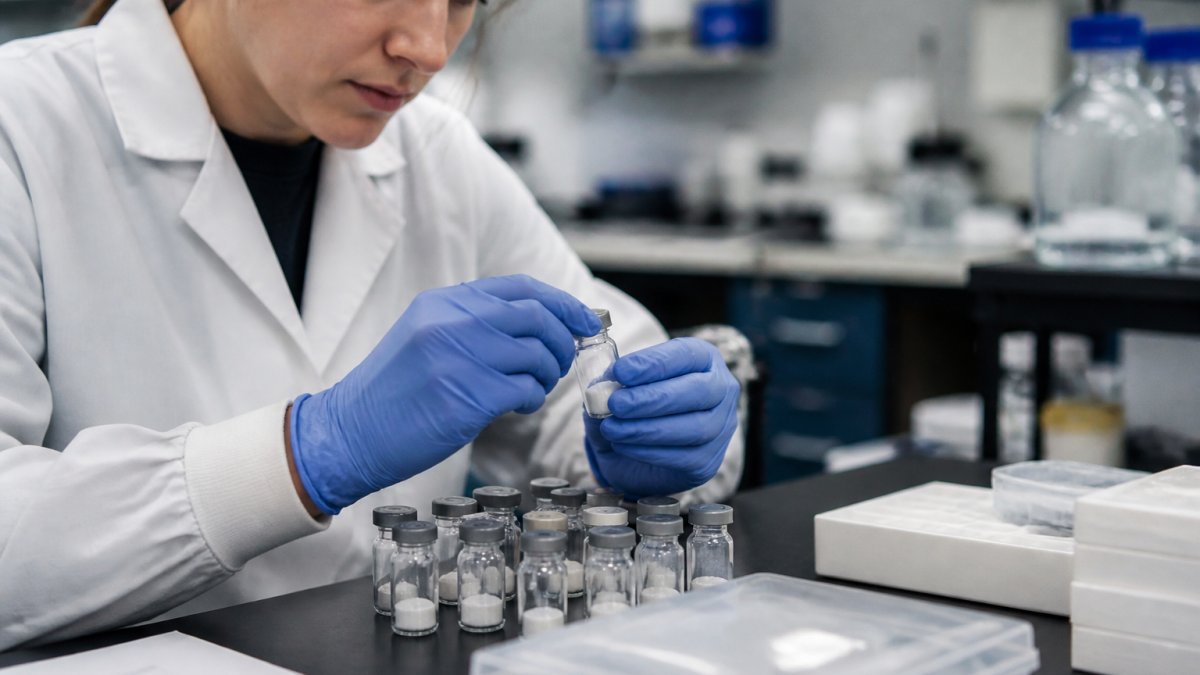
- Packaging and handling: vial type, fill accuracy, labeling, and lot documentation
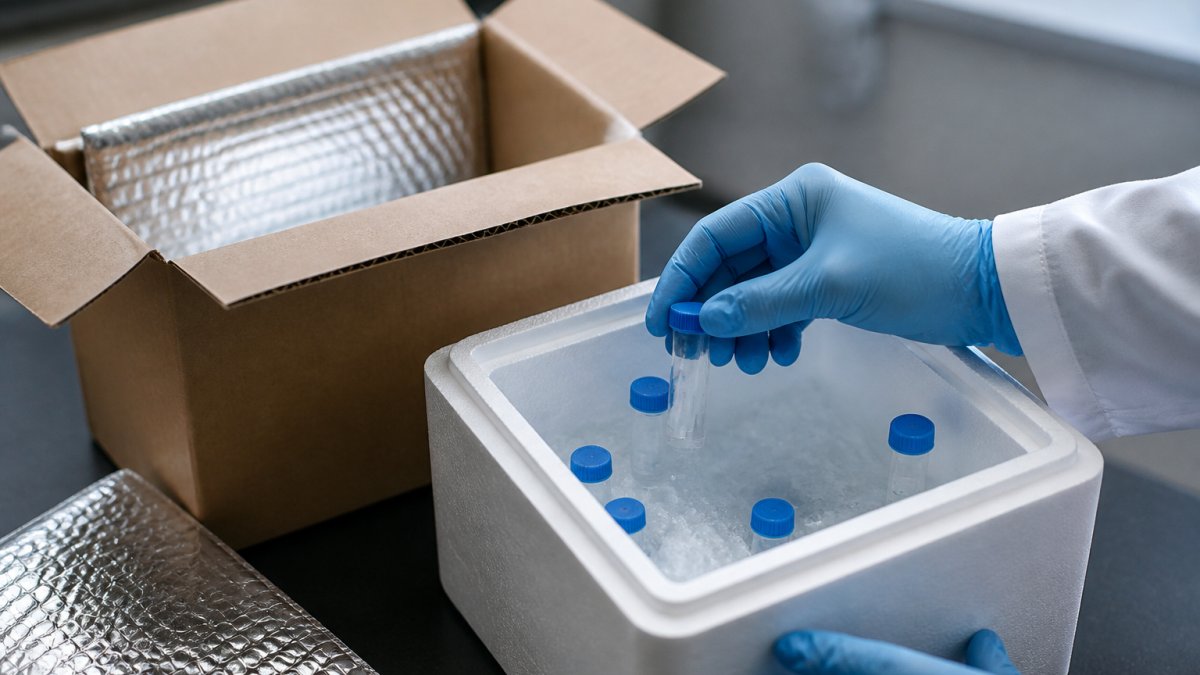
- Shipping and cold chain: temperature-controlled transit where the compound requires it
A quote that cannot be broken down this way is a quote you cannot audit. Ask for the batch size, the purification method, and the testing panel behind any number. Those three answers tell you more about value than the sticker price does.
What a Peptide Certificate of Analysis Actually Tells You
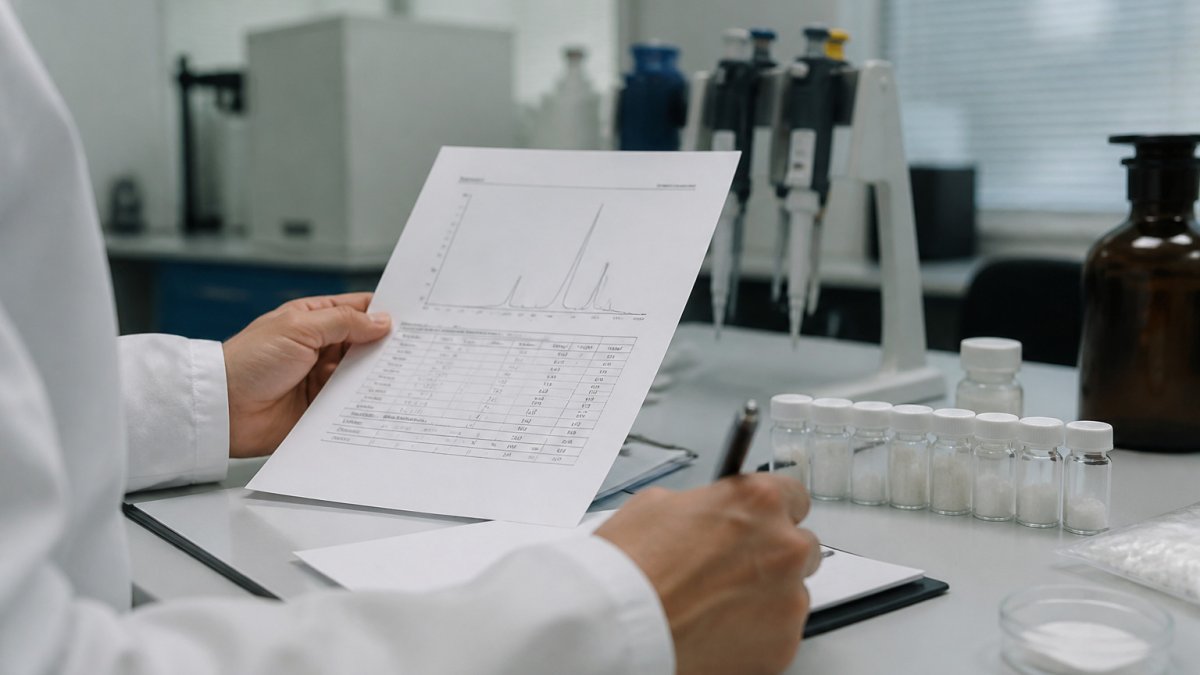
A peptide certificate of analysis is a lot-specific document that reports what was tested, how it was tested, and what the results were. It is the single most useful document you can request from a supplier.
Here is what to check, in order:
| Section | What to Look For | Red Flag |
|---|---|---|
| Lot number | Matches the vial label exactly | Generic or missing lot ID |
| Identity testing | Mass spectrometry confirms the sequence | No method named |
| Purity result | HPLC percentage with the method stated | Purity with no method |
| Test method | HPLC column, gradient, wavelength | "Tested in-house" only |
| Testing lab | Named third-party laboratory | No lab named |
| Storage guidance | Temperature and light conditions | Blank or vague |
Reading Identity Testing, Purity Results, and Test Methods
Identity testing confirms the peptide is what the label says. Mass spectrometry is the usual method. The reported mass should match the expected mass for the stated sequence.
Purity results need context. An HPLC purity figure means little without the method. Ask which column, which gradient, and which wavelength were used.
Then check who ran the test. In-house results are better than nothing. Independent third-party peptide testing is better still, because it removes the conflict of interest.
Third-Party Peptide Testing and Quality Control Costs
Quality control is the cost line buyers underestimate most.
Those tests are not free, and they are not one-time. Each batch needs its own panel. A supplier running twenty small batches a year pays for twenty test panels.
This is also where suppliers separate. Some test every lot. Some test occasionally. Some publish a single certificate and reuse it across batches.
At Bluegrass Research, every compound ships with lot-specific third-party analytical documentation. That is the standard we hold ourselves to.
How to Compare Peptide Suppliers on Price Per Milligram
Comparing suppliers on the sticker price of a vial is the fastest way to overpay. Price per milligram is the only figure that lets you compare like with like, and even then you need to check what sits behind it. Two quotes for the "same" peptide can differ widely and both be fair, because they may not be the same product at all.
Run this checklist before you commit:
- Confirm the vial size in milligrams, not the total vial weight
- Divide total price by milligrams to get price per milligram
- Confirm the purity target and the test method behind it
- Confirm the COA is lot-specific, not a sample document
- Ask whether testing is in-house or independent
- Ask about shipping conditions and temperature control in transit
- Confirm packaging works with your institution's procurement process
What Makes Two Peptide Quotes Genuinely Comparable
A like-for-like comparison of peptide quotes requires matching six variables. If any one of them differs, the price difference may reflect a different product rather than a better deal:
- Sequence and length. The same name can cover different sequences. Confirm the exact amino acid sequence and residue count.
- Quantity. Price per milligram changes with vial size. A 5 mg vial and a 50 mg vial are not priced on the same curve.
- Purity specification. A 95% target and a 98% target are different products with different purification costs.
- Salt form. Acetate and trifluoroacetate salts behave differently and are not interchangeable in every assay.
- Modifications. Labels, tags, and non-standard residues add synthesis steps and cost.
- Analytical documentation. A quote that includes lot-specific third-party testing is not the same as one that includes a generic certificate.
When you line up two quotes, put these six variables side by side. A higher price per milligram with a tighter purity spec, a named testing lab, and a matching lot COA is often the cheaper option once a failed run is factored in.
Direct Supplier vs Reseller
A direct supplier who manufactures and tests in-house often beats a reseller on both price and traceability. Resellers add a margin and rarely control the testing. That does not make every reseller a bad choice, but ask who ran the synthesis and who ran the assay.
One more habit worth building: request a quote for the same sequence and vial size from two or three suppliers, then compare the documentation packages side by side.
Clinical Peptide Therapy Pricing vs Research-Grade Costs
Research-grade costs cover none of that, no patient care, no prescription, no clinical validation. That is why the two numbers should never be compared directly.
If you are budgeting for a study, separate the two lines clearly:
- Material cost: the vial, its purity, and its documentation
- Study cost: your labor, equipment, and analysis time
Mixing them leads to bad decisions. A cheaper vial that fails identity testing costs you the whole run, not just the difference in price.
The National Institutes of Health publishes guidance on research material handling and documentation that is worth reviewing before you finalize a procurement policy.
Conclusion
The hardest part of peptide procurement is not finding a low price. It is proving the material in the vial is what the label says it is, batch after batch, when your results are on the line.
Bluegrass Research was built for exactly that problem. Every order ships with lot-specific COA documentation and independent third-party analytical testing, so the evidence travels with the compound.
Get started with Bluegrass Research and put verified documentation behind every vial in your study.
Frequently Asked Questions
Why do research-grade peptides cost more than other peptides?
Research-grade peptides cost more because of what goes into verifying them. Each batch requires solid-phase synthesis, purification to remove truncated sequences, and analytical testing for identity and purity. Lot-specific documentation, including a certificate of analysis from third-party peptide testing, adds cost that lower-priced suppliers often skip. You are paying for documented compound integrity, not just the powder in the vial, which matters when results need to hold up to scrutiny.
Does a higher price mean a peptide is purer?
Not automatically. Price reflects many inputs: synthesis scale, purification method, testing depth, and documentation. A high price with no lot-specific certificate of analysis is a warning sign, not a guarantee. Ask for the COA and check that purity results come from a named analytical method and a third-party lab. A supplier should be able to show you exactly what verifiable records you will receive, batch by batch.
What documentation should come with a research peptide?
At minimum, expect a lot-specific certificate of analysis listing the peptide sequence, batch or lot number, purity percentage, identity confirmation, and the test methods used. The COA should come from third-party peptide testing rather than an in-house claim. Reputable suppliers also provide storage guidance and shipping temperature records. Without lot-specific documentation, you cannot confirm that the vial in your hand matches the tested material, which undermines any experimental result.
How can researchers compare peptide suppliers fairly?
Compare like for like: same peptide sequence, same vial size, same stated purity, and price per milligram rather than total price. Then check documentation quality. A supplier offering a lot-specific COA with third-party testing may provide better value than a cheap vial you cannot defend in a lab notebook. Ask about minimum order quantities, shipping temperature control, and turnaround time before deciding, since these affect both budget and experimental timelines.