 how-to
Small Volume Peptide Research Procurement: 2026 Guide
Table of Contents
- What You'll Need Before You Start Sourcing
- Peptide Supplier Verification Checklist for Small Volume Orders
- Peptide Analytical Documentation Requirements: COAs and Third-Party Testing
- How Small Volume Peptide Procurement Differs From Bulk Sourcing
- Budgeting for Analytical Validation and Custom Synthesis
- How to Store Research Peptides After Delivery
- Logistics, Regulatory Compliance, and Institutional Sourcing
- Common Mistakes to Avoid in Small Volume Peptide Procurement
- Frequently Asked Questions
Last Updated: September 25, 2026
What You'll Need Before You Start Sourcing
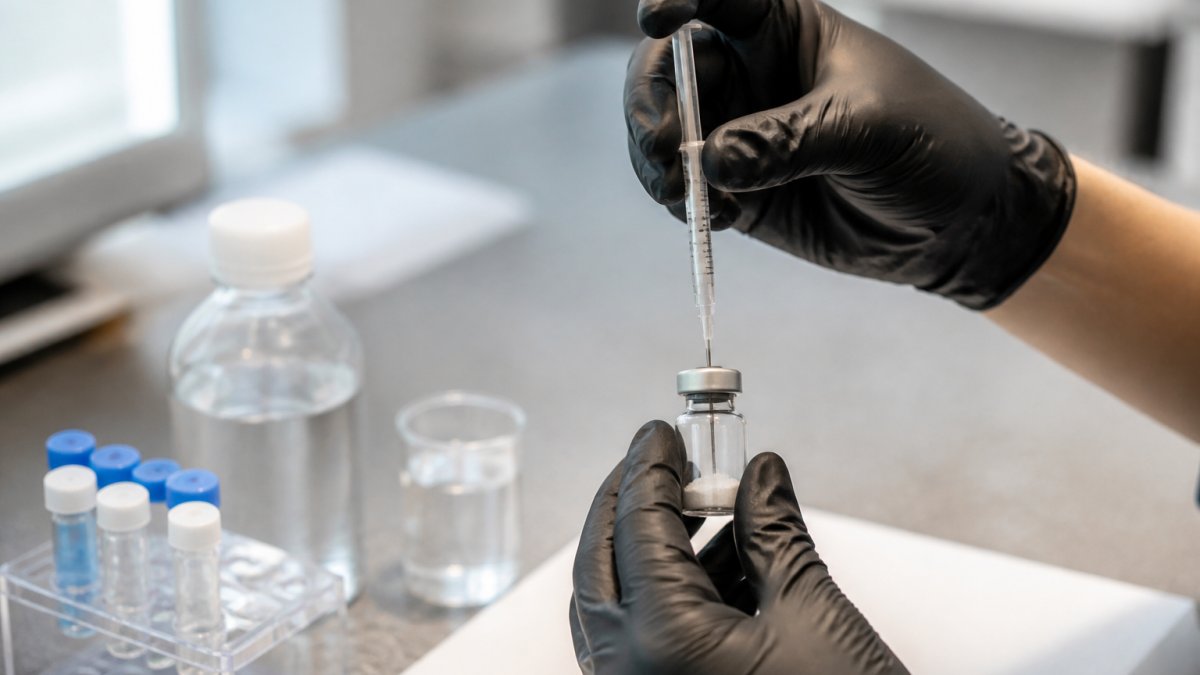
Small volume peptide research procurement is the process of sourcing research-grade peptides in limited quantities, typically for single studies or small laboratory batches, where every compound must be verified and traceable. Small volume peptide research procurement is the process of sourcing research-grade peptides in limited quantities, typically for single studies or small laboratory batches, where every compound must be verified and traceable.
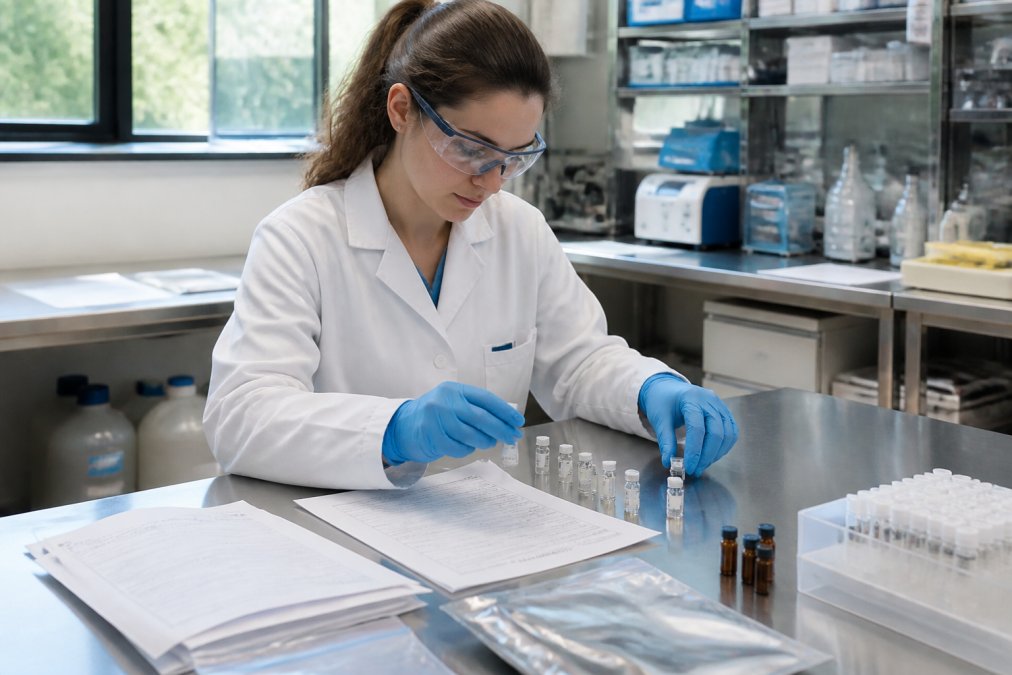
Before you contact a single supplier, gather four things:
- Your compound list with required purity levels
- Your study timeline and delivery deadline
- Storage capacity at your facility
- Your institution's documentation requirements
Peptide Supplier Verification Checklist for Small Volume Orders
A peptide supplier verification checklist is a fixed set of questions you run against every vendor before placing an order. Small volume buyers have less leverage than bulk buyers, so the checklist matters more, not less.
Run these checks in order:
- Does the vendor provide lot-specific documentation, not generic COAs?
- Can they name the third-party laboratory that performed testing?
- Do they disclose synthesis location and shipping method?
- Will they answer technical questions in writing?
- Do they publish a clear returns or resolution policy for compromised shipments?
Red Flags in Vendor Evaluation
The clearest warning sign is a certificate of analysis that never changes between orders. Real testing produces lot-specific results, so identical documents across multiple batches suggest copied paperwork.
Peptide Analytical Documentation Requirements: COAs and Third-Party Testing
Peptide analytical documentation requirements center on one document: the certificate of analysis. A COA is a lot-specific record that states a compound's identity, purity, and the analytical methods used to confirm both.
What a Legitimate Certificate of Analysis Contains
A legitimate COA includes the compound name and lot number, the testing laboratory's identity, the analytical methods used, and the measured purity result.
How Small Volume Peptide Procurement Differs From Bulk Sourcing
Small volume procurement trades cost efficiency for flexibility and documentation depth. Bulk buyers negotiate on price per unit; small volume buyers should negotiate on verification and handling instead.
| Factor | Small Volume | Bulk Sourcing |
|---|---|---|
| Pricing model | Per-unit, volume-based pricing less favorable | Volume-based pricing, lower per unit |
| Documentation | Lot-specific COA essential | Often batch-level summaries |
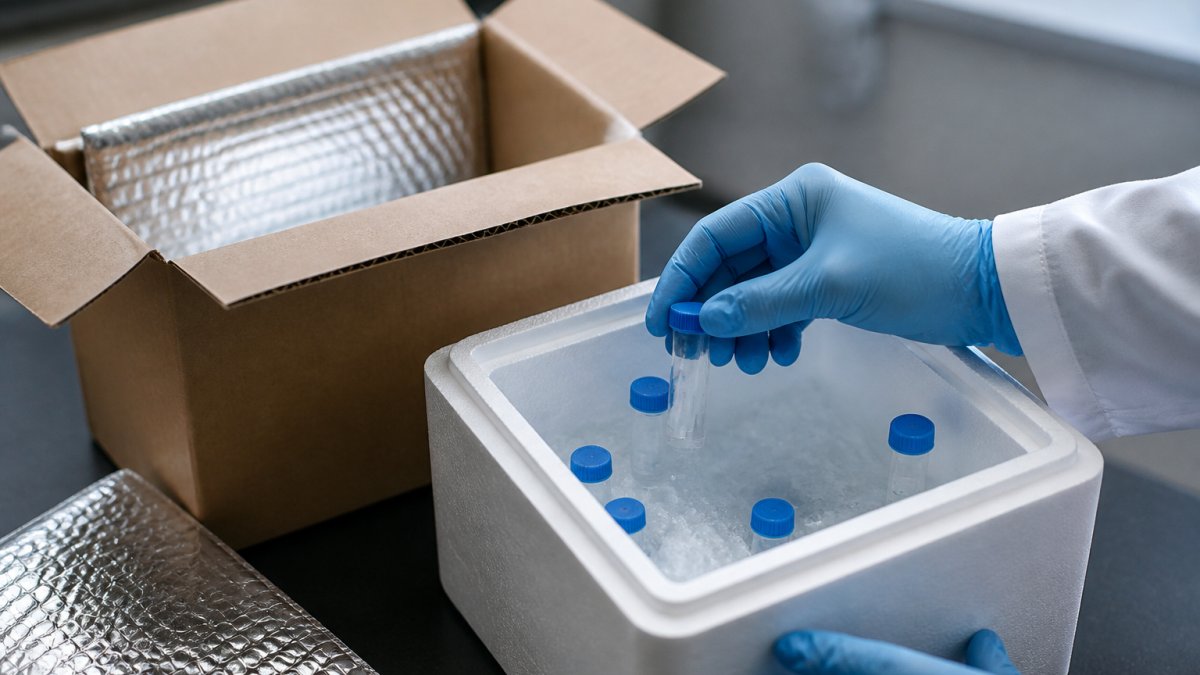
| Shipping | Individual cold-chain packaging | Pallet or case shipment |
| Best for | Single studies, pilot work | Long-term programs |
Budgeting for Analytical Validation and Custom Synthesis
Budgeting for analytical validation means setting aside funds for the testing and documentation that make your results defensible, not just the compound itself. At small volumes, this is where most researchers underplan, because the per-unit cost of verification does not shrink the way compound cost does.
Two cost lines most researchers underplan:
- Analytical validation: independent testing to confirm what the vendor's COA claims
- Custom synthesis: commissioning a specific compound rather than buying off-the-shelf
Scoping Independent Verification on a Small Batch
Independent verification is not an all-or-nothing purchase. Most contract analytical laboratories offer tiered scopes, and a small-volume researcher can pick the tier that matches how the data will be used:
- Identity-only confirmation via mass spectrometry, the cheapest check, useful when you mainly need to confirm the vial contains the stated compound.
- Purity plus identity via high-performance liquid chromatography paired with mass spectrometry, the standard defensible package for a study that may face internal review.
- Full characterization adding residual solvents, counterion content, water content by Karl Fischer titration, or peptide content by amino acid analysis, reserved for work headed to publication or regulatory scrutiny.
The Cost-Benefit Question
Independent testing on a small batch can approach or exceed the cost of the compound itself, so the decision should track the consequence of being wrong. Ask three questions before you authorize testing:
- Will the results be published, patented, or submitted to a funder?
- Is the compound going into a study that cannot be repeated cheaply?
- Has this vendor's documentation been consistent across prior lots?
Custom Synthesis vs. Off-the-Shelf
Custom synthesis makes sense when your target compound is not commercially available, when you need a specific modification (a labeled residue, a non-natural amino acid, a particular salt form), or when you need a defined quantity that catalog vendors cannot supply at your purity target. Off-the-shelf procurement is faster and cheaper when a standard compound fits your study.
How to Store Research Peptides After Delivery
How you store research peptides determines whether they stay stable for the length of your study. Most lyophilized peptides tolerate short room-temperature transit, but long-term storage should follow the vendor's stated conditions. Small-volume researchers face a specific problem here: you have fewer vials, so each one carries more of your study, and a single degraded lot can end the work.
A Small-Scale Stability Testing Protocol
Bulk buyers can afford to sacrifice vials to stability testing because they hold hundreds. At small volumes, you need a protocol that uses as few vials as possible while still generating defensible data. A workable approach:
- Reserve one vial per lot as a stability reference. Do not open it. Store it under the same conditions as your working vials and label it with the receipt date.
- Test at defined intervals, commonly at receipt, then at a midpoint, then at the end of your planned study window. Each test is a purity check by high-performance liquid chromatography against the vendor's stated value.
- Compare against the baseline COA. A drop in purity beyond the method's typical variability is your signal that storage conditions are failing.
- Track appearance and solubility as a cheap secondary indicator. A vial that no longer dissolves cleanly at the expected concentration warrants a purity check before use.
Storage Conditions That Actually Matter
A workable routine:
- Store lyophilized vials at the temperature the COA specifies, commonly -20°C for short-term and -80°C for long-term, but follow the vendor's stated condition rather than assuming.
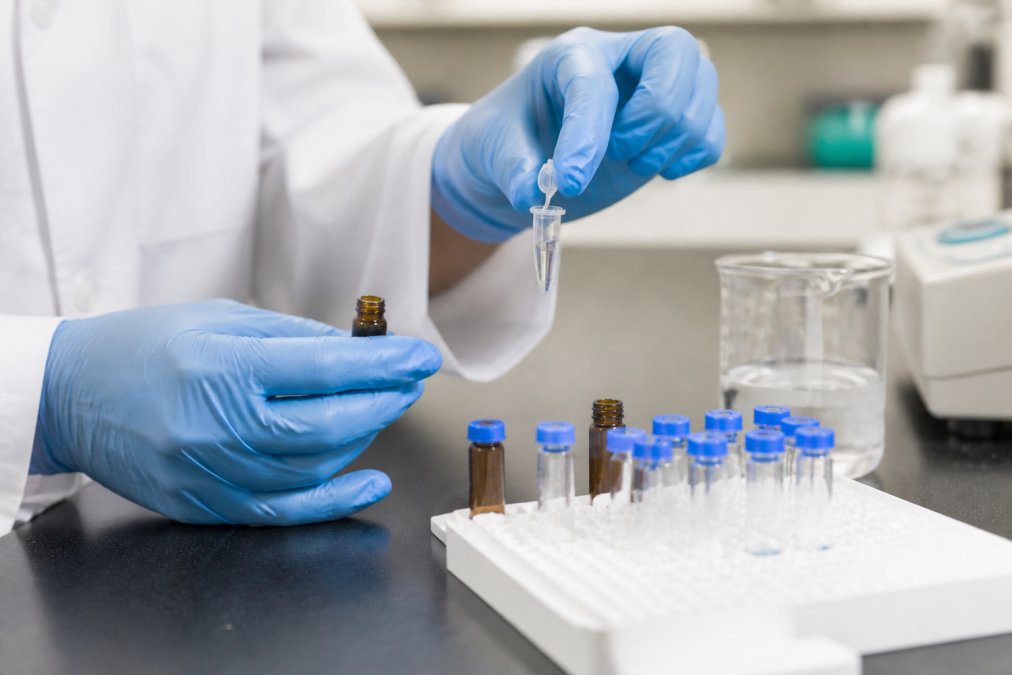
- Keep vials sealed and away from light; amber glass or foil wrap reduces photodegradation risk for light-sensitive sequences.
- Aliquot before reconstitution to avoid repeated freeze-thaw cycles, which are a leading cause of purity loss in solution.
- Label every vial with lot number and receipt date.
For reconstituted peptide in solution, stability is generally shorter and depends on the solvent, pH, and concentration. If your study requires working solution over weeks, plan to aliquot into single-use volumes and store at the temperature the vendor recommends for the reconstituted form.
When to Escalate
If a stability check shows purity loss beyond expected variability, stop and contact the vendor before using the remaining vials. A documented stability failure is a legitimate basis for a replacement or credit request, and it is far stronger evidence than a complaint filed after a study has already failed.
Logistics, Regulatory Compliance, and Institutional Sourcing
Logistics and regulatory compliance decide whether your order clears your institution's intake process. Research compounds are not approved drugs, and suppliers should describe them as research-grade materials intended for laboratory use only.
For institutional sourcing, confirm three things before ordering:
- Your procurement office accepts unbranded, discreet packaging
- The vendor can supply documentation in the format your compliance team expects
- Shipping method matches the compound's stability requirements
Common Mistakes to Avoid in Small Volume Peptide Procurement
The most costly mistakes in small volume peptide research procurement are documentation failures, not product failures. Poor paperwork sinks a study faster than a slow shipment.
Watch for these:
- Accepting a generic COA instead of a lot-specific one
- Skipping your own verification step to save budget
- Ordering without checking institutional intake requirements
- Storing vials without lot labels, making later traceability impossible
- Choosing a vendor on price alone when documentation is the real differentiator
Frequently Asked Questions
What documentation should accompany research-grade peptides?
Every order should include a lot-specific certificate of analysis showing purity percentage, molecular weight, and the testing method used, such as high-performance liquid chromatography or mass spectrometry. The COA must match the exact batch number on your vial. Without lot-specific documentation, you cannot verify compound integrity or defend your results if they are scrutinized. Ask for a sample COA before placing your first order.
How do you verify the purity of small-volume peptide orders?
Request the lot-specific COA and confirm the batch number matches your vial. Check that purity was measured by HPLC and identity confirmed by mass spectrometry. If your budget allows, send a sample to an independent analytical lab for confirmatory testing. For small volume peptide research procurement, this step is critical because you lack the leverage of bulk buying to demand extensive pre-purchase verification.
How does small-volume procurement differ from bulk wholesale sourcing?
Small volume orders typically carry higher per-unit costs and less negotiating power. Bulk buyers often access volume-based pricing. However, small volume procurement gives you flexibility to test multiple vendors, avoid large upfront commitments, and maintain fresher inventory. The trade-off is that you must invest more time in vendor evaluation and analytical validation per order.
What are the storage requirements for research peptides?
Most lyophilized peptides remain stable at -20°C for extended periods. Once reconstituted, store at -80°C for best stability and avoid repeated freeze-thaw cycles. Use sterile aliquots to minimize handling. Protect from light and moisture. For how to store research peptides in a small lab, a dedicated -20°C freezer with organized racking and a temperature log provides adequate compound integrity for most research applications.
Small volume ordering puts the burden of verification on you, and that is exactly where Bluegrass Research is built to help. Every compound ships with lot-specific COA documentation, third-party analytical testing records, and discreet US shipping with no external branding, backed by professional storage solutions for your facility. Get started with Bluegrass Research and source research-grade peptides you can defend in review.