 ultimate-guide
Academic Research Peptide Procurement: Requirements Guide
Last Updated: November 2, 2026
Quick Summary
Research peptide procurement starts with a written specification of the peptide's sequence, modifications, and salt form, then a quantity matched to the study design. Labs then qualify suppliers, review a lot-specific Certificate of Analysis, and inspect each shipment on receipt. Each step is documented so results can be traced back to a specific lot.
- Write the full amino acid sequence, modifications, and salt form before contacting any supplier.
- Calculate total milligrams across all planned runs and add a margin for pilot work.
- Request a lot-specific Certificate of Analysis and confirm its lot number matches the vial label.
- Purity from HPLC alone does not confirm identity, so a sequence-confirming method is needed too.
- Quarantine any lot that fails receiving inspection and document the nonconformance in writing.
Table of Contents
- Defining Your Research Requirements Before Sourcing
- Building a Research Peptide Procurement Checklist
- Research Peptide Supplier Evaluation and Approved-Supplier Criteria
- Reading a Peptide Certificate of Analysis
- Receiving Inspection, Traceability, and Nonconformance Management
- Research Peptide Storage Requirements and Shipping Conditions
- Requesting Your First Research Peptide Order from Bluegrass Research
- Frequently Asked Questions
Defining Your Research Requirements Before Sourcing
Before a university lab places its first order for a research peptide, the research peptide procurement decision should rest on a written definition of what the study needs. Researchers generally benefit from settling the specification first, because the sequence, modifications, and quantity determine which suppliers and documents are relevant. Starting with a vendor catalog and working backward can lead to mismatched material and wasted budget.
A research peptide is a short chain of amino acids supplied for laboratory investigation and not for human use. Under the research-use-only (RUO) designation, the material is sold for in vitro or laboratory study, and the buyer must confirm that the intended use matches that status.
Peptide Sequence, Modifications, and Salt Form
The sequence is the non-negotiable part of the specification. Write out the full amino acid sequence, then list every modification the study requires, such as acetylation, amidation, a fatty-acid side chain, or a fluorescent label. Each modification changes the molecule's identity, so a compound that differs by one residue is a different product for experimental purposes.
Salt form matters as well. Peptides are commonly supplied as trifluoroacetate (TFA) or acetate salts, and the choice affects net peptide content and the weight a lab actually measures out. Confirm the salt form in the specification before calculating doses, or the molar concentrations in the study will be wrong.
Quantity Ranges and Study Timelines
Match the order quantity to the study design rather than buying the largest size available. Calculate the total milligrams needed across all planned runs, add a margin for pilot work and failed attempts, and account for the shelf life of reconstituted material. Many labs find that a smaller, verified lot used on schedule outperforms a bulk purchase that degrades before it is needed.
Build the timeline backward from the study start date. Allow time for supplier qualification, document review, shipping, and receiving inspection before the material is needed at the bench. Pricing depends on quantity, delivery terms, and the specification, so check the Bluegrass Research website or request a quote for your exact requirements.
Building a Research Peptide Procurement Checklist
A written checklist keeps procurement consistent across grants, principal investigators, and purchasing staff. The checklist should follow the sequence of the purchase: specification, supplier review, documentation, shipping, and receiving. Most of the costly errors in academic peptide buying come from skipping one of these steps rather than from any single dramatic failure.
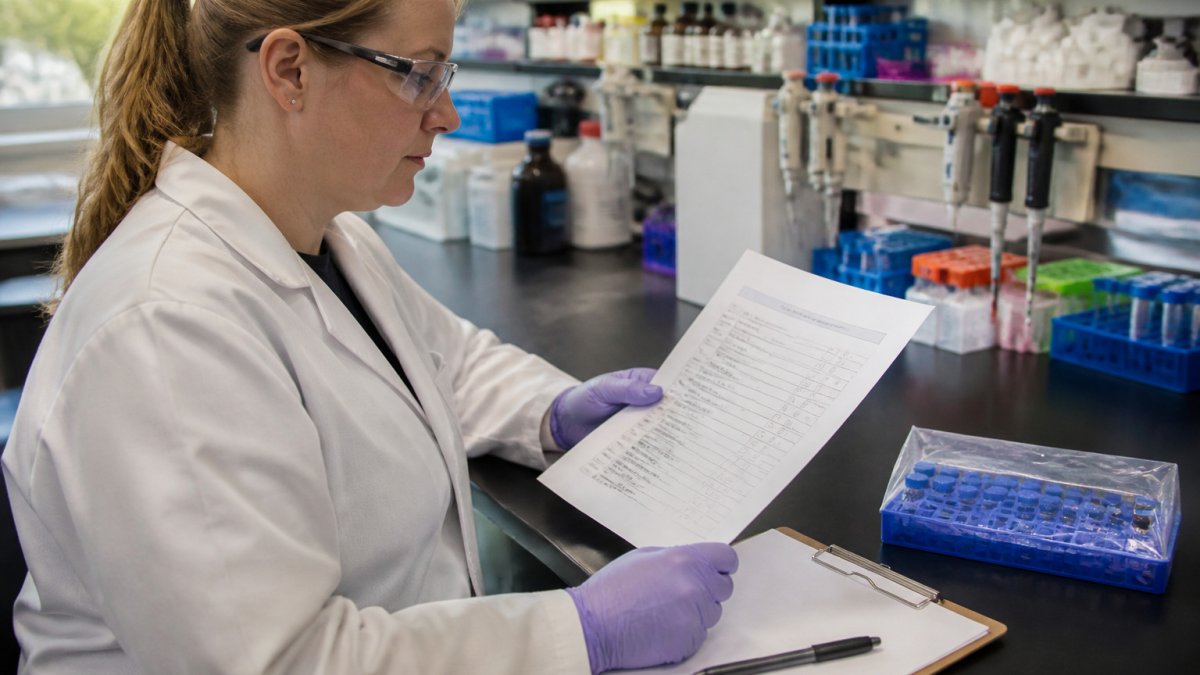
A practical checklist includes the following items:
- Full sequence, modifications, and salt form confirmed in writing
- Quantity calculated from the study design, with a documented margin
- Research-use-only status and intended use recorded in the purchase file
- Supplier qualification record on file before the first order
- Lot-specific Certificate of Analysis (COA) requested and reviewed
- Storage and shipping conditions specified in the order
- Receiving inspection completed and logged on arrival
Attach the checklist to the purchase order so an auditor or grant reviewer can trace each decision. Keeping the record complete is the simplest defense if the study's results are later questioned.
Research Peptide Supplier Evaluation and Approved-Supplier Criteria
A university purchasing office should maintain an approved-supplier list and a documented reason for every vendor on it. Supplier evaluation turns a one-time purchase into a repeatable process, and it protects the lab when a result depends on the consistency of the material. The criteria should be written before the first order, not reconstructed after a problem appears.
Useful criteria include lot-specific analytical documentation, transparent testing methods, clear RUO labeling, stated storage and shipping practices, and a responsive technical contact. Ask each prospective supplier how it tracks batches from synthesis through shipment, because batch traceability is what allows a lab to tie a result back to a specific lot.
Risk-Based Supplier Qualification and Ongoing Monitoring
Qualify suppliers in proportion to risk. A compound used in a pivotal study that depends on precise dosing warrants a deeper review than a reagent used for a method check.
Scale the depth of review to the consequence of a bad lot. A low-risk purchase might require only a current COA review and a check that the lot number matches.
Qualification is not a single event. Re-check suppliers periodically, review the COAs for each new lot against the previous ones, and track any nonconformances.
Corrective actions close the loop. When a lot fails inspection or a COA does not match the material, document the issue, notify the supplier in writing, and record the supplier's response and the resolution.
Reading a Peptide Certificate of Analysis
The Certificate of Analysis is the core document in peptide procurement. A COA reports the results of testing on a specific lot, and it should identify that lot clearly.
Read each COA for the sequence or identity data, the purity result with the method used, the lot or batch number, the date of testing, and the salt form and net peptide content.
Purity is usually reported as a percentage determined by high-performance liquid chromatography (HPLC). Understand what the purity figure measures, because a high HPLC percentage does not by itself confirm identity, and a sequence-confirming method such as mass spectrometry is needed alongside it.
Verifying Identity and Purity Independently
Verification should not rest on the supplier's paperwork alone. Where the lab has the equipment, run an independent identity check such as mass spectrometry against the expected molecular weight, and review the chromatogram itself rather than only the summary percentage.
Some labs send a retained sample to an independent analytical facility for confirmation. This adds cost and time, but it provides a check that is separate from the supplier. Decide in advance which lots warrant independent testing, typically the first lot from a new supplier and lots used in pivotal experiments.
The table below summarises the main checks a buyer should make when reviewing a COA.
| Check | What to confirm | Why it matters |
|---|---|---|
| Lot number | Matches the vial label and packing slip | Ties the document to the material shipped |
| Identity | Sequence or molecular weight data reported | Purity alone does not confirm identity |
| Purity | Percentage and the method used, usually HPLC | A high figure alone is not sufficient |
| Salt form | TFA or acetate stated in the specification | Affects net peptide content and dosing |
| Testing date | Date of testing listed | Shows how current the analysis is |
| Mismatch | Lot number differs from the label | Ask the supplier before the material enters the lab |
Receiving Inspection, Traceability, and Nonconformance Management
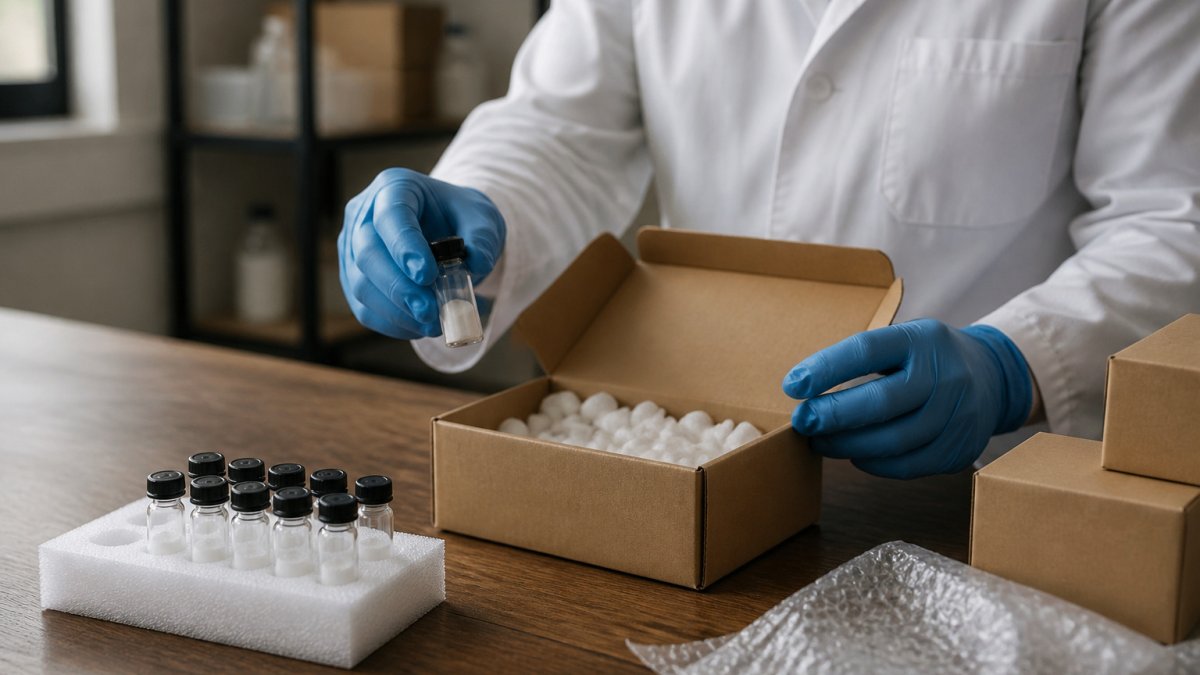
Receiving is the last control point before material reaches the bench, and it is also where the procurement record meets the institutional purchasing system. Inspect each shipment on arrival: confirm the lot number against the order and COA, check the condition of the vial and seal, verify that the temperature indicator (if present) shows the material stayed within range, and log the receipt with the date and the receiver's initials.
Maintain traceability from receipt through use. Record which lot went into which experiment so that any later question about a result can be answered. A simple inventory log that links each vial to its COA and its experiments is usually enough for most academic labs.
Documenting Discrepancies and Managing Nonconformance
When a lot fails inspection, quarantine it and document the nonconformance. Record what was observed, notify the supplier in writing, and do not use the material until the issue is resolved.
Watch out: accepting a replacement lot without re-running the receiving inspection defeats the purpose of the control, so treat every replacement shipment as a new receipt and check it against its own COA.
Rejection and return decisions should follow the institution's purchasing policy. Confirm whether the purchasing office requires a formal return authorization, a credit memo, or a written rejection notice before the supplier will issue a replacement.
Research Peptide Storage Requirements and Shipping Conditions
Storage and shipping conditions affect whether a peptide arrives in the state the COA describes. Lyophilized peptides are generally more stable than solutions, but moisture, heat, light, and repeated freeze-thaw cycles can all degrade them. Specify the required storage temperature in the order and confirm that the supplier ships under conditions appropriate for the compound.
Once a vial is reconstituted, its stability window shrinks considerably. Aliquot solutions into single-use portions where practical, store them at the recommended temperature, and record the preparation date. Labs that treat storage as part of the procurement specification avoid many of the degradation problems that otherwise surface as inconsistent experimental results.
Requesting Your First Research Peptide Order from Bluegrass Research
Bluegrass Research supplies research-grade peptide materials with lot-specific, third-party analytical documentation, and it ships in discreet packaging with no external branding. Before you request an order, complete the specification, quantity, and storage sections of your checklist so the quote reflects your actual study requirements. Pricing depends on quantity, delivery terms, and the specification, so check the Bluegrass Research website for current prices or request a quote.
Send the sequence, modifications, salt form, quantity, intended use, and your institution's purchasing requirements with the request. Ask for the lot-specific COA for the lot you will receive, and confirm the storage and shipping conditions in writing. Visit the Bluegrass Research website to review the product catalog and request your quote.
Frequently Asked Questions
What should a research peptide procurement checklist include?
A procurement checklist should record the peptide sequence, modifications, salt form, required purity threshold, quantity, intended research-use-only status, and the documentation required with each lot. It should also list the supplier qualification status, shipping and storage conditions, and the purchase order details your institution requires. Keeping these fields together lets the lab verify each order against the study protocol before the material arrives and gives auditors a clear record of the decision.
How can academic labs evaluate research peptide suppliers?
Labs can evaluate suppliers by checking whether each lot is supported by a Certificate of Analysis, whether analytical testing is performed by an independent third party, and whether batch traceability is available. Review the supplier's documentation practices, shipping controls, and responsiveness to technical questions. Many institutions also require an approved-supplier file that is reviewed periodically, so the lab can show ongoing oversight rather than a single one-time check.
What documentation should accompany research-grade peptides?
Each lot should be accompanied by a Certificate of Analysis showing the lot number, identity confirmation, purity result from HPLC analysis, and the testing method used. The documentation should also state the research-use-only designation and the intended-use restriction. Labs should confirm that the lot number on the vial matches the lot number on the certificate before the material is entered into inventory.
How can researchers verify peptide identity and purity?
Identity is typically confirmed by mass spectrometry, which checks the molecular weight against the expected sequence, while purity is measured by HPLC, which reports the percentage of the target peptide in the sample. Researchers can compare the supplier's reported values against their own acceptance criteria. Independent verification, such as sending a retained sample to an outside analytical laboratory, can add confidence when a study requires defensible data.
How should research peptides be shipped and stored?
Shipping and storage conditions should be specified on the purchase order and confirmed on the packing slip. Ask the supplier how temperature is controlled in transit and what packaging is used. On arrival, inspect the shipment, record the condition, and move the material to the storage temperature listed on the Certificate of Analysis or product specification. Log the date received and the storage location to support traceability.
What questions should researchers ask a peptide supplier before ordering?
Ask whether each lot has its own Certificate of Analysis, who performed the purity and identity testing, and whether the testing laboratory is independent. Confirm the minimum order quantity, lead time, and the storage and shipping conditions. Ask how the supplier handles nonconforming lots and whether they provide documentation that fits your institution's purchasing and compliance requirements. For current pricing, contact Bluegrass Research directly, since costs vary with quantity, timing, and delivery.