 ultimate-guide
Peptide Degradation in Research: Prevention & Detection
Table of Contents
- What Is Peptide Degradation and Why It Matters in Research
- Chemical Pathways: How Peptides Break Down
- Environmental Factors That Accelerate Peptide Degradation
- Peptide Storage Temperature Guidelines for Research Labs
- Bacteriostatic Water vs. Sterile Water for Peptides
- Signs of Peptide Degradation: How to Identify Compromised Samples
- Protecting Peptide Integrity: Practical Troubleshooting for Researchers
- Frequently Asked Questions
Last Updated: September 19, 2026
What Is Peptide Degradation and Why It Matters in Research
Peptide degradation is the breakdown of peptide bonds and structural integrity in protein chains, compromising their bioactivity and experimental validity. This matters profoundly in research because degraded peptides produce unreliable results, invalidate months of work, and waste research budgets.
A sample that appears intact may have already lost 30-50% of its bioactivity through invisible chemical processes. For pharmacology researchers studying metabolic peptides or clinical investigators validating therapeutic compounds, undetected degradation transforms what should be a controlled experiment into a confounded one.
Understanding peptide degradation mechanisms gives you the tools to protect your compounds from the moment they arrive through final analysis, ensuring your experimental data remains defensible and reproducible.
Chemical Pathways: How Peptides Break Down
Peptides degrade through three primary chemical mechanisms: hydrolysis, oxidation, and deamidation. Each pathway attacks different molecular vulnerabilities and progresses at different rates depending on environmental conditions.
Hydrolysis and peptide bond cleavage
Hydrolysis occurs when water molecules attack peptide bonds directly, cleaving the backbone that holds amino acids together. This process accelerates dramatically at higher temperatures and extreme pH values, producing shorter peptide fragments with different molecular weights.
Asp-Gly and Asp-Pro sequences degrade 100-1000 times faster than stable peptide bonds under identical conditions, requiring tightly controlled storage.
Oxidation and methionine/tryptophan vulnerability
Oxidation occurs when peptides interact with dissolved oxygen or reactive species in solution. Methionine and tryptophan residues, which contain sulfur and aromatic rings, are particularly vulnerable to oxidative attack.
Methionine oxidation transforms the side chain to a sulfoxide, changing charge distribution and destroying bioactivity while the backbone remains intact. Tryptophan oxidation modifies the aromatic ring, reducing fluorescence and altering binding properties. Researchers often miss oxidative degradation because the peptide appears unchanged to the naked eye.
Deamidation and Maillard reactions
Deamidation removes ammonia from asparagine and glutamine residues, converting them to aspartic and glutamic acid. This pH-dependent process modifies side chains rather than breaking the backbone, creating microheterogeneity that complicates analytical results.
Maillard reactions occur when peptides interact with reducing sugars or aldehydes in storage buffers, producing brown polymers and aggregates that precipitate. This is particularly problematic in buffers containing glucose and accelerates sharply above 25°C.
Environmental Factors That Accelerate Peptide Degradation
Storage conditions determine degradation rates more than any other factor: temperature, pH, light exposure, and freeze-thaw cycling.
Temperature, pH, and light exposure
Temperature is the dominant accelerant of peptide degradation. Every 10°C increase roughly doubles the degradation rate. A peptide stored at 37°C degrades 8-16 times faster than at 4°C, meaning room temperature storage is catastrophic for long-term stability.
pH directly controls hydrolysis rates and deamidation kinetics. Most peptides are stable between pH 3-5 or pH 7-8. Even small pH drifts during storage measurably increase degradation rates over weeks.
Light exposure, particularly ultraviolet radiation, degrades tryptophan and methionine through photochemical oxidation. Research-grade peptide storage requires opaque, light-blocking containers.
Freeze-thaw cycles and aggregation
Freeze-thaw cycles are a major degradation mechanism. When a peptide solution freezes, ice crystals exclude dissolved salts and peptides, creating regions of high concentration that increase local pH and osmotic stress. Upon thawing, peptides may aggregate or precipitate, reducing bioavailable concentration.
A peptide solution thawed three times shows measurable aggregation and reduced activity. For high reproducibility, prepare aliquots in advance rather than repeatedly accessing a single vial.
Aggregated peptides precipitate out of solution, reducing bioactive monomer concentration and creating background noise in analytical detection.
Peptide Storage Temperature Guidelines for Research Labs
Storage temperature is the single most controllable variable affecting peptide degradation. The correct temperature depends on your peptide's composition, the intended storage duration, and whether the peptide is lyophilized or in liquid form.
Lyophilized vs. liquid peptide storage
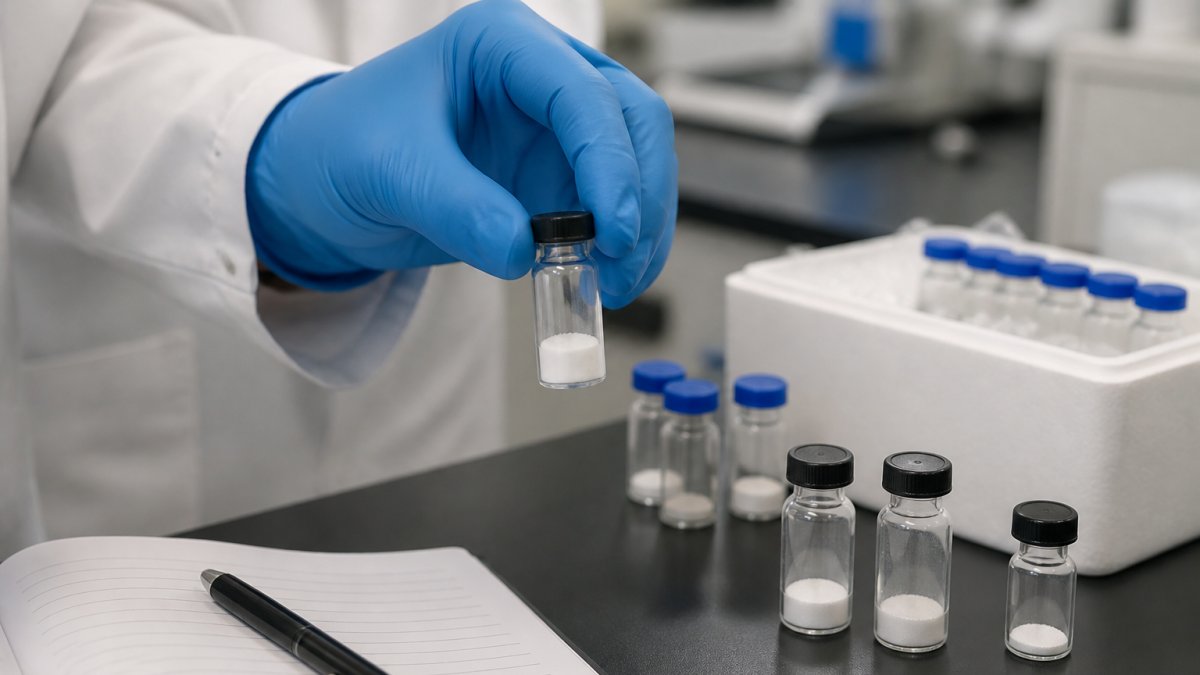
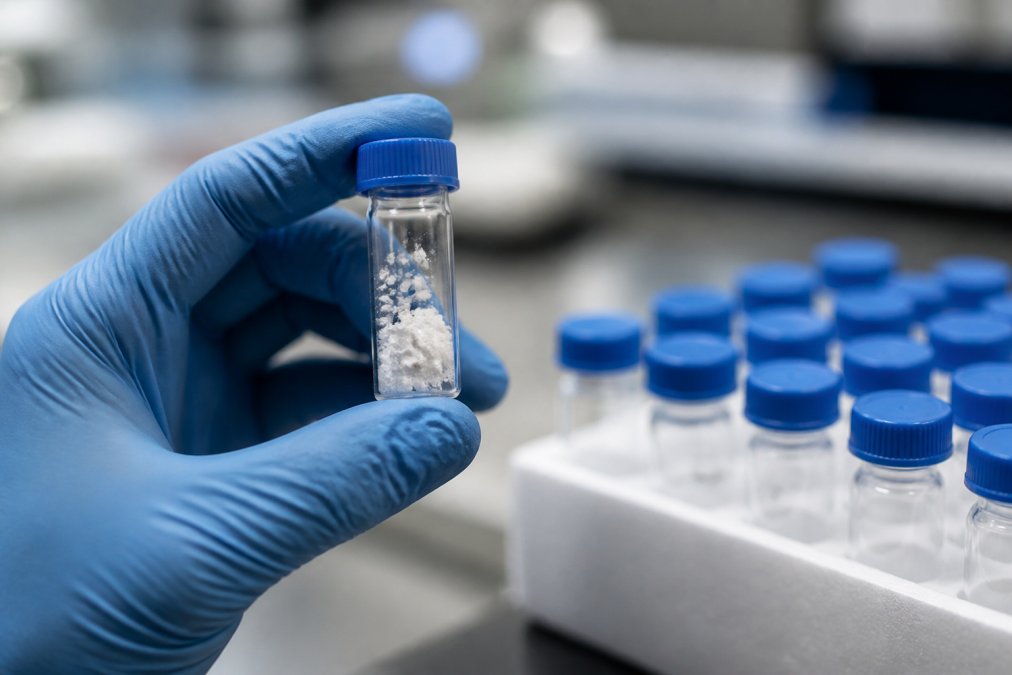
Lyophilized peptides are inherently more stable than liquid solutions because hydrolysis cannot occur without water. Stored at -20°C or colder, they typically remain stable for 2-5 years or longer.
Liquid peptide solutions degrade much faster because water drives hydrolysis. At 4°C, stability lasts 2-4 weeks; at 25°C, degradation is visible within days. For storage beyond 4 weeks, lyophilization or -80°C storage is essential.
Store lyophilized peptides at -20°C or below in sealed containers with desiccant. Before reconstitution, allow the vial to warm to room temperature while sealed to prevent moisture condensation. Once reconstituted, treat as a liquid peptide.
Buffer compatibility and solvent selection
The buffer you choose for peptide reconstitution directly impacts degradation rates. Phosphate-buffered saline (PBS) is commonly used but is not optimal for all peptides, it can promote aggregation in some cases and accelerates Maillard reactions if it contains glucose. Acetate buffers (pH 4-5) are excellent for peptides vulnerable to hydrolysis because they maintain acidic conditions that slow bond cleavage.
Sterile water and bacteriostatic water differ in their impact on peptide stability. Bacteriostatic water contains preservatives (typically benzyl alcohol) that inhibit microbial growth but can interact with some peptides, particularly those with exposed aromatic residues. For peptides sensitive to organic solvents, sterile water is preferable despite requiring more careful aseptic handling. For peptides intended for extended storage, bacteriostatic water's antimicrobial properties may justify the slight chemical risk.
Organic solvents like dimethyl sulfoxide (DMSO) or acetonitrile stabilize certain peptides by reducing water availability and protecting against hydrolysis. However, organic solvents are incompatible with downstream biological assays, so their use is limited to pure analytical applications. For research peptides intended for cell-based assays or in vivo studies, aqueous buffers remain standard.
Bacteriostatic Water vs. Sterile Water for Peptides
The choice between bacteriostatic water and sterile water for peptide reconstitution involves a trade-off between antimicrobial protection and chemical purity.
Bacteriostatic water contains 0.9% benzyl alcohol as a preservative, which prevents bacterial and fungal growth during storage. This is valuable for peptide solutions that will be accessed multiple times over weeks or months, the preservative reduces contamination risk each time the vial is opened. However, benzyl alcohol can interact with hydrophobic peptides or those containing aromatic residues, potentially affecting their solubility or bioactivity.
Sterile water contains no preservatives and maintains absolute chemical purity. It is the better choice for peptides where any chemical modification is unacceptable, such as those intended for mass spectrometry analysis or high-resolution structural studies. Sterile water requires strict aseptic technique during reconstitution because any microbial contamination will proliferate unchecked. Once reconstituted, sterile water solutions should be aliquoted immediately and stored at -20°C or below to prevent contamination.
For most research applications, bacteriostatic water is the practical choice because it balances chemical compatibility with contamination prevention. If your research protocol requires absolute chemical purity, sterile water is necessary, just plan for immediate use or frozen storage.
Signs of Peptide Degradation: How to Identify Compromised Samples
Detecting degradation before it invalidates your experiment requires knowing what to look for. Degradation manifests through visual signs, chemical indicators, and analytical findings that range from obvious to subtle.
Visual, chemical, and analytical indicators
Visual inspection catches obvious degradation but misses most damage. A peptide solution that has changed color, from clear to yellow, brown, or turbid, has likely undergone oxidation or Maillard reactions. Precipitate or cloudiness indicates aggregation or crystallization. However, many degradation pathways produce no visible change, so a clear solution is not proof of integrity.
Chemical indicators include pH drift and changes in osmolarity. If your buffer pH has shifted more than 0.5 units from the original value, degradation or contamination has occurred. Some degradation pathways (particularly deamidation) release ammonia, which raises pH gradually over time.
HPLC and mass spectrometry detection methods
High-performance liquid chromatography (HPLC) is the standard analytical method for peptide purity assessment. HPLC separates peptides by hydrophobicity and charge, revealing the percentage of intact peptide versus degradation products. A research-grade peptide should show greater than 95% purity on HPLC. If your sample shows less than 90% purity, degradation has progressed significantly.
Protecting Peptide Integrity: Practical Troubleshooting for Researchers
Protecting peptides from degradation requires a systematic approach to handling, documentation, and verification. Small procedural changes prevent the majority of preventable degradation.
Shipping and handling protocols
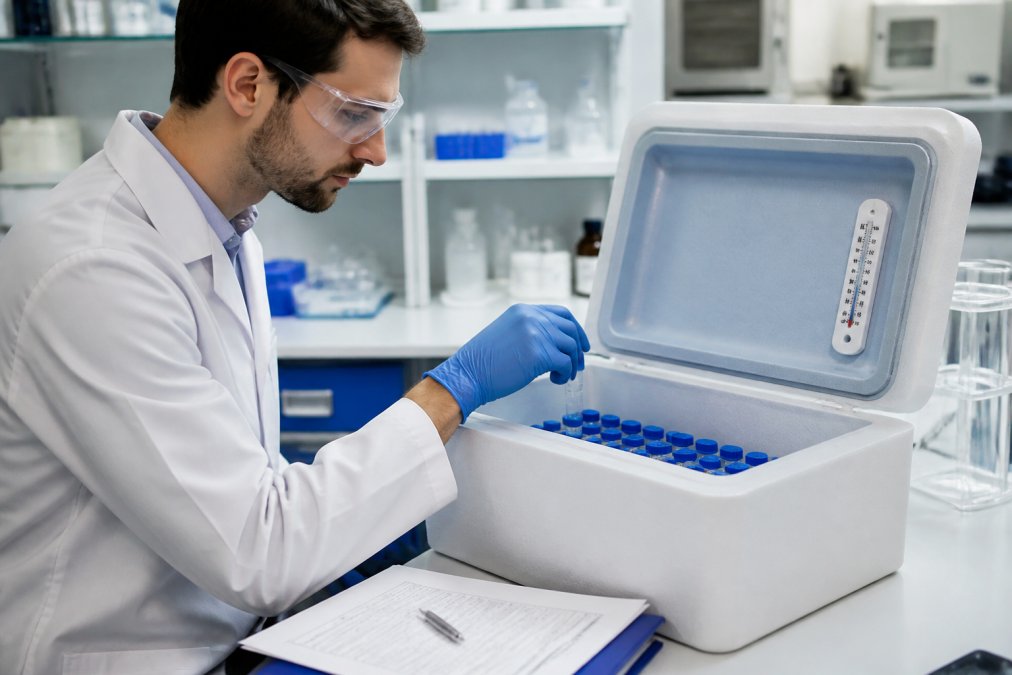
Temperature control during shipping is non-negotiable. Peptides should arrive in insulated packaging with ice packs or gel packs that maintain 2-8°C throughout transit. If a package arrives warm to the touch or shows signs of thawing, the peptides have been compromised. Refuse the shipment and request replacement with temperature-monitored packaging.
Documentation and lot-specific verification
Maintain detailed records of peptide receipt, storage conditions, reconstitution dates, and analytical results. This documentation becomes critical if your research results are questioned or if you need to correlate degradation with experimental outcomes.
Frequently Asked Questions
At what temperature should I store research-grade peptides to prevent degradation?
Most lyophilized peptides remain stable at -20°C for extended periods, typically 12-24 months or longer depending on the specific sequence and environmental conditions. Liquid peptide solutions require -20°C or -80°C storage to slow hydrolysis and oxidation. Room temperature storage accelerates degradation within days or weeks. Always verify storage recommendations in your peptide's certificate of analysis, as residue vulnerability and formulation affect stability timelines.
What is the difference between bacteriostatic water and sterile water for peptide reconstitution?
Bacteriostatic water contains 0.9% benzyl alcohol as a preservative, making it suitable for multi-dose peptide solutions that will be used over time. Sterile water lacks preservatives and is better for single-use or short-term reconstitution to avoid potential interaction with sensitive peptide sequences. For research applications requiring maximum purity and reproducibility, sterile water is often preferred unless the peptide will be stored in solution for weeks. Check your protocol requirements and the peptide's analytical findings for guidance.
How can I tell if my peptide sample has degraded?
Visual signs include discoloration, cloudiness, or crystallization in liquid solutions, and color changes in lyophilized powders. Chemical indicators include off-odors and unexpected pH shifts. Analytical confirmation requires HPLC analysis or mass spectrometry to detect peptide bond cleavage, aggregation, or oxidation of methionine and tryptophan residues. Degraded samples show reduced molecular weight peaks, additional chromatographic peaks, or loss of expected conformational stability.
Does freeze-thaw cycling damage research peptides?
Yes, repeated freeze-thaw cycles accelerate peptide degradation through several mechanisms: ice crystal formation disrupts conformational stability, osmotic stress increases hydrolysis rates, and oxidation becomes more pronounced during thawing. Most researchers minimize freeze-thaw exposure by aliquoting peptide solutions into single-use portions before initial freezing. Lyophilized peptides are more resistant to freeze-thaw damage than liquid solutions. If your research requires multiple uses, prepare fresh aliquots or use stabilizing buffers to maintain experimental integrity across trials.