 ultimate-guide
Lot Specific COA Importance in Peptide Research
Table of Contents
- Why a Lot Specific COA Matters for Research Integrity
- How to Spot Fraudulent Peptide Certificates of Analysis
- Interpreting HPLC and MS Data on COAs
- Beyond the Paper: Digital Verification and Traceability
- Peptide Purity Verification Methods You Can Trust
- Integrating COA Checks into Your Lab Workflow
- Conclusion: Make Lot Specific COAs Non-Negotiable
- Frequently Asked Questions
Last Updated: September 8, 2026
Why a Lot Specific COA Matters for Research Integrity
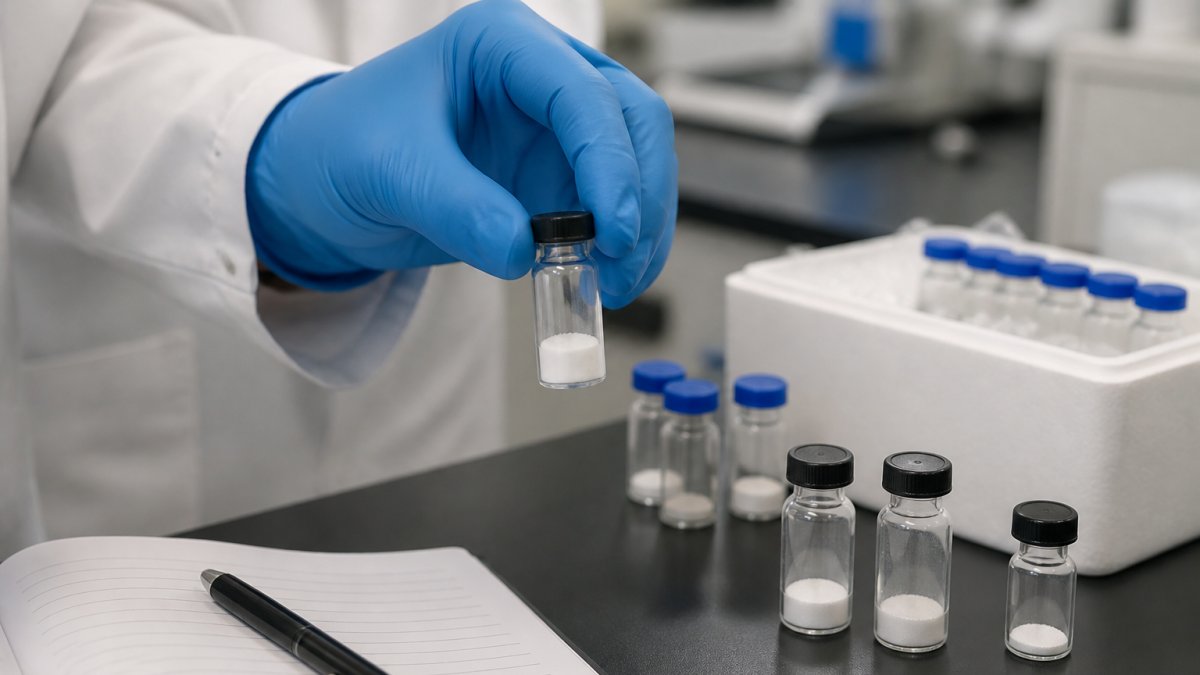
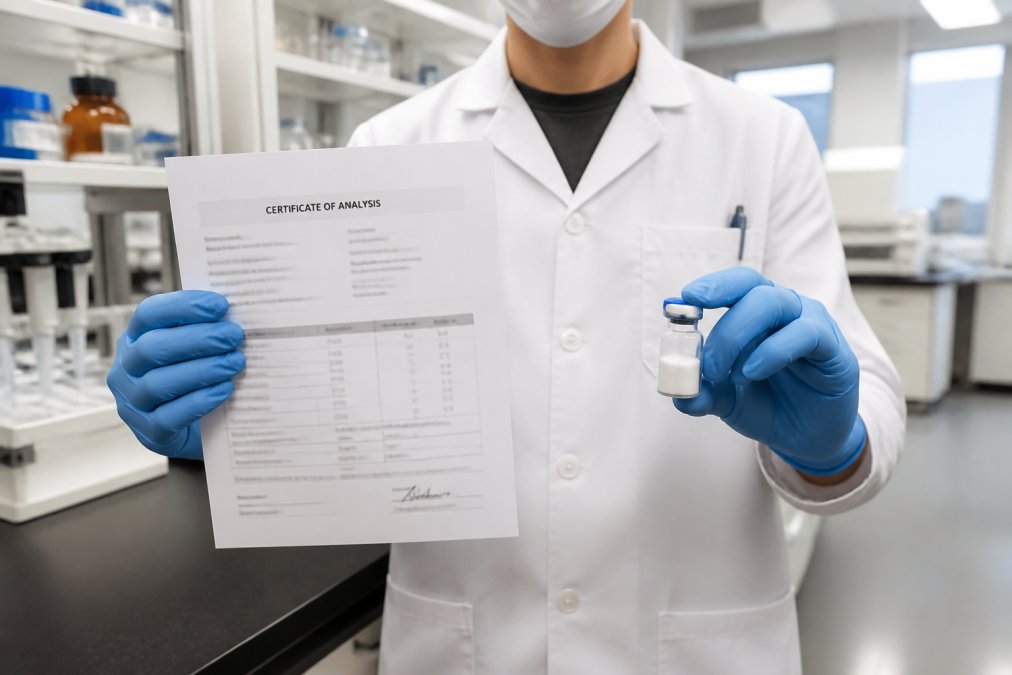
A lot specific COA is the analytical document that ties a Certificate of Analysis to one distinct production batch, not to an entire product line. When you receive a peptide vial, the lot number on the label must match the lot number printed on the accompanying COA before that material is considered verified for use. This single point of verification is the foundation of reproducible research.
Generic, product-level certificates that list the same purity specifications for every batch tell you nothing about the specific vial in your hand. They cannot confirm that the material you received actually passed the tests it claims to have passed. For researchers running metabolic studies with compounds like Semaglutide analogs, this distinction is the difference between defensible data and a costly replication failure.
At Bluegrass Research, we treat the lot specific COA as the core of our quality assurance process. Every batch we supply undergoes third-party analytical testing, and the resulting documentation is unique to that batch. The practical rule is simple: if the certificate lacks a lot number, or the lot number does not match the vial, treat the material as unverified.
How to Spot Fraudulent Peptide Certificates of Analysis
The most common red flag in a fraudulent COA is the absence of a verifiable lot number. A certificate that describes a product generically without linking it to a specific production batch has no evidentiary value. Beyond the lot number, several other signs warrant immediate scrutiny.
Check the laboratory that performed the analysis. A legitimate COA names an independent third-party testing facility, not the supplier itself. Look for contact details and, where possible, an accreditation reference such as ISO 17025 certification. Unverifiable or missing laboratory information is a strong indicator of a fabricated document. Cross-check the lab's name against its public registration; many accredited labs list their scope of testing methods online, and a COA claiming a method the lab does not offer is a clear forgery.
A common mistake is accepting a COA that shows perfect, round numbers across every specification. Real analytical data from USP guidelines on analytical procedures rarely produces uniform values; slight variations between purity specifications and impurity profiles are normal and expected. Documents showing identical results across multiple different lots are almost certainly recycled or forged. Compare the reported purity percentage against the integrated peak areas on the chromatogram itself, if the numbers do not reconcile arithmetically, the document was assembled from mismatched parts.
Examine the date logic. A COA dated before the lot's manufacturing date, or a certificate issued the same day the lot was synthesized, is physically implausible for a process that requires multiple analytical runs. Mismatched dates between the COA, the shipping manifest, and the vial label are among the easiest fraud indicators to catch without any technical training.
A less obvious red flag is a COA that lists a testing method but omits the instrument parameters. Real certificates from accredited labs specify the column type, mobile phase composition, flow rate, detection wavelength, and gradient program for the HPLC run. When those parameters are absent, the certificate cannot be independently replicated, which defeats the purpose of documentation. For research peptides, the absence of a mass spectrometry (MS) spectrum alongside the reported molecular weight is another warning sign, the number alone proves nothing about the actual compound.
Finally, consider the legal weight of the document. A COA is an evidentiary record. In a product liability dispute or a research misconduct investigation, a forged or recycled COA shifts the burden of proof onto the party that relied on it. If you cannot demonstrate that you verified the certificate's authenticity at the time of receipt, your defense weakens considerably. Treating COA verification as a formal, documented step in your receiving process is not bureaucratic overhead; it is the only way to preserve the document's evidentiary value if a question ever arises.
Interpreting HPLC and MS Data on COAs
Two analytical methods dominate peptide purity verification: High-Performance Liquid Chromatography (HPLC) and Mass Spectrometry (MS). Understanding what each method reports is essential for reading a COA correctly.
HPLC data reports purity as a percentage, typically presented alongside the chromatogram. The purity percentage reflects the area under the main peptide peak relative to all detected peaks. A purity specification of 98% or higher is common for research-grade peptides, but the chromatogram itself matters more than the number (peer-reviewed research). Check that the main peak is sharp and symmetrical, with minimal shoulders or tailing that could indicate degradation or impurities.
MS data confirms the molecular weight of the peptide. The reported mass should match the theoretical mass of the compound within an acceptable tolerance, usually a fraction of a Dalton. A significant deviation from the expected molecular weight indicates the wrong compound or a truncated sequence. The relationship between these two methods is complementary: HPLC verifies how much of the material is the target peptide, while MS verifies that the peptide present is the correct one.
For researchers comparing suppliers, the presence of both HPLC and MS data on a COA is a baseline expectation, not a differentiator. The absence of either method should raise immediate questions about the thoroughness of the testing.
Beyond the Paper: Digital Verification and Traceability
Paper certificates are easy to alter. A scanned document can be edited, a purity percentage changed, or a logo copied without detection. Digital verification closes this gap by linking the COA to a traceable, immutable record.
The most reliable systems use a unique identifier, such as a QR code or a lot-specific verification number, that links to a secure database. Entering that identifier should retrieve the original certificate, confirming that the document you hold has not been modified. This creates an audit trail that supports regulatory compliance and supply chain transparency.
Traceability extends beyond the certificate itself. A complete quality management system tracks the raw material source, the manufacturing date, the analytical testing date, and the distribution chain for each lot. When results are scrutinized, this documentation chain is what allows a researcher to defend their data. Batch traceability is not just a supplier convenience; it is a risk mitigation tool that protects the integrity of your entire study.
Peptide Purity Verification Methods You Can Trust
Beyond reading the COA, independent verification is the gold standard for research integrity. If your study outcomes will face scrutiny, consider sending a sample from your lot to an independent laboratory for confirmatory testing. This is a standard practice in regulated research environments, and the choice of confirmatory method depends on what question you need answered.
Amino acid analysis (AAA) confirms the peptide sequence composition by hydrolyzing the peptide into individual amino acids and quantifying each one. The molar ratios should match the theoretical composition of the target sequence within a tolerance of approximately ±10% (PubMed). AAA catches errors that HPLC purity alone cannot, a peptide with the correct purity percentage but a missing residue or an incorrect sequence position will still pass an HPLC check. The method is quantitative and widely available through commercial labs, with turnaround times of 3 to 5 business days and costs typically in the low hundreds of dollars per sample.
Capillary electrophoresis (CE) offers an orthogonal separation method to HPLC. Where HPLC separates based on hydrophobicity, CE separates based on charge-to-size ratio. A peptide that appears pure by HPLC but contains a charged impurity, a truncated sequence with a missing acidic residue, for example, will show a distinct additional peak in CE. Running both methods on the same lot provides complementary evidence that the material is homogeneous and correctly structured. Most practitioners find that discrepancies between HPLC and CE results are the first signal of a synthesis problem that purity percentages alone will not reveal.
Mass spectrometry (MS) with tandem analysis (MS/MS) goes beyond the single molecular weight measurement reported on most COAs. MS/MS fragments the peptide and sequences the fragments, confirming the order of amino acids rather than just the total mass. This is the definitive test for sequence fidelity. A peptide with a single amino acid substitution, leucine replaced by isoleucine, for instance, has an identical molecular weight and will pass a standard MS check. Only MS/MS fragmentation can distinguish these isomers. For peptides used in receptor binding studies where a single residue change alters activity, MS/MS confirmation is the difference between reliable data and a silent experimental failure.
What most guides miss is that the verification burden does not end at the certificate. Storage conditions affect peptide stability. A lot specific COA confirms the state of the material at the time of testing, but degradation can occur during shipping or improper storage. Documenting the storage temperature and handling conditions from receipt to use is part of maintaining compound integrity. Lyophilized peptides stored at −20°C in a desiccator typically remain stable for months, but the same material reconstituted in aqueous buffer may degrade within days at room temperature. The COA cannot protect you from post-release degradation; only your own storage log can.
Integrating COA Checks into Your Lab Workflow
A lot specific COA check should be a formal step in your receiving process, not an afterthought. A simple standard operating procedure protects your research and creates a clear audit trail.
| Workflow Step | Action Required | Purpose |
|---|---|---|
| Receiving | Match lot number on vial to lot number on COA | Confirm batch identity |
| Documentation | Archive COA with lot number and receipt date | Create audit trail |
| Verification | Check HPLC and MS data against specifications | Confirm purity and identity |
| Storage | Log storage conditions and temperature | Maintain compound integrity |
| Usage | Record lot number in lab notebook for each experiment | Enable traceability |
A common mistake is filing the COA away without recording the lot number in the experimental notes. If a result is later questioned, the ability to trace the exact material used is what allows you to rule out or confirm a compound-related issue. Automated COA management systems can simplify this process, but even a manual logbook is sufficient if it is consistently maintained.
For small laboratories ordering a few times a year, these checks take minutes per order. The effort is minimal compared with the consequences of discovering, months later, that a study was conducted with unverified material.
Conclusion: Make Lot Specific COAs Non-Negotiable
Research integrity depends on knowing exactly what is in every vial you use. A lot specific COA is the only document that provides that certainty, linking analytical test results directly to the material in your hands. Every other quality control measure builds on this foundation.
At Bluegrass Research, we supply high-quality, research-grade peptide materials, meticulously verified through lot-specific, third-party analytical documentation for unparalleled transparency and trust. Our research-first philosophy ensures every compound comes with transparent verification records, providing the verified purity and documentation essential for rigorous laboratory and scientific use. Shop Now and make verified compound integrity a non-negotiable part of your laboratory workflow.
Frequently Asked Questions
Why is a lot-specific COA more reliable than a generic one?
A generic COA describes a representative sample from a larger production run. A lot-specific COA is tied to the exact batch you receive, with its own lot number, test date, and analytical results. This matters because quality can vary between batches. Relying on a generic document means your results could be based on data that does not apply to the material in your lab.
Can a COA be faked or manipulated?
Yes, certificates can be forged or copied from another supplier. To spot fraudulent peptide certificates of analysis, verify the document includes your specific lot number and check for third-party laboratory letterhead. Confirm the testing laboratory exists and contact them directly if possible. Digital verification systems and QR codes linked to the manufacturer's database add another layer of security against tampering.
What specific data points should be present on a lot-specific COA?
A proper lot-specific COA includes the product name, lot number, manufacturing and expiry dates, and the testing date. Analytical data must show the results from HPLC and MS testing, including purity percentage and molecular weight confirmation. It should also list the analytical methods and instruments used, the testing laboratory's name, and an authorized signature.
What is the difference between a batch-specific and a lot-specific COA?
The terms are often used interchangeably, but the key is whether the document refers to the exact container you hold. A batch-specific certificate may cover a larger production batch that is later split into several lots. A lot-specific certificate is issued for the precise lot number printed on your vial, providing the most direct link between the test data and your material.