 ultimate-guide
High Purity Tirzepatide for Analysis: A 2026 Buyer Guide
Table of Contents
- What Defines High Purity Tirzepatide for Research?
- Analytical Method Validation for Tirzepatide: HPLC and Mass Spec
- How to Read a Peptide Certificate of Analysis Interpretation
- The Role of Third-Party Peptide Testing Services
- Impurity Profiles and What They Mean for Your Data
- Spotting Weak Documentation and Generic Certificates
- Our Evaluation Criteria for High Purity Tirzepatide Suppliers
- Final Verdict: Securing High Purity Tirzepatide for Your Lab
- Frequently Asked Questions
Last Updated: September 7, 2026
What Defines High Purity Tirzepatide for Research?
High purity tirzepatide for analysis is a lyophilized peptide preparation verified to meet strict analytical standards, typically exceeding 98% purity, with a documented impurity profile and molecular weight confirmation suitable for laboratory use (usp.org). The distinction between "research grade" and material suitable for rigorous analytical work comes down to documentation and batch consistency, not marketing language.
At Bluegrass Research, we evaluate every compound against the same criteria a quality control chemist would apply: chromatographic separation results, mass spectrometry confirmation, and a complete Certificate of Analysis. The real question is whether a supplier can prove what is in the vial, not just assert it.
The scientific community relies on unambiguous standards for analytical purity. Guidance from organizations like the United States Pharmacopeia shapes how many labs define acceptable thresholds for peptide materials, and those expectations carry directly into research procurement decisions.
Analytical Method Validation for Tirzepatide: HPLC and Mass Spec
Method validation proves that an analytical test reliably measures what it claims to measure. For tirzepatide, this means HPLC methods that separate the full-length peptide from truncation products and deletion sequences, paired with mass spectrometry for molecular weight verification.
The HPLC method must demonstrate specific resolution between the target peptide and closely related impurities. Key parameters include retention time stability, peak integration accuracy, and detection limits sensitive enough to catch low-level contaminants. Mass spectrometry adds a second dimension: the observed molecular weight should match the theoretical value within tight tolerance.
SPPS, or solid-phase peptide synthesis, inevitably produces impurities. A validated method will separate and quantify peptide fragments, residual solvents, and oxidation products. Without method validation, a Certificate of Analysis is just a piece of paper with numbers that cannot be reproduced.
The gap is a practical, step-by-step protocol that researchers can use to perform their own internal verification of received samples before committing valuable time and reagents to an experiment.
A Step-by-Step Internal Verification Checklist
This protocol is designed to be a first-line check, not a full method validation. It uses standard lab equipment and focuses on confirming the supplier's claims.
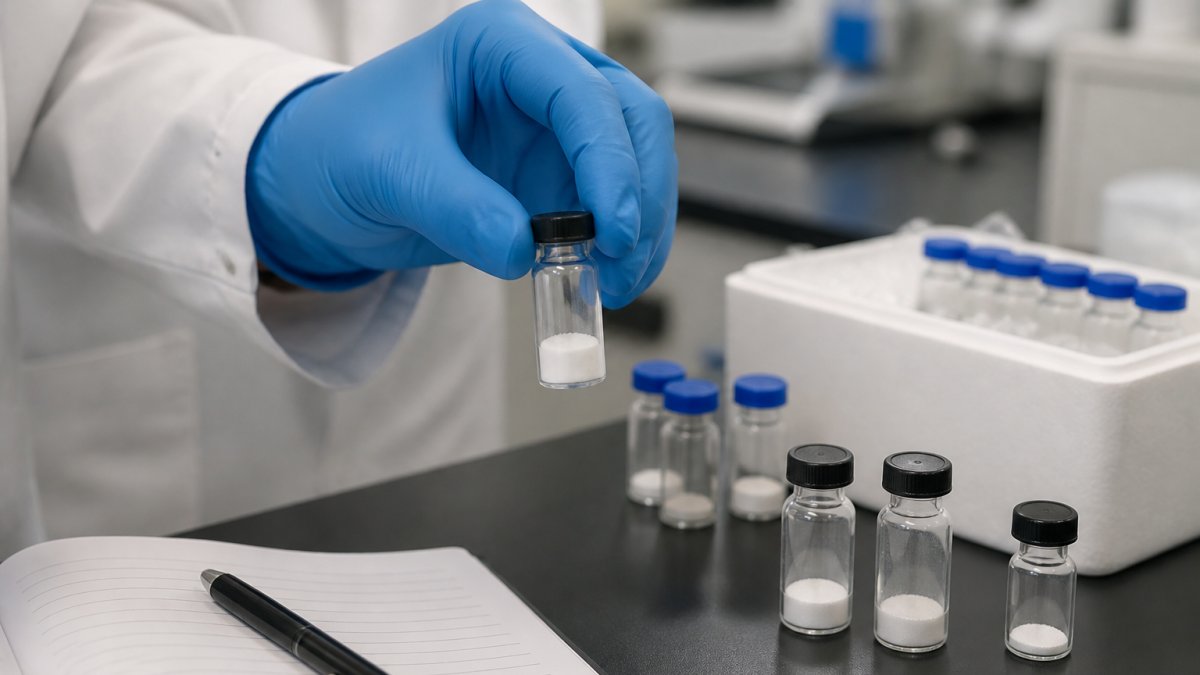
- Visual Inspection: Before anything else, examine the lyophilized powder. It should be a white to off-white, fluffy cake. Discoloration, a glassy appearance, or a collapsed cake can indicate improper lyophilization or moisture ingress.
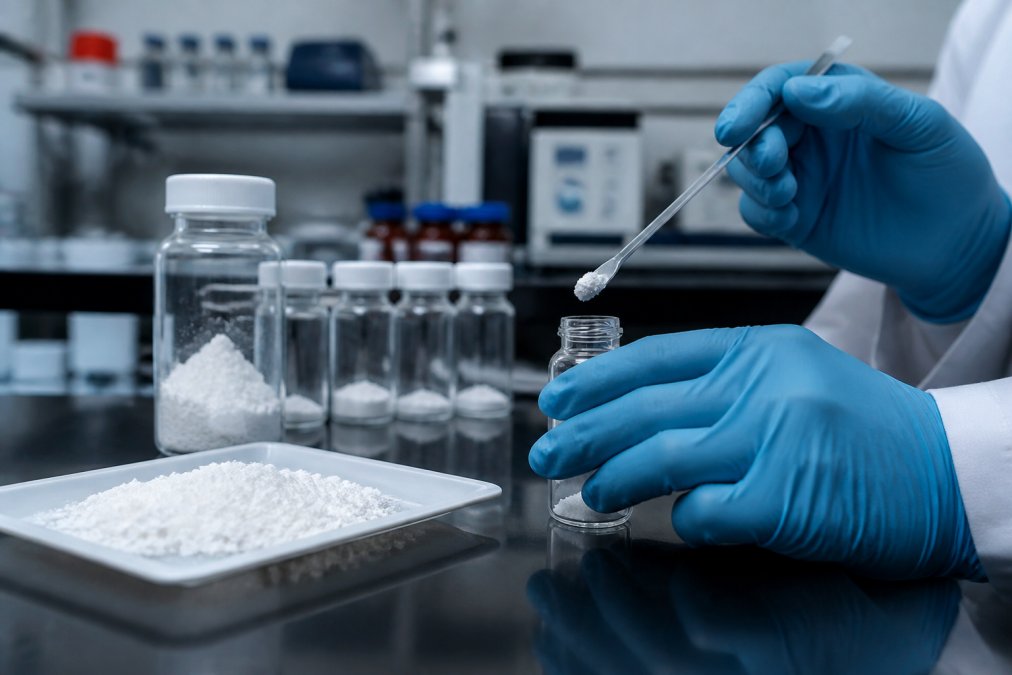
- Reconstitution and Solubility Test: Reconstitute a small, accurately weighed portion of the powder in a standard solvent like HPLC-grade water or a recommended buffer at a known concentration (e.g., 1 mg/mL). Vortex gently. The peptide should dissolve completely within a few minutes to form a clear, colorless solution. Persistent cloudiness or particulates are a major red flag indicating poor solubility or insoluble impurities.
- UV Scan (If a UV-Vis Spectrophotometer is Available): Perform a wavelength scan from 200-400 nm. Tirzepatide has a characteristic absorbance profile due to its aromatic residues (PubMed). A clean spectrum with a peak around 280 nm and a strong amide bond absorbance below 230 nm is expected. Anomalous peaks in the 260 nm range can suggest nucleic acid contamination, which is unlikely but possible from a poorly purified process.
- Analytical HPLC Run: If you have access to an HPLC, run a standard reversed-phase gradient. A common starting point is a C18 column (e.g., 4.6 x 150 mm, 5 µm) with a mobile phase of water and acetonitrile, both containing 0.1% TFA. Use a gradient from 20% to 60% acetonitrile over 30 minutes at 1 mL/min. Inject a known concentration of your sample and compare the retention time and peak profile to the chromatogram provided by the supplier.
- Mass Spec Confirmation (If Accessible): The most definitive check is mass spectrometry. An ESI-MS or MALDI-TOF analysis should show a major peak corresponding to the expected molecular weight of tirzepatide (approximately 4813 Da). The presence of additional major peaks with lower masses indicates truncation or deletion impurities. The supplier's CoA should list the theoretical molecular weight; your observed value should be within 1 Da of that figure.
- Data Cross-Checking: Compare your findings directly against the CoA. Does your observed retention time match the reported one? Does your purity estimate (by peak area) align with the reported percentage? Any major discrepancy is cause for concern.
What to Do When Results Do Not Match
If your internal verification fails, do not use the material. Document your findings with screenshots and chromatograms. Contact the supplier with your data and ask for an explanation. A reputable supplier will take the discrepancy seriously and may offer a replacement or a credit. A supplier that dismisses your data or refuses to engage is one you should not work with again.
How to Read a Peptide Certificate of Analysis Interpretation
A Certificate of Analysis, or CoA, is the single most important document you will receive with research peptides. It should report the analytical purity percentage, the test method used, the batch or lot number, and the date of analysis. If any of those elements are missing, treat the document with suspicion.
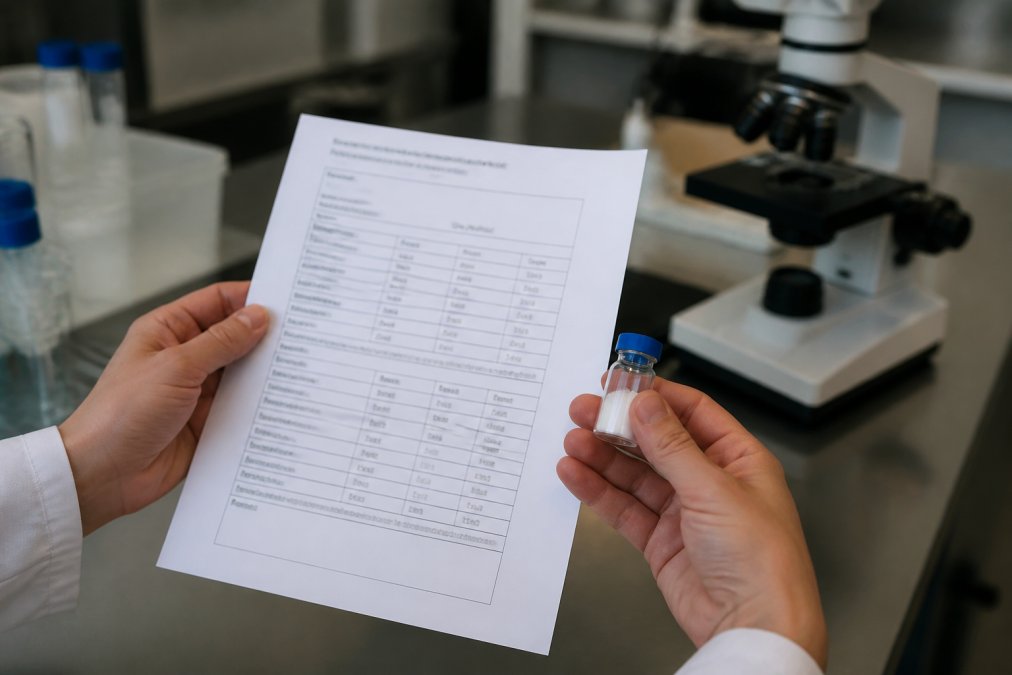
The purity percentage means nothing without knowing which method produced it. HPLC purity of 98.5% is meaningful when the chromatogram shows a single dominant peak with minor impurities quantified. Look for the actual chromatographic conditions: column type, mobile phase, and gradient.
Peptide certificate of analysis interpretation requires attention to what is not there as much as what is. A CoA that reports only purity without an impurity profile, residual solvent analysis, or mass spec confirmation is incomplete.
The Role of Third-Party Peptide Testing Services
Third-party peptide testing services provide independent verification that a supplier's quality claims are accurate. Independent laboratories run the same analytical methods and issue their own documentation, creating a chain of custody for quality data.
The value of third-party testing becomes clear when you consider batch consistency. Lot-specific third-party analysis confirms that the specific vial you receive matches the documented purity, not just the batch that happened to test well.
For academic researchers facing institutional purchasing requirements, third-party documentation also provides defensibility. If your results get scrutinized, you can point to independent analytical evidence rather than a manufacturer's assertion.
Impurity Profiles and What They Mean for Your Data
Impurity profiling identifies and quantifies every contaminant present in a peptide preparation beyond the target compound. Common impurities include truncated sequences, deletion peptides, oxidation products, and residual solvents. A 1% impurity that happens to be a biologically active peptide fragment can skew receptor activity assays, while an oxidation product might interfere with spectroscopic data.
Understanding what you are looking at is the difference between trusting a purity number and verifying it. Here is how to visually audit a raw HPLC trace for the most common issues.
Reading the Baseline
A clean baseline should be flat and stable. A gradual upward or downward drift can indicate column contamination or an unstable mobile phase gradient. A noisy, jagged baseline often points to detector issues or air bubbles, which can obscure small impurity peaks.
Identifying the Main Peak
The tirzepatide main peak should be sharp, symmetrical, and well-resolved from any neighboring peaks. A leading or trailing edge suggests the column is overloaded or the mobile phase pH is not optimal. A split or shouldered peak indicates a closely related impurity, such as an oxidation product or a peptide with a single amino acid deletion, that is not being fully separated.
Spotting Common Impurity Signatures
- Truncated Peptides: These are shorter fragments from incomplete coupling during synthesis. They typically elute earlier than the full-length product because they are less hydrophobic. Look for small, sharp peaks before the main tirzepatide peak.
- Oxidation Products: Oxidation of methionine or tryptophan residues increases polarity, so these impurities also tend to elute earlier. They may appear as a small peak or a shoulder on the leading edge of the main peak.
- Residual Solvents: Solvents like acetonitrile or trifluoroacetic acid (TFA) from the purification process can show up as large, broad peaks near the solvent front at the very beginning of the run. Their presence can interfere with the integration of early-eluting peptide fragments.
- Deletion Peptides: These lack one or more internal amino acids. Their elution time varies, but they often appear as small peaks immediately adjacent to the main peak, making them difficult to spot without a high-resolution column.
The Solvent Front Trap
A common mistake is ignoring the large peak at the start of the chromatogram, the solvent front. This is where unretained material elutes. If your peptide is highly hydrophilic or the column is not retaining it properly, the main peak can co-elute with this front, making purity analysis meaningless. A proper method will have a retention time for tirzepatide that is well-separated from this initial disturbance.
Buffer and Mobile Phase Artifacts
System peaks, caused by the mobile phase composition changing during the gradient, can appear as positive or negative peaks. These are not sample impurities but can be mistaken for them. Running a blank injection (just the diluent) and comparing the chromatograms is the standard way to identify these system artifacts. If a peak appears in both, it is not from your peptide sample.
By developing this visual literacy, you transform a Certificate of Analysis from a simple number into a diagnostic tool. You can spot potential problems before they ruin an experiment, and you can have an informed conversation with your supplier about the specific impurities you see in their data.
Spotting Weak Documentation and Generic Certificates
The peptide supply market has a documentation problem. Many suppliers issue certificates that look professional but contain recycled data, vague test descriptions, or purity claims without supporting chromatographic evidence.
Generic certificates often share common traits: no unique batch identifier, purity values that repeat suspiciously across products, and methods described only as "HPLC" without conditions. A legitimate CoA ties every result to a specific synthesis batch.
Standardization of testing protocols remains a challenge across the industry. When you see a purity value that seems too good, ask for the raw chromatogram. A legitimate supplier will provide it. One selling generic documentation will not.
Our Evaluation Criteria for High Purity Tirzepatide Suppliers
When we evaluate suppliers of high purity tirzepatide, we apply the same scrutiny we would to any critical research reagent.
| Evaluation Criteria | What We Look For | Red Flags |
|---|---|---|
| Documentation | Lot-specific CoA with full method details | Generic certificates, no batch numbers |
| Analytical Testing | Third-party HPLC and mass spec data | In-house testing only, no raw data |
| Impurity Profile | Quantified impurities with identification | Purity percentage only, no profile |
| Batch Consistency | Reproducible results across lots | Varying purity claims between batches |
A supplier should be able to provide the analytical method validation details for their testing. The purity threshold should be stated clearly, typically above 98%, with supporting evidence. Molecular weight verification should accompany the HPLC data.
Final Verdict: Securing High Purity Tirzepatide for Your Lab
The market for high purity tirzepatide rewards careful buyers. Suppliers who invest in third-party analytical testing, lot-specific documentation, and transparent quality control protocols are essential for rigorous research.
Bluegrass Research builds every order around this verification-first approach. Each compound ships with lot-specific CoA documentation backed by third-party analytical testing, so you know exactly what your research is working with. Discreet US shipping with no external branding protects your procurement process, while professional storage solutions keep lyophilized materials stable until you are ready to reconstitute them.
The cost difference between verified and unverified peptides is a fraction of what one failed experiment costs in time, materials, and lost progress. When your results will face peer review or regulatory scrutiny, the documentation is the foundation of reproducible science.
Get started with Bluegrass Research and secure high purity tirzepatide with the verified documentation your laboratory demands.
Frequently Asked Questions
What purity level should high purity tirzepatide for analysis have?
For rigorous analytical work, look for tirzepatide with a purity of 98% or higher, verified by HPLC. This threshold minimizes the risk of peptide fragments and truncated sequences interfering with your assays. The certificate of analysis should state the percentage clearly and show a chromatogram with a dominant main peak. Do not rely on a single number; confirm the method used and that the purity claim is backed by third-party testing.
How do I verify a peptide certificate of analysis is legitimate?
A legitimate certificate of analysis for tirzepatide includes the lot number, the date of analysis, the analytical method (typically HPLC and mass spectrometry), the purity percentage, and the signature of an analyst. Crucially, it must come from an independent, third-party laboratory, not the supplier itself. Cross-reference the lot number on the certificate with the vial label. If the document is generic or lacks a chromatogram, treat it as a red flag.
Why is third-party testing critical for research peptides?
Third-party testing removes the conflict of interest inherent when a supplier tests its own products. Independent labs provide unbiased analytical method validation, confirming the identity, purity, and concentration of the peptide. For tirzepatide research, this independent verification ensures the compound is what the label claims, with the correct amino acid sequence and molecular weight. This protects the integrity of your data and the validity of your conclusions.
What do HPLC and mass spectrometry tell me about tirzepatide purity?
HPLC separates the components of a sample to quantify purity and detect impurities, such as peptide fragments or residual solvents. Mass spectrometry provides the exact molecular weight, confirming the peptide's identity and sequence integrity. Together, these methods offer a complete picture: HPLC tells you how much of the target peptide is present, and mass spec confirms it is the correct peptide. Look for both techniques on the certificate of analysis.