 how-to
Discreet Shipping for Scientific Materials: A Guide
Table of Contents
- What Is Discreet Shipping for Scientific Materials?
- Why Discreet Shipping Matters for Research Integrity
- Shipping Protocols for Laboratory Chemicals
- Documentation Requirements for Scientific Shipments
- Bacteriostatic Water vs. Sterile Water for Peptides
- Regulatory Compliance and Legal Liability
- Carrier-Specific Discreet Shipping Policies and Tracking Security
- Frequently Asked Questions
Last Updated: September 2, 2026
What Is Discreet Shipping for Scientific Materials?
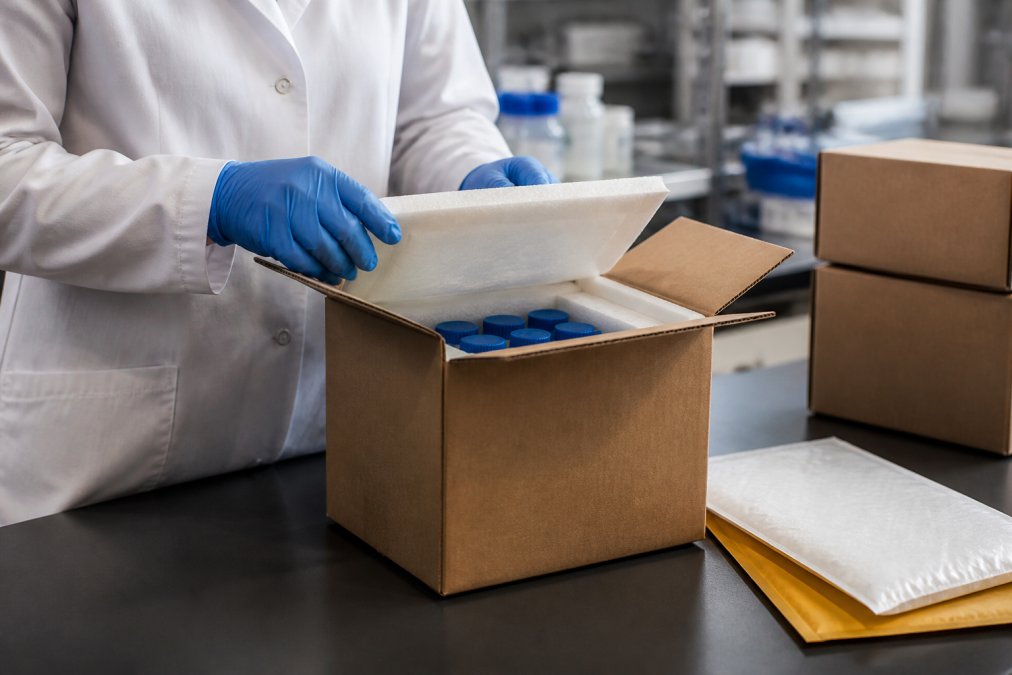
Discreet shipping for scientific materials is the practice of sending research-grade compounds, biospecimens, and laboratory chemicals in unmarked packaging that conceals the contents from external observation. Unlike standard commercial shipping, discreet shipments arrive in plain exterior boxes with no identifying labels, branding, or external markings that indicate what's inside.
For researchers working with sensitive compounds, peptides, bacteriostatic water, biological samples, and other research materials, this approach protects intellectual property, maintains confidentiality during transit, and ensures samples arrive without drawing unnecessary attention. The goal is simple: maintain professional discretion without compromising chain of custody documentation or regulatory compliance.
Bluegrass Research understands that academic and biotech researchers operate under strict institutional oversight. Our discreet shipping approach combines unmarked packaging with full transparency in documentation. You receive complete lot-specific COA records, third-party analytical verification, and detailed shipping manifests, but the box itself tells no story. This balance between confidentiality and accountability is what separates research-grade discreet shipping from casual concealment.
The distinction matters. Discreet shipping is not about hiding what you're doing. It's about controlling who knows you're doing it. A university researcher ordering peptides for metabolic studies shouldn't broadcast that order to campus mail staff. A biotech firm running proprietary trials shouldn't leave compound details visible on a shipping label. Discreet packaging solves both problems while keeping all regulatory documentation intact.
Why Discreet Shipping Matters for Research Integrity
Research integrity depends on controlling information flow. When your compounds arrive in unmarked packaging, three critical things happen: your intellectual property stays protected, your research timeline remains confidential, and your procurement process avoids unnecessary scrutiny from institutional staff who handle mail.
The stakes are real. A competitor intercepting information about your research direction could influence their own trial design. A supply chain leak could compromise the novelty of your findings. Institutional procurement offices sometimes flag unusual orders, discreet shipping eliminates that friction point entirely.
Many researchers don't realize how much information a standard shipping label reveals. A labeled box showing "research peptides" or "biospecimens" creates a paper trail that extends beyond your lab. Discreet packaging closes that gap. The box arrives unmarked. Your documentation arrives separately, through secure channels. Your research stays yours.
Temperature control during transit is another reason discreet shipping matters. Unmarked boxes often use more strong protective materials than branded packaging, extra padding, phase-change materials, and insulation layers that keep compounds stable regardless of ambient conditions. The research-grade approach means your samples arrive at the same purity they left the supplier's facility.
For researchers at independent facilities or smaller biotech firms, discreet shipping eliminates the "what is this?" conversation. Your mail handler doesn't need to know. Your institution's compliance officer doesn't need a justification. The box simply arrives, you verify contents against your documentation, and the work continues.
Shipping Protocols for Laboratory Chemicals
Shipping protocols for laboratory chemicals vary dramatically depending on what you're sending. The difference between hazardous and non-hazardous materials determines everything: packaging requirements, carrier restrictions, documentation demands, and transit timelines.
Handling Hazardous vs. Non-Hazardous Materials
Non-hazardous research materials, including most peptides, bacteriostatic water, and sterile water for injection, follow standard domestic shipping rules (the FDA). These compounds can move through most carriers without special hazmat certification. The packaging still needs to be strong and protective, but it doesn't trigger the regulatory burden that hazardous materials do.
Hazardous materials, radioactive compounds, certain solvents, dangerous goods classified by the Department of Transportation, require certified hazmat carriers, specialized packaging, hazard labels, and detailed shipping documentation (dot.gov). A single radioactive sample requires paperwork that a non-hazardous peptide order never touches.
The practical difference: non-hazardous research materials can ship discreetly because they don't legally require external hazard markings. The unmarked box is compliant. Hazardous materials cannot ship discreetly, they must display identifiable markings by law. If your research involves dangerous goods, you're working within a different regulatory framework entirely.
Most academic and biotech researchers ordering from Bluegrass Research work with non-hazardous compounds. Peptides, water for injection, and standard biological samples fall into this category. They ship in unmarked boxes without triggering hazmat protocols. The documentation, your lot-specific COA, third-party analytical testing results, and shipping manifest, travels separately and proves exactly what was sent, when it arrived, and its verified purity.
Chain of Custody and Temperature Control
Chain of custody documentation proves who handled your materials at every step. It's the audit trail that makes your research defensible. When your compounds arrive, you need to know they haven't been compromised, opened, or exposed to conditions that would degrade them.
Temperature control during transit is the primary threat to sample integrity (peer-reviewed research). Research-grade shipping uses phase-change materials, insulated boxes, and sometimes active cooling to maintain specific temperature ranges. A peptide stored at room temperature during a three-day summer shipment arrives degraded. The same peptide shipped with temperature-controlled packaging arrives stable.
Discreet shipping doesn't mean cutting corners on temperature control. The unmarked exterior protects your confidentiality. The interior protection, insulation, cooling materials, protective padding, protects your compounds. These are separate concerns that work together.
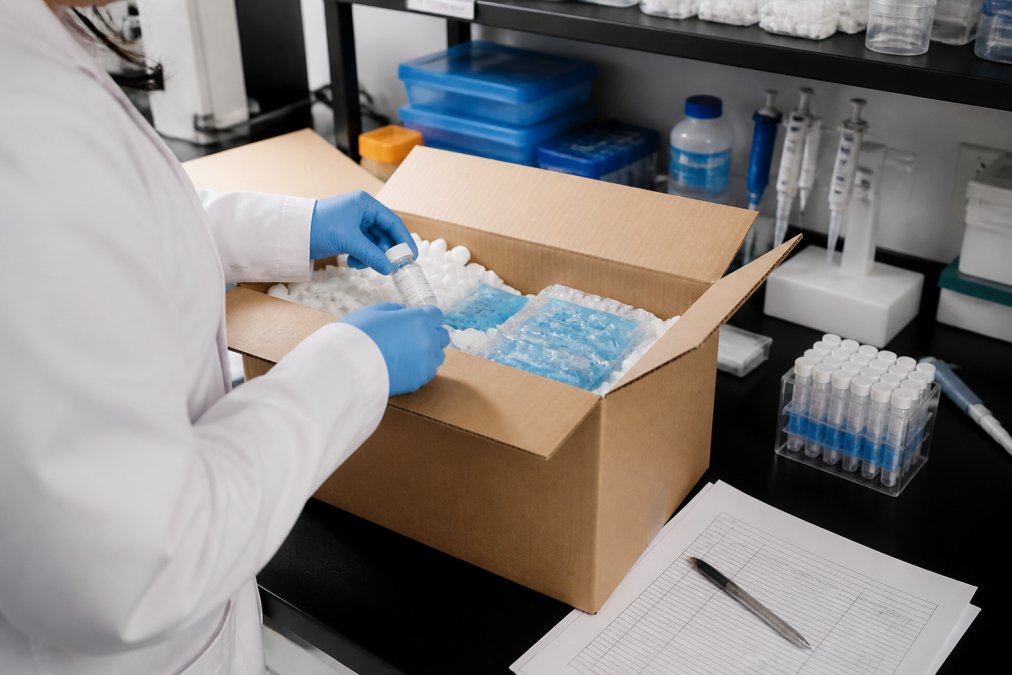
Documentation at each handoff proves the chain stayed intact. Your supplier seals the box, logs the seal, records the temperature-controlled materials used, and provides a tracking reference. The carrier confirms receipt, transit conditions, and delivery time. You verify the seal upon arrival. This documentation is what makes your research reproducible and your results defensible.
Documentation Requirements for Scientific Shipments
Scientific shipments require documentation that proves what was sent, its verified purity, and its condition upon arrival. This is non-negotiable for research integrity. The unmarked exterior doesn't eliminate the need for thorough records, it actually makes them more important.
Lot-specific COA documentation is the foundation. Each batch of research material should come with a Certificate of Analysis that identifies the specific lot, its purity percentage, the testing methods used, and the date of analysis. Third-party analytical testing adds credibility, an independent laboratory verifies what the supplier claims. Bluegrass Research provides both: lot-specific documentation and third-party verification so you have transparent records of exactly what you ordered.
Shipping documentation includes the manifest (what was sent), tracking information (where it went), and condition reports (how it arrived). Some researchers need photographic evidence of the sealed box upon delivery. Others need temperature logs from the shipment. These requirements vary by institution and by research protocol.
The key insight most guides miss: documentation is more critical with discreet shipping, not less. Because the box itself carries no identifying information, your paperwork is the only proof of contents. A university procurement office reviewing your order needs to see your COA and third-party test results. Your institutional review board needs to verify that what you ordered matches what you received. The documentation makes discreet shipping legitimate.
Bacteriostatic Water vs. Sterile Water for Peptides
Bacteriostatic water and sterile water serve different purposes in peptide research, and choosing the wrong one compromises your compounds.
Bacteriostatic water contains benzyl alcohol as a preservative. It prevents bacterial and fungal growth, making it suitable for multi-dose vials that will be accessed repeatedly over time. If you're reconstituting peptides and using portions of the solution over weeks or months, bacteriostatic water keeps the remaining solution stable between uses.
Sterile water contains no preservative. It's pure, sterile, and suitable for single-use applications or for immediate use after reconstitution. If you're preparing a peptide solution for a single experiment or a short research window, sterile water is appropriate.
The difference matters for your research protocol. If your methodology calls for bacteriostatic water and you use sterile water instead, you've altered a variable. If your protocol specifies sterile water and you use bacteriostatic water, the benzyl alcohol might interfere with your results. Bluegrass Research supplies both options with clear documentation of which you've ordered, so your research stays true to your protocol.
For discreet shipping purposes, both ship identically, in unmarked packaging with temperature control and full documentation. The choice depends on your research design, not on shipping logistics.
Regulatory Compliance and Legal Liability
Discreet shipping carries legal responsibilities that unmarked packaging alone doesn't satisfy. You must comply with regulations governing research materials, maintain proper documentation, and ensure your supplier operates within legal boundaries.
The Department of Transportation regulates hazardous materials shipping. If your research involves dangerous goods, discreet shipping is not an option, hazmat regulations require identifiable markings. Non-hazardous materials don't trigger these restrictions, which is why most peptide and biological sample shipments can arrive in unmarked packaging without violating federal law.
State and local regulations vary. Some jurisdictions have specific rules about how research materials can be stored, transported, or received. Your institution's compliance office should review your sourcing and shipping practices. Bluegrass Research operates within federal guidelines and works with institutions to meet state-level requirements, but your research facility bears the responsibility of verifying compliance with local law.
The legal liability question is straightforward: if something goes wrong, a sample arrives degraded, documentation is incomplete, or a shipment is lost, who is responsible? This is determined by your purchase agreement with your supplier. Bluegrass Research provides lot-specific COA documentation and third-party analytical verification precisely so you have proof of what you received and when. That documentation protects you if questions arise about your research integrity.
A common mistake is assuming discreet shipping means less accountability. It's the opposite. Because the packaging reveals nothing, your documentation must be bulletproof. Every shipment should come with complete records, clear chain of custody, and verified purity data. That's what makes discreet shipping defensible.
Carrier-Specific Discreet Shipping Policies and Tracking Security
Different carriers have different policies about unmarked packaging, and understanding these policies prevents shipping delays or rejections.
Most major carriers, FedEx, UPS, USPS, allow unmarked boxes for non-hazardous materials. They don't require external labeling beyond the address and tracking barcode. However, some carriers have specific rules about what information must be visible on the exterior. A shipping request form typically specifies carrier requirements, and your supplier should confirm that their discreet packaging meets those standards.
Tracking security is a separate concern. You need to know where your shipment is at every moment, but you don't want that information visible on the box itself. Discreet shipping handles this through tracking numbers that only you and your supplier know. The carrier scans the package at each checkpoint, creating a digital record you can access online. The box itself shows nothing.
Temperature monitoring during transit adds another layer of security. Some carriers offer tracking that includes temperature logs, digital records of the conditions the package experienced. This is especially important for research materials that degrade if exposed to heat or cold. You receive the temperature log upon delivery, proving your compounds stayed within the required range.
Bluegrass Research works with carriers that understand research-grade requirements. We use discreet packaging that meets carrier specifications, provide tracking numbers only to you, and ensure temperature-controlled transit. The result is a shipment that arrives unmarked but fully documented and verified.
| Element | Standard Shipping | Discreet Shipping for Scientific Materials |
|---|---|---|
| Exterior Markings | Branded labels, content descriptions | Unmarked box, address and barcode only |
| Documentation | Basic packing slip | Lot-specific COA, third-party testing, chain of custody |
| Temperature Control | Variable | Phase-change materials, insulation, monitoring |
| Tracking | Carrier tracking only | Carrier tracking plus temperature logs |
| Regulatory Compliance | Standard shipping rules | Non-hazardous material compliance verified |
Discreet shipping for scientific materials is not a shortcut, it's a professional approach to research logistics. Your compounds arrive in unmarked packaging that protects your confidentiality and intellectual property. Your documentation arrives complete, verified, and defensible. The chain of custody stays intact. Temperature control ensures sample integrity. This is how research-grade compounds should move from supplier to laboratory.
At Bluegrass Research, we've built our discreet shipping process around this principle: transparency in documentation, discretion in appearance. Your lot-specific COA proves purity. Third-party analytical testing verifies what we claim. Your research stays yours. Your compounds arrive stable. Your results stay defensible.
Shop Now to secure research-grade peptides with discreet, verified shipping.
Frequently Asked Questions
Is discreet shipping legal for scientific materials?
Yes, discreet shipping for legitimate research materials is legal when the contents comply with Department of Transportation (DOT) and FDA regulations. Unmarked packaging is permissible for non-hazardous, non-controlled research compounds. However, hazardous materials, dangerous goods, and radioactive materials require proper labeling and documentation regardless of external packaging. The key is ensuring your shipping request form and documentation requirements are complete and accurate. Discreet shipping does not mean hiding contents from regulatory oversight, it means professional, unmarked exterior packaging while maintaining full compliance documentation.
What's the difference between bacteriostatic water vs. sterile water for peptides?
Bacteriostatic water contains benzyl alcohol as a preservative and is suitable for multi-dose vials of peptides stored over time. Sterile water lacks preservatives and is appropriate for single-use applications or immediate preparation. For research purposes, bacteriostatic water extends shelf life and prevents bacterial contamination in vials accessed multiple times, while sterile water is preferred when you need the purest possible solution without additives. Your choice depends on your experimental protocol and storage timeline. Both require proper chain of custody documentation and discreet shipping to maintain sample integrity during transit.
How does discreet shipping protect intellectual property in research?
Discreet shipping protects intellectual property by using plain exterior packaging with no identifiable markings that could reveal the contents, sender, or recipient to observers. This minimizes risk of package interception or competitor awareness of your research direction. Combined with secure tracking and digital security measures, unmarked packaging ensures confidentiality throughout the supply chain. Professional suppliers maintain detailed shipping documentation and chain of custody records internally while presenting only an innocuous exterior to couriers and handling personnel. This dual approach, transparency in documentation, discretion in appearance, protects both your research security and regulatory compliance simultaneously.
What should I look for in a supplier's discreet shipping policy?
Look for suppliers that offer plain exterior packaging with no external branding, lot-specific chain of custody documentation, temperature-controlled transit for sensitive materials, and secure digital tracking without external indicators. Verify they maintain compliance standards for hazardous materials handling and provide complete shipping documentation for institutional procurement requirements. Ask about their carrier partnerships and whether they offer options for signature confirmation and discrete delivery instructions. Ensure their fulfillment approach includes third-party verification of compound integrity and purity, this demonstrates that discretion does not compromise transparency in documentation. Request samples of their shipping documentation to confirm it meets your laboratory's compliance standards.
This article was written using GrandRanker
Frequently Asked Questions
Is discreet shipping legal for scientific materials?
Yes, discreet shipping for legitimate research materials is legal when the contents comply with Department of Transportation (DOT) and FDA regulations. Unmarked packaging is permissible for non-hazardous, non-controlled research compounds. However, hazardous materials, dangerous goods, and radioactive materials require proper labeling and documentation regardless of external packaging. The key is ensuring your shipping request form and documentation requirements are complete and accurate. Discreet shipping does not mean hiding contents from regulatory oversight—it means professional, unmarked exterior packaging while maintaining full compliance documentation.
What's the difference between bacteriostatic water vs. sterile water for peptides?
Bacteriostatic water contains benzyl alcohol as a preservative and is suitable for multi-dose vials of peptides stored over time. Sterile water lacks preservatives and is appropriate for single-use applications or immediate preparation. For research purposes, bacteriostatic water extends shelf life and prevents bacterial contamination in vials accessed multiple times, while sterile water is preferred when you need the purest possible solution without additives. Your choice depends on your experimental protocol and storage timeline. Both require proper chain of custody documentation and discreet shipping to maintain sample integrity during transit.
How does discreet shipping protect intellectual property in research?
Discreet shipping protects intellectual property by using plain exterior packaging with no identifiable markings that could reveal the contents, sender, or recipient to observers. This minimizes risk of package interception or competitor awareness of your research direction. Combined with secure tracking and digital security measures, unmarked packaging ensures confidentiality throughout the supply chain. Professional suppliers maintain detailed shipping documentation and chain of custody records internally while presenting only an innocuous exterior to couriers and handling personnel. This dual approach—transparency in documentation, discretion in appearance—protects both your research security and regulatory compliance simultaneously.
What should I look for in a supplier's discreet shipping policy?
Look for suppliers that offer plain exterior packaging with no external branding, lot-specific chain of custody documentation, temperature-controlled transit for sensitive materials, and secure digital tracking without external indicators. Verify they maintain compliance standards for hazardous materials handling and provide complete shipping documentation for institutional procurement requirements. Ask about their carrier partnerships and whether they offer options for signature confirmation and discrete delivery instructions. Ensure their fulfillment approach includes third-party verification of compound integrity and purity—this demonstrates that discretion does not compromise transparency in documentation. Request samples of their shipping documentation to confirm it meets your laboratory's compliance standards.