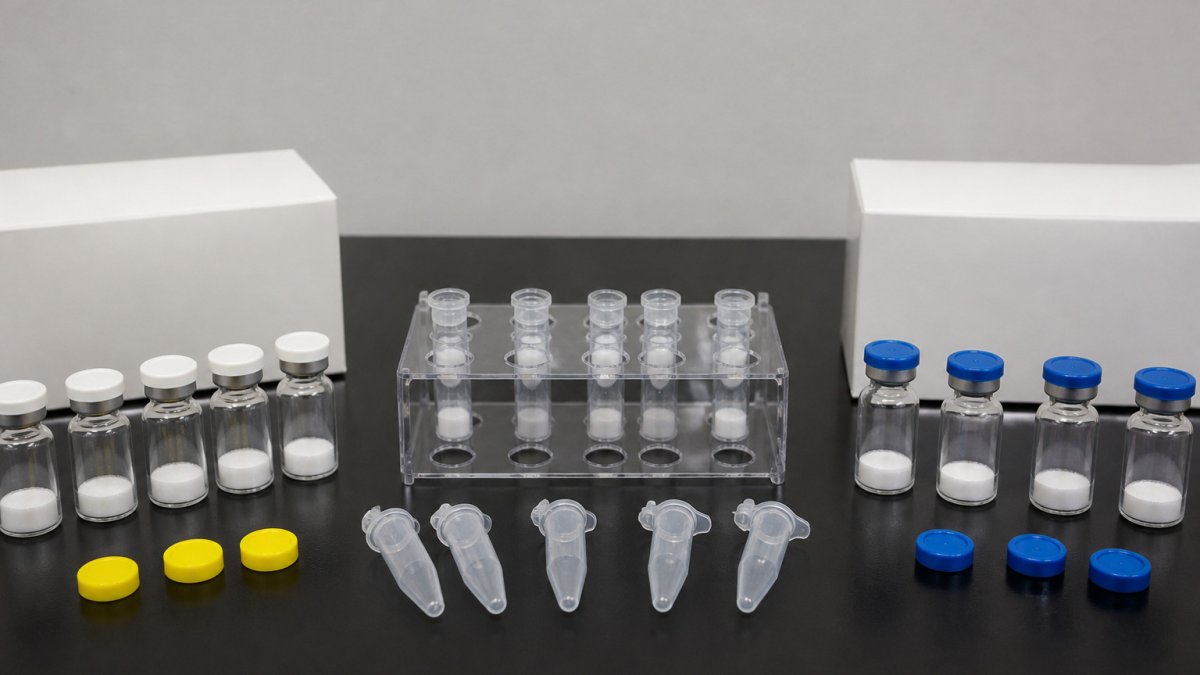
 comparison
Kylopeptides Alternative for Clinical Research: 2026 Guide
Table of Contents
- Why Researchers Seek a Kylopeptides Alternative for Clinical Research
- Best Research Grade Peptide Suppliers: Comparison Table and Selection Criteria
- Third-Party Analytical Documentation for Peptides: Reading COAs and Test Reports
- Top Kylopeptides Alternatives for Clinical Research: Pros, Cons, and Best Use Cases
- Research Peptide Storage and Handling Best Practices
- Regulatory Landscape for Laboratory Chemicals in 2026
- Common Mistakes When Switching Peptide Suppliers
- Conclusion: Choosing the Right Kylopeptides Alternative
- Frequently Asked Questions
Last Updated: September 15, 2026
Why Researchers Seek a Kylopeptides Alternative for Clinical Research
Finding a dependable kylopeptides alternative for clinical research starts with a simple shift in perspective: the question is not which supplier has the best reputation, but which one can prove, lot by lot, that its material is what the label says it is. Bluegrass Research built its entire operation around that question, and this guide explains how to evaluate any supplier against it.
The pressure to switch vendors rarely comes from a single failure. It builds. A certificate of analysis arrives that looks photocopied. A shipment shows up warm. A colleague asks for the raw data behind a purity claim and nobody can produce it. For laboratories working with analytical compounds, those small gaps in documentation become large problems at publication or audit time.
That is the tension running through this entire guide: most supplier comparisons rank vendors by catalog size and price, while the researchers who actually depend on research-use-only materials care about something harder to shop for, which is verifiable evidence.
Below, we break down selection criteria, how to read analytical reports, storage and cold-chain practice, and the regulatory picture for 2026.
Best Research Grade Peptide Suppliers: Comparison Table and Selection Criteria
The best research grade peptide suppliers are the ones that publish lot-specific, third-party analytical documentation and stand behind it. Everything else, including catalog breadth and turnaround speed, is secondary to whether you can verify what arrived in the box.
| Supplier | Documentation Model | Best For | Watch For |
|---|---|---|---|
| Bluegrass Research | Lot-specific third-party COA | Labs needing verified purity and discreet logistics | Pricing depends on quantity, dates, and delivery |
| FormBlends | Evidence-based protocols, public research docs | Academic labs sourcing a wide catalog | Pricing varies by requirement |
| PepScribe | Subscription-based procurement | Recurring, predictable compound access | Less flexible for one-off projects |
How We Evaluated Suppliers
We scored suppliers on four things: whether documentation is lot-specific rather than generic, whether testing is performed by an independent laboratory, whether shipping protects compound stability, and whether the vendor is transparent about what it does not disclose.
A common mistake is treating a glossy website as evidence of quality. It is not. Ask for a sample COA before you order anything.
Third-Party Analytical Documentation for Peptides: Reading COAs and Test Reports
Third-party analytical documentation for peptides is the paper trail that connects a specific batch number to actual test results from a laboratory the supplier does not control. Without that link, a purity figure is marketing, not data.
A legitimate certificate of analysis should include the compound name, the lot or batch number, the analytical method used, the result, the testing laboratory, and a date. If any of those are missing, treat the document as incomplete.
HPLC vs. Mass Spectrometry: What Each Report Tells You
High-performance liquid chromatography (HPLC) separates the components of a sample and reports purity as a percentage, typically measured by peak area. It tells you how much of the material is your target compound versus related impurities.
Mass spectrometry (MS) measures molecular weight. It confirms identity: whether the molecule in the vial is actually the peptide you ordered, not a similar sequence or a degraded fragment.
The two answer different questions. HPLC says "how pure." MS says "what is it." A report with only one of the two leaves half the picture blank, which is why suppliers serious about scientific reproducibility run both.
FDA guidance on analytical procedures and methods validation
Top Kylopeptides Alternatives for Clinical Research: Pros, Cons, and Best Use Cases
The strongest kylopeptides alternative for clinical research is one that treats documentation as the product, not an accessory. Rather than ranking vendors by catalog size, this section scores them against the criteria a working laboratory actually audits: lot-specific documentation, independent testing, cold-chain integrity, and supply-chain transparency.
How to Score Any Alternative Before You Order
Use the same four-axis framework on every candidate vendor. It takes about an hour and it will eliminate most of the field.
- Documentation specificity. Does the COA reference the exact lot number on the vial, or does it cover a product line? Lot-specific is the only acceptable answer.
- Testing independence. Was the analysis performed by a laboratory the supplier does not own or control? In-house testing is not third-party testing, regardless of how the report is formatted.
- Cold-chain integrity. What temperature control is used in transit, and what is the stated remedy if a shipment is delayed or arrives warm?
- Disclosure honesty. Does the vendor clearly state what it does not test for, what it cannot guarantee, and where its raw materials originate?
A common pattern is that vendors strong on axis one are weak on axis three, and vice versa. Score each axis separately rather than averaging them into a single impression.
Bluegrass Research
Bluegrass Research is built around the verification-first model: every compound ships with lot-specific, third-party analytical documentation, so the COA you receive corresponds to the exact batch in your freezer. Shipping is discreet, with no external branding, and the operation is structured around research-first sourcing rather than volume sales.
- Pros: Lot-specific COA documentation, independent third-party analytical testing, discreet shipping, professional storage solutions,
- Cons: Pricing depends on quantity, dates, and delivery, so you must request a quote; the catalog size is not specified
FormBlends
FormBlends leans into evidence-based protocol development and carries a broad catalog of research-grade compounds. Its documentation is comparatively transparent, and the range suits labs that source many different sequences across multiple projects.
- Pros: Wide compound variety, transparent research documentation, useful protocol references for early-stage work
- Cons: Pricing varies with each research requirement, which complicates budgeting; documentation depth can vary by catalog category
PepScribe
PepScribe bundles materials into a subscription model with structured tiers. For a lab that consumes the same compounds on a predictable schedule, the flat monthly structure simplifies procurement and reduces per-order administrative overhead.
- Pros: Predictable monthly costs, simplified ordering, fewer purchase-order cycles
- Cons: The subscription structure fits poorly with one-off or exploratory projects; switching compounds mid-cycle can be inflexible
What the Comparison Table Cannot Tell You
A comparison table is a starting point, not a verdict. The variables that matter most, whether a specific lot was tested, whether the testing lab is independent, whether transit held temperature, are lot-level facts that no vendor-level table can capture. Request a sample COA for a current lot before you commit, and compare that document against the four-axis framework above. If a vendor cannot produce a batch-specific report on request, the ranking is irrelevant.
Research Peptide Storage and Handling Best Practices
Research peptide storage and handling best practices begin with temperature discipline and end with documentation. Most peptides ship as a lyophilized powder.
Store material at the temperature the COA or product sheet specifies. Label every vial with the lot number so results remain traceable.
Cold-Chain Logistics for Sensitive Compounds
Cold-chain management is where many suppliers quietly fail.
Ask a prospective supplier two questions: what temperature control is used during transit, and what happens if a shipment is delayed.
Regulatory Landscape for Laboratory Chemicals in 2026
The Agencies That Actually Touch Your Supply Chain
What 'Documentation Tightening' Means in Practice
A practical recordkeeping set for each lot includes:
Research-Use-Only vs. Human-Grade: Why the Distinction Matters Legally
What to Ask Before Your Next Audit Cycle
Common Mistakes When Switching Peptide Suppliers
Other recurring errors:
Conclusion: Choosing the Right Kylopeptides Alternative
Frequently Asked Questions
What criteria define a reputable research peptide supplier?
A reputable supplier provides lot-specific certificates of analysis (COAs) from independent third-party labs and offers full supply chain transparency. They should also supply detailed handling and storage instructions. Without verified purity and documentation, you cannot confirm the compound's identity or integrity for clinical research.
How do third-party analytical reports verify peptide purity?
Third-party analytical reports verify purity through methods like HPLC, which separates and quantifies peptide components, and mass spectrometry, which confirms molecular weight. These reports are generated by independent labs, not the supplier, ensuring unbiased verification. For clinical research, always request lot-specific COAs to ensure the batch you receive matches the documented results.
Are there reliable alternatives to Kylopeptides for laboratory research?
Yes. Several suppliers focus on research-grade peptides with rigorous documentation. When evaluating a Kylopeptides alternative for clinical research, prioritize those offering lot-specific COAs, third-party testing, and secure shipping. Some suppliers provide additional services like cold-chain logistics and professional storage solutions. Always verify that the supplier's documentation meets your institution's compliance requirements and that compounds are labeled research-use-only.
What should researchers look for in a peptide supplier's documentation?
Researchers should look for lot-specific COAs that include verified purity and documentation. Documentation should also cover storage conditions and handling protocols. For clinical research, ensure the supplier provides research-use-only labeling and complies with relevant regulations. Incomplete documentation is a red flag for scientific reproducibility.
Is it standard practice to use multiple peptide suppliers for clinical research?
Using multiple suppliers is common in clinical research to mitigate supply chain risks and compare compound quality. However, it requires careful tracking of lot numbers and COAs for each supplier. Some researchers prefer a primary supplier for consistency and a secondary for backup. When using multiple sources, ensure all compounds meet the same purity and documentation standards to maintain experimental integrity. Always validate new suppliers with small test orders before committing to larger studies.