 listicle
Buy Research Grade Semaglutide Online: 2026 Guide
Table of Contents
- What Research Grade Semaglutide Actually Means
- Third-Party Analytical Documentation for Peptides: What to Demand
- Research Grade Semaglutide Storage Requirements
- How to Evaluate Suppliers Before You Buy Research Grade Semaglutide
- GLP-1 Receptor Agonist Mechanisms and Laboratory Applications
- Why Bluegrass Research Stands Apart for Metabolic Peptide Sourcing
- Conclusion
- Frequently Asked Questions
Last Updated: August 31, 2026
What Research Grade Semaglutide Actually Means
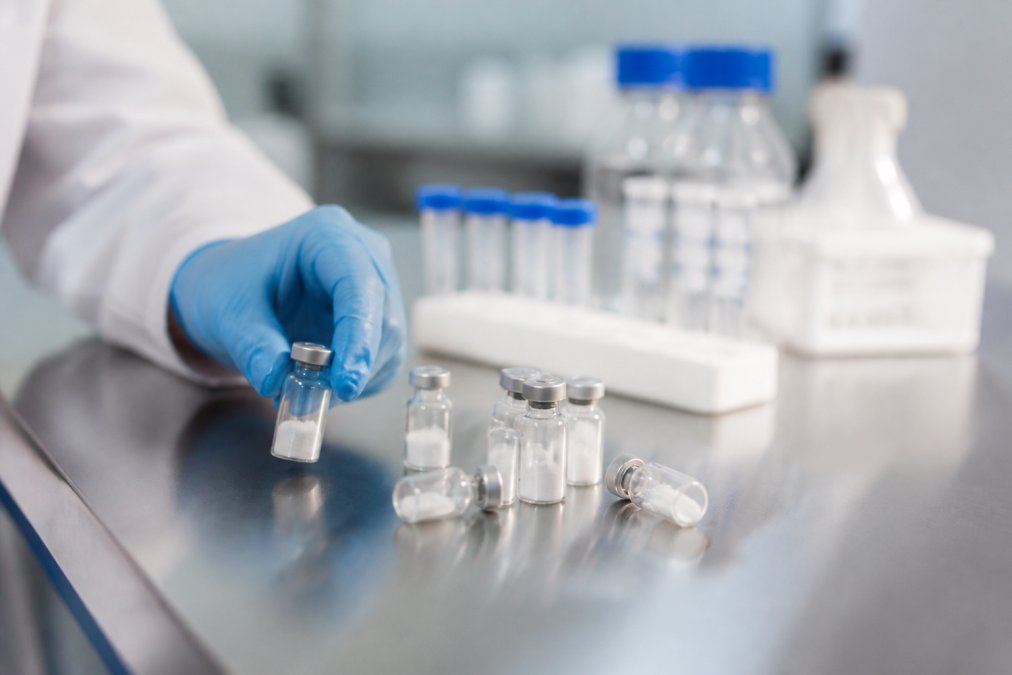
Research grade semaglutide is a synthetically produced GLP-1 receptor agonist peptide manufactured and verified to analytical standards required for laboratory investigation, not for human administration. "Research grade" is not a marketing label, it is a specification that determines whether your experimental data is defensible.
The core difference between research grade and pharmaceutical grade lies in the documentation chain. A compound can test at 98% purity and still be unsuitable for rigorous scientific work if the lot-specific analytical records are absent or produced by the same facility that synthesized it. Independent verification separates research-grade material from catalog chemicals.
Synthetic Peptide Specifications and Purity Benchmarks
Semaglutide is a 31-amino acid synthetic peptide analog of human GLP-1, modified with a C18 fatty acid chain to extend plasma half-life. Its molecular weight is approximately 4,113.58 Da. For research applications, purity benchmarks fall into two tiers: materials verified at 95% or above by HPLC, and higher-specification materials verified at 98% or above using combined HPLC-MS confirmation.
The 95% threshold is acceptable for exploratory assays. The 98%+ specification becomes important for quantitative receptor binding studies where impurity profiles could confound results.
Key specifications to confirm before ordering:
- Purity percentage verified by HPLC (minimum 95% for research use)
- Molecular identity confirmed by mass spectrometry
- Peptide sequence verification
- Absence of stabilizers or preservatives in lyophilized form
- Lot number traceable to a specific manufacturing batch
Research Use Only (RUO) Status and Legal Context
Research grade semaglutide carries a Research Use Only designation, meaning it is sold exclusively for in vitro and laboratory research purposes. It is not approved by the FDA for human consumption, therapeutic use, or veterinary administration.
According to FDA guidance on research use only products, RUO materials must not be used in clinical procedures, diagnostic applications, or any context involving human subjects outside of approved clinical trial frameworks. Researchers purchasing these compounds are responsible for ensuring use complies with institutional review board protocols and applicable federal and state regulations.
Third-Party Analytical Documentation for Peptides: What to Demand
The most important document in any peptide procurement decision is the Certificate of Analysis, which documents the identity, purity, and testing conditions for a specific batch. The problem is that "COA" covers documents ranging from rigorous third-party laboratory reports to internally generated summaries that confirm almost nothing.
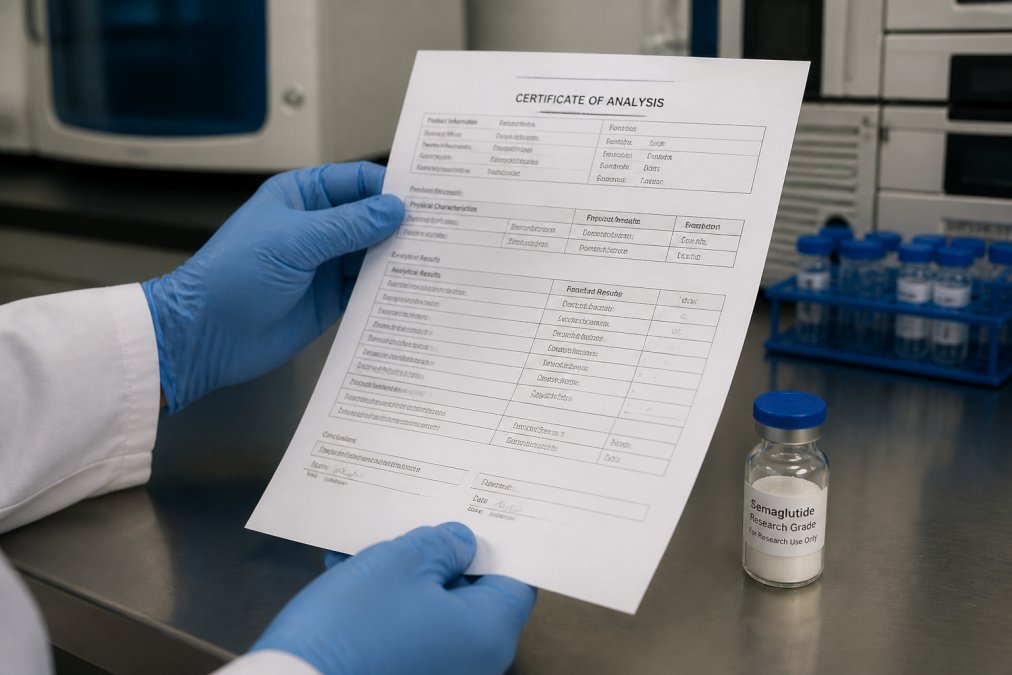
Third-party analytical documentation means the testing was performed by an independent laboratory with no financial relationship to the manufacturer. This independence makes the data credible. When a supplier tests its own product and issues its own COA, there is no external check on methodology, instrument calibration, or result interpretation.
HPLC-MS Testing and What the Numbers Tell You
HPLC-MS, high-performance liquid chromatography coupled with mass spectrometry, is the standard analytical combination for research grade semaglutide verification. HPLC separates the compound by molecular interaction and generates a purity percentage. Mass spectrometry confirms molecular identity by measuring the mass-to-charge ratio of ionized fragments.
What the numbers tell you:
- Purity percentage: The proportion of detected material matching the target compound. A result of 98.2% means 1.8% is impurities or degradation products.
- Molecular weight confirmation: MS data should align with the theoretical molecular weight of semaglutide (approximately 4,113.58 Da). Deviations indicate structural issues.
- Retention time: The HPLC retention time for a known compound should be consistent across batches. Significant variation suggests purity or structural inconsistency.
A COA showing only a purity percentage without the underlying chromatogram, retention time, and MS spectrum provides a conclusion without evidence. Demand the full analytical report.
Lot-Specific COAs vs. Generic Batch Documents
Lot-specific COAs are tied to a unique lot number identifying the exact manufacturing batch your vial came from. Generic batch documents reference a production run or representative sample, which may not reflect your actual material.
If your experiment produces an anomalous result and you need to trace it to source material variability, a lot-specific COA provides that traceability. Ask directly: "Is the COA lot-specific to my order, or is it a representative batch document?"
Research Grade Semaglutide Storage Requirements
Proper storage of research grade semaglutide is critical, improper handling is one of the most common causes of compound degradation before an experiment begins.
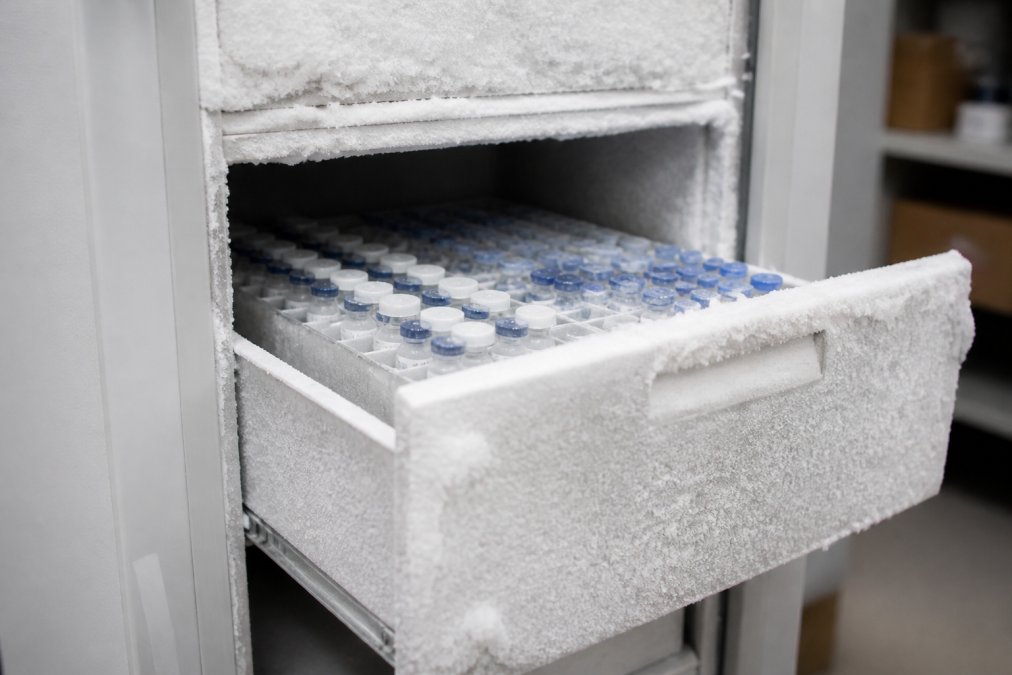
Lyophilized semaglutide powder is stable at temperatures between -20°C and -80°C when stored in a vacuum-sealed, moisture-free environment. Exposure to ambient temperature, humidity, or repeated freeze-thaw cycles accelerates degradation. According to National Institutes of Health peptide storage guidelines, lyophilized peptides stored under appropriate cold-chain conditions maintain stability for extended periods, while improper storage results in measurable degradation within days.
Lyophilized Powder Handling and Reconstitution Protocols
Lyophilized powder is the standard delivery format because it maximizes stability during shipping and storage. Reconstitution requires care, the wrong buffer, concentration, or technique introduces variables that invalidate downstream data.
Standard reconstitution protocol:
- Allow the sealed vial to equilibrate to room temperature before opening (approximately 15-20 minutes) to prevent condensation.
- Select an appropriate reconstitution buffer. Bacteriostatic water (0.9% benzyl alcohol in sterile water) is commonly used for in vitro applications. Sterile PBS (phosphate-buffered saline) at pH 7.4 is appropriate for cell-based assays.
- Add reconstitution solvent slowly along the vial wall; do not inject directly onto the lyophilized cake.
- Swirl gently. Do not vortex, as this introduces mechanical stress that can disrupt peptide structure.
- Allow full dissolution before aliquoting.
- Aliquot into single-use volumes to avoid repeated freeze-thaw cycles.
- Label each aliquot with lot number, reconstitution date, concentration, and buffer used.
Target concentration for most metabolic research applications ranges from 1 mg/mL to 5 mg/mL. Reconstituted material stored at 4°C should be used within 48-72 hours. For longer storage, freeze aliquots at -20°C and use within 30 days.
Stability, Degradation Data, and Controlled Environment Conditions
Semaglutide's fatty acid side chain makes it more sensitive to oxidative degradation than simpler peptide analogs. Stability data should include accelerated degradation studies at elevated temperatures to characterize the compound's degradation profile.
What to look for in stability documentation:
- Time-point purity measurements at multiple temperatures (e.g., 4°C, 25°C, 37°C)
- Identification of major degradation products
- Recommended storage conditions with supporting data
- Shelf life projections based on observed degradation kinetics
Suppliers providing only a storage recommendation without supporting stability data are asking you to trust their assertion. For research applications where compound integrity directly affects result validity, that is not acceptable.
How to Evaluate Suppliers Before You Buy Research Grade Semaglutide
Most risk in peptide procurement is front-loaded in the supplier selection decision. The questions that matter most are the ones you ask before placing an order.
| Evaluation Criterion | What to Ask | Red Flag |
|---|---|---|
| COA specificity | Is this lot-specific or batch-representative? | "We test all batches" without lot numbers |
| Testing independence | Who performed the analysis? | Supplier's own internal lab only |
| Analytical methods | HPLC-MS or HPLC only? | Purity claim without method disclosure |
| Stability documentation | Do you have degradation data? | "Stable at -20°C" without supporting data |
| Shipping temperature control | How is temperature maintained in transit? | No mention of cold-chain packaging |
| Minimum order | What are your order minimums? | Minimums that don't suit lab scale |
| Reorder traceability | Can I request the same lot for follow-on orders? | No lot-level inventory tracking |
Documentation quality is a proxy for manufacturing discipline. A supplier maintaining rigorous analytical records pays close attention to process consistency.
Shipping Protocols, Temperature Control, and Discreet Delivery
Lyophilized peptides are generally stable at ambient temperature for short transit periods, typically 72 hours or less, when properly packaged in vacuum-sealed vials with desiccant. However, the margin for error narrows in summer months, during extended transit, or when shipments are held at carrier facilities without climate control.
A supplier's shipping protocol should specify:
- Packaging method for lyophilized material (vacuum-sealed vials, desiccant packs, insulated packaging)
- Maximum transit time before temperature assurance is no longer guaranteed
- Whether cold packs or dry ice are used for temperature-sensitive orders
- Tracking availability to monitor transit duration
For university laboratories with institutional purchasing requirements, discreet shipping, meaning no external branding identifying the contents or supplier, is often a compliance requirement.
Pricing Structures and Minimum Order Considerations
Pricing for research grade semaglutide varies based on quantity, vial concentration, purity specification, and documentation level. Higher-specification materials with full lot-specific third-party COAs cost more than catalog-grade peptides, and that difference is justified if your research requires defensible source material records.
Small labs ordering two or three times per year should ask directly about minimum order quantities. A supplier genuinely oriented toward the research community will accommodate lower-frequency, smaller-volume orders without penalizing the researcher.
GLP-1 Receptor Agonist Mechanisms and Laboratory Applications
Semaglutide functions as a GLP-1 receptor agonist, binding to the glucagon-like peptide-1 receptor with high affinity and activating downstream signaling cascades that regulate insulin secretion, glucagon suppression, gastric emptying, and energy homeostasis. Its C18 fatty acid chain enables albumin binding in biological systems, extending the compound's effective half-life.
In laboratory research, semaglutide is used for metabolic pathway studies examining GLP-1 receptor-mediated effects on glucose metabolism, obesity and energy homeostasis research investigating central nervous system effects on appetite regulation, incretin hormone signaling analysis, pharmacological research on biosimilar compounds using semaglutide as a reference standard, and receptor binding studies characterizing binding kinetics in transfected cell lines.
As documented in NIH National Library of Medicine research on GLP-1 receptor pharmacology, GLP-1 receptor agonists have become central research tools in metabolic biology, with semaglutide serving as a reference compound in growing in vitro and preclinical work.
The fatty acid conjugation creates specific reconstitution and assay design considerations. Researchers moving from unconjugated GLP-1 peptides to semaglutide should expect differences in dissolution behavior, non-specific binding, and receptor engagement kinetics.
Why Bluegrass Research Stands Apart for Metabolic Peptide Sourcing
The decision to buy research grade semaglutide online comes down to one question: how much do you trust the documentation behind the compound? Bluegrass Research was built around the answer to that question.
Our lot-specific COA documentation is verified by an independent third-party laboratory, with the analytical report tied directly to the lot number on your vial. When your results are scrutinized by journal reviewers, institutional compliance officers, or collaborating PIs, you have a traceable, externally verified documentation chain.
All materials ship with packaging designed to maintain compound integrity through transit, with no external branding identifying the contents or supplier. That matters for university labs navigating institutional receiving and procurement compliance requirements.
Small labs are not a secondary market for us. Researchers ordering two or three times a year get the same documentation standard, analytical rigor, and shipping protocols as high-volume institutional accounts. Pricing depends on quantity, dates, and delivery, visit our product page for current options and to discuss your specific requirements.
The broader research grade semaglutide market has a transparency problem: too many suppliers offer purity claims without the analytical infrastructure to back them. Bluegrass Research's research-first philosophy means every compound we supply comes with verified purity and documentation that rigorous laboratory work requires. As Science.gov resources on peptide research standards make clear, research outcome integrity depends on source material integrity, and that starts with the supplier.
| Supplier | Purity Claim | Testing Method | COA Type | Lyophilized | Discreet Shipping |
|---|---|---|---|---|---|
| Bluegrass Research | Verified | Third-party HPLC-MS | Lot-specific | Yes | Yes, no external branding |
| Provider B | 95%+ | HPLC | Batch-level | Yes | Tracked US shipping |
| Provider C | 98%+ | HPLC | Batch-level | Yes | Standard tracked |
| Provider D | 95%+ | HPLC-MS | Batch-level | Yes | Ambient transit |
| Provider E | 98%+ | HPLC | Per-batch | Yes | Nationwide |
Note: Provider details reflect publicly available information from supplier product pages. Always verify current documentation standards directly with any supplier before ordering.
Conclusion
Sourcing research grade semaglutide is a procurement decision with direct consequences for experimental validity. The compound in your vial is only as reliable as the documentation that verifies it, and that documentation is only as credible as the testing process behind it. Bluegrass Research addresses both directly: lot-specific COAs from independent third-party laboratories, discreet US shipping with no external branding, and a research-first approach that treats documentation as a core deliverable. Shop Now and request current pricing and availability for your next research phase.
Frequently Asked Questions
Q: What does research grade semaglutide mean?
A: Research grade semaglutide is a synthetically produced peptide compound manufactured to laboratory specifications, typically verified at 95% purity or higher by HPLC or HPLC-MS analysis. It is supplied strictly for scientific and analytical research purposes, not for human consumption or clinical administration. Reputable suppliers provide lot-specific Certificates of Analysis confirming purity, molecular identity, and batch traceability. The compound mirrors the peptide sequence of pharmaceutical semaglutide but is produced outside pharmaceutical manufacturing channels and is not approved by the FDA for therapeutic use.
Q: Is it legal to buy semaglutide for research purposes?
A: Purchasing research grade semaglutide for legitimate laboratory and scientific study is generally permissible under federal law, provided the compound is clearly labeled for research use only and is not intended for human consumption. Suppliers and buyers must comply with applicable FDA regulations governing research chemicals. Institutional researchers should also confirm that their facility's internal compliance and procurement policies permit such purchases. Misrepresenting research-grade compounds as pharmaceutical products or administering them to humans falls outside legal and ethical boundaries.
Q: How do I verify the purity of research peptides?
A: Purity verification relies on analytical methods, primarily HPLC (high-performance liquid chromatography) and mass spectrometry. A credible supplier provides a lot-specific Certificate of Analysis generated by an independent, third-party laboratory, not an internal document. The COA should state the exact purity percentage, the analytical method used, the lot number, and the test date. Cross-referencing the lot number on the COA against the vial label confirms the document applies to your specific batch, not a generic or reused report from a different production run.
Q: What are the storage requirements for research grade semaglutide?
A: Research grade semaglutide in lyophilized powder form is most stable when stored at -20°C in a sealed, vacuum-protected vial away from light and moisture. Once reconstituted with an appropriate buffer such as sterile bacteriostatic water, the solution should be kept at 4°C and used within a defined window, typically 28 to 30 days depending on buffer composition and concentration. Repeated freeze-thaw cycles accelerate degradation and reduce bioavailability in experimental models. Always consult the supplier's stability and degradation data before establishing your lab's storage protocol.
Q: What documentation should a reputable peptide supplier provide?
A: A reliable supplier should provide a lot-specific Certificate of Analysis from a qualified third-party laboratory, confirming purity percentage, analytical method (HPLC or HPLC-MS), molecular weight verification, peptide sequence identity, and the test date tied to that exact production lot. Generic or undated COAs shared across multiple batches are a red flag. Additional documentation worth requesting includes stability data, storage recommendations, and reconstitution guidelines. For institutional researchers, suppliers should also be able to provide documentation compatible with procurement and compliance review processes.
This article was written using GrandRanker
Frequently Asked Questions
Q: What does research grade semaglutide mean?
A: Research grade semaglutide is a synthetically produced peptide compound manufactured to laboratory specifications, typically verified at 95% purity or higher by HPLC or HPLC-MS analysis. It is supplied strictly for scientific and analytical research purposes, not for human consumption or clinical administration. Reputable suppliers provide lot-specific Certificates of Analysis confirming purity, molecular identity, and batch traceability. The compound mirrors the peptide sequence of pharmaceutical semaglutide but is produced outside pharmaceutical manufacturing channels and is not approved by the FDA for therapeutic use.
Q: Is it legal to buy semaglutide for research purposes?
A: Purchasing research grade semaglutide for legitimate laboratory and scientific study is generally permissible under federal law, provided the compound is clearly labeled for research use only and is not intended for human consumption. Suppliers and buyers must comply with applicable FDA regulations governing research chemicals. Institutional researchers should also confirm that their facility's internal compliance and procurement policies permit such purchases. Misrepresenting research-grade compounds as pharmaceutical products or administering them to humans falls outside legal and ethical boundaries.
Q: How do I verify the purity of research peptides?
A: Purity verification relies on analytical methods, primarily HPLC (high-performance liquid chromatography) and mass spectrometry. A credible supplier provides a lot-specific Certificate of Analysis generated by an independent, third-party laboratory, not an internal document. The COA should state the exact purity percentage, the analytical method used, the lot number, and the test date. Cross-referencing the lot number on the COA against the vial label confirms the document applies to your specific batch, not a generic or reused report from a different production run.
Q: What are the storage requirements for research grade semaglutide?
A: Research grade semaglutide in lyophilized powder form is most stable when stored at -20°C in a sealed, vacuum-protected vial away from light and moisture. Once reconstituted with an appropriate buffer such as sterile bacteriostatic water, the solution should be kept at 4°C and used within a defined window, typically 28 to 30 days depending on buffer composition and concentration. Repeated freeze-thaw cycles accelerate degradation and reduce bioavailability in experimental models. Always consult the supplier's stability and degradation data before establishing your lab's storage protocol.
Q: What documentation should a reputable peptide supplier provide?
A: A reliable supplier should provide a lot-specific Certificate of Analysis from a qualified third-party laboratory, confirming purity percentage, analytical method (HPLC or HPLC-MS), molecular weight verification, peptide sequence identity, and the test date tied to that exact production lot. Generic or undated COAs shared across multiple batches are a red flag. Additional documentation worth requesting includes stability data, storage recommendations, and reconstitution guidelines. For institutional researchers, suppliers should also be able to provide documentation compatible with procurement and compliance review processes.